

Talk:Dervish War
Add topic| This is the talk page for discussing improvements to the Dervish War article. This is not a forum for general discussion of the subject of the article. |
Article policies
|
| Find sources: Google (books · news · scholar · free images · WP refs) · FENS · JSTOR · TWL |
 | This  level-5 vital article is rated C-class on Wikipedia's content assessment scale. level-5 vital article is rated C-class on Wikipedia's content assessment scale.It is of interest to the following WikiProjects: | |||||||||||||||||||||||||||||||||||||||||||||||||||||||||||||||||||||||||||||||||||||||||||||||||||||
| ||||||||||||||||||||||||||||||||||||||||||||||||||||||||||||||||||||||||||||||||||||||||||||||||||||||


.svg)


 |
This article contains broken links to one or more target anchors:
The anchors may have been removed, renamed, or are no longer valid. Please fix them by following the link above, checking the page history of the target pages, or updating the links. Remove this template after the problem is fixed | Report an error |
Disputed links, wording
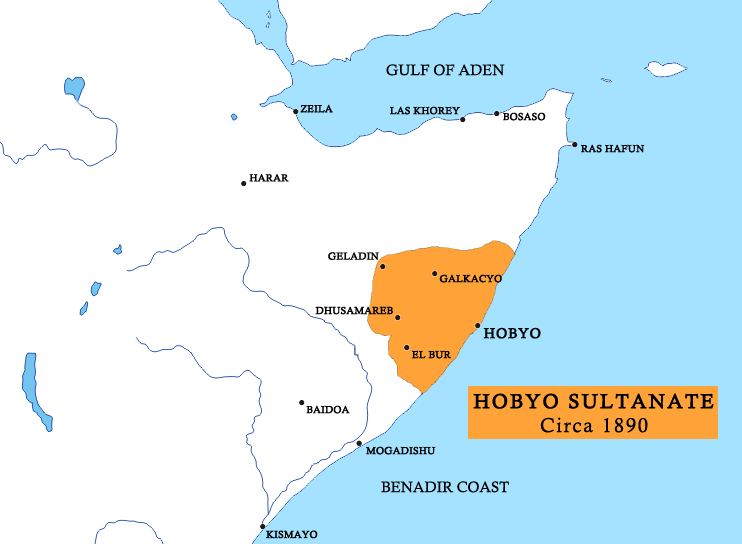
[edit]I don't think linking in the captions is necessary. First, the lede picture does not need links to articles already linked in the lede right beside it. Worse, the lede has a link to the very action described by the caption. Second, the other picture doesn't need a link to Sultanate of Hobyo, when there is a link to Sultan of Hobyo (same page) in the paragraph beside it. I think "cavalry" is too common a word to need linking in this case at all. We don't link camels in the text. That's it for links, except for the link to a website that seems to be down, which I have removed.
About wording: why are we avoiding common adjectives, like "Italian" and "Dervish", in favour of using multi-word nouns as adjectives, as in "Italian Somaliland protectorate" or "Dervish State forts"? That's my beef. I have no problem with the term "Italian Somaliland" and am not trying to suppress it. I also don't know why we need to say "the founder of the Sultanate of Hobyo" instead of just "the Sultan of Hobyo". Why more words that are irrelevant? That Yusuf founded the state is not relevant in this context. The other issues with wording have to do with representing properly the sources that are cited. In other words, I have no problem with the revised wording if it is correct, but the sources that I have added do not support it. For instance, "counter-attack .. by the Sultan's army" is not necessarily the same as "rebellion ... by the sultan's supporters". Both may be true, but one may be false. The wording should reflect the source cited. Nothing in that sources suggests that the British attacked the sultan to depose him. I don't know what Middayexpress means by "active voice - battle should be told from neutral perspective", but "had exiled" and "had restored" are active voice and "was appointed" is passive. Again, it is not clear to me that the British directly exiled the sultan rather than having others do it for them. Certainly the new wording is better if correct, but the original wording was hedged for a reason. Srnec (talk) 19:18, 12 October 2012 (UTC)
- It is common practice to link to relevant pages in image captions (c.f. WP:CAP). I agree, though, about the cavalry link. The Majeerteen Sultanate article can also be accessed via the Internet Archive . Additionally, Italian Somaliland is the official name of the territory. "Italian protectorate" by itself is vague and could refer to any number of global territories since Italian Somaliland is not introduced elsewhere in the article. "Founder of the Sultanate of Hobyo" is likewise preferable to "Sultan of Hobyo" because "Hobyo" alone most immediately refers to the city of Hobyo. That town served as the capital of the Sultanate of Hobyo, whose domain was much broader than just it (c.f. ). What I mean by "active voice - battle should be told from neutral perspective" is that we should avoid recounting the battle uniquely from any particular belligerent's perspective. In retrospect, it's not immediately clear that the British exiled or had others exile the Sultan to Eritrea. It would appear that the Italians exiled the ruler first to Yemen and then to Italian Eritrea (c.f. ). Middayexpress (talk) 14:24, 13 October 2012 (UTC)
- We do not need to link to Hassan in the caption, and I have removed that. The definite article in front of "Italian protectorate" makes it clear that a specific one is in mind. I think we should write a background section to remove the need even for a link at that point.
- The title "Sultan of Hobyo" is correct and is perfectly normal. Like "Sultan of Muscat" or "King of Jerusalem". We are not comparing "invasion of Hobyo" (bad) with "invasion of the Sultanate of Hobyo" (better). We're just comparing titles, and it is more important to know that Yusuf was the Sultan of Hobyo at just that moment, not that he was its founder (which might not even make him its sultan at all). Srnec (talk) 18:00, 13 October 2012 (UTC)
- The definite article "the" in "the Italian protectorate" does not make that phrase any less vague. Bottom line, Italian Somaliland needs to be named and linked to, just like British Somaliland and Italian Eritrea are. Point taken regarding the "Sultan of Hobyo". Middayexpress (talk) 12:30, 14 October 2012 (UTC)
- I accept the need to mention Italian Somaliland clearly, but I think it is best to add a background section, which I have done. Now it only includes Italian Somaliland, but it should briefly describe the genesis of British Somaliland and probably an explanation of Hassan's origins and maybe a description of Ethiopia's claims in the region. I do not want the background to become too bloated, so it might be best to just put it in the lede somehow. Srnec (talk) 00:24, 15 October 2012 (UTC)
- The term "Somaliland" referred to all Somali-inhabited territories in the pre-colonial period (i.e. Greater Somalia), not just Italian Somaliland and British Somaliland (Somalia). The section also doesn't explain how Britain and Italy acquired a foothold in the region to begin with. It was through treaties with the ruling Somali Sultans, not conquest. I've clarified that and the fact that it was actually the Italians who exiled Sultan Yusuf; first to Yemen, and then to Eritrea. Middayexpress (talk) 02:26, 15 October 2012 (UTC)
- I accept the need to mention Italian Somaliland clearly, but I think it is best to add a background section, which I have done. Now it only includes Italian Somaliland, but it should briefly describe the genesis of British Somaliland and probably an explanation of Hassan's origins and maybe a description of Ethiopia's claims in the region. I do not want the background to become too bloated, so it might be best to just put it in the lede somehow. Srnec (talk) 00:24, 15 October 2012 (UTC)
Round 2
[edit]The pictured Mohamoud Ali Shire was one of the main players in the Somaliland Campaign. He was the Sultan of the Warsangali Sultanate, one of the Somali polities with which Britain had signed a protectorate agreement to establish the British Somaliland protectorate. Sultan Shire was also an ally and the brother-in-law of Mohammed Abdullah Hassan. The link-throughs to the Warsangali Sultanate, Majeerteen Sultanate and Sultanate of Hobyo articles are likewise relevant since all of these sultanates were part of the ruling establishment before and during the formation of Italian Somaliland and British Somaliland. Perhaps they don't meet the Template:Main linking criteria, but they certainly do Template:See also (which goes at the top of sections). This obviously also applies to the Dervish State. Middayexpress (talk) 14:25, 17 October 2012 (UTC)
- This article is not about Somali history. It is about a series of military campaigns that form a small part of Somali history. Those articles are relevant, but they are all linked already in the text. The reader doesn't need to 'see also', they can read about their relevance and click on the link if they wish. The image is large and the sultan's role in the campaign is nowhere mentioned, making it out of place at least for now. I have other misgivings, but I'm going to concentrate on expanding the campaigns sections. Srnec (talk) 15:07, 17 October 2012 (UTC)
- Kindly stop de-linking Italian Somaliland. Here, you indicate that "that's not what the source says", when, quite clearly, that is what the cited Issa-Salwe source says. Relevant excerpts from his book can be found on this webpage. Further, you re-added a book by Lee V. Cassanelli that's not being used as a ref. I mistakenly introduced that book, when I really meant to cite an I.M. Lewis work. I corrected the error today, so there's no need to re-add the Cassanelli citation. The hatnotes pointing to the Somali sultanates are every bit as relevant as those pointing to the opposing belligerents, British Somaliland and Italian Somaliland (which are also linked to in the body). Per Template:See also: "[seealso] is used to create hatnotes to point to a small number of other, related, titles at the top of article sections according to Wikipedia:Layout. It is not for use in the "See also" section at the bottom of an article." Middayexpress (talk) 15:29, 17 October 2012 (UTC)
- I didn't even realise I was de-linking the first instance of Italian Somaliland. I was only intending to restore details you removed from the cited source, Hess. Here is a source that says that "Italian Somaliland" only came into use in 1905.
- I checked all your sources. Cassanelli was correct and it is worth keeping him even if he is not being used at the moment. The bibliography doesn't need only to contain books cited in footnotes. We could put it in a "Further reading" section if you insist.
- I left the Somaliland links because the sections had those titles. A main article link often matches a section heading. I would more than happy to remove them too. That would be my preference, over adding more hatnotes. Srnec (talk) 15:52, 17 October 2012 (UTC)
It's not clear, as Hess claims, that Sultan Kenadid approached the Italians about a protection agreement. Other sources much closer to the period in question suggest that the ruler actually accepted a protection offer . Given this, it's perhaps best to just indicate that he entered into an agreement with the Italians. Further, page 19 of Cassanelli's book does not discuss the Gadabuursi and Habar Awal treaties. That's because I accidentally pasted the wrong ref yesterday from another page. It's page 19 of I.M. Lewis's A Pastoral Democracy that does. I corrected that mistake today and added a link to the book, but you accidentally re-inserted the Cassanelli work. At any rate, the References section is for works that are actually used as references in the article. All the belligerent link-throughs are relevant, including the British Somaliland and Italian Somaliland ones. Regarding "Italian Somaliland", that pdf is quite mistaken. It has been in use as a term from the early 19th century onwards, though the polity itself was formally established considerably later (it originally just used to refer to Italian interests in the Somali territories; c.f. ). Middayexpress (talk) 17:33, 17 October 2012 (UTC)
- It may not be clear that Hess is right, but it is not clear that he is wrong. You removed him several times without explanation.
- You are right about Cassanelli, except that I did not add him back accidentally. I believe that articles should have extensive bibliographies. Like I said, we can split off a "Further reading" if you would prefer.
- Of course all those links are relevant and they should be in the text. I don't believe any require a special hatnote.
- I am aware of all this, but "that pdf" is not saying when the term came into use, but only when it came into official use. I do not know if it is right, but I doubt the Italians signed a treaty of protection with one small sultanate and started calling it "Italian Somaliland" in official documents. Srnec (talk) 18:11, 17 October 2012 (UTC)
i dont think a two decade long war should be shortend in the results section
[edit]afghanistan and iraq war have a lot more detail due to the durity of the conflict this page should have it also Sha19999 (talk) 17:42, 31 May 2025 (UTC)
- This page does not warrant such detail. The Hundred Years War article certainly didn't need it. Eastfarthingan (talk) 17:46, 31 May 2025 (UTC)
- I think it should also the hundred years war is from the middle ages can we stick to the mordern era, also allied victory is misleading since it wasnt even a first World war event but coencided with it. But i think we need more editors opinion on this so it can be fair, also its an event that is very important as the longest resistence war to European colonization Also the first time an Areal bombing took place in africa.Sha19999 (talk) 17:50, 31 May 2025 (UTC)
- Happy with other editors to voice their opinion. Eastfarthingan (talk) 17:55, 31 May 2025 (UTC)
- Thank you Sha19999 (talk) 17:58, 31 May 2025 (UTC)
- This war started in 1898 long before the First World War and the creation of the allied alliance a bit strange to say allied victory. When the war was won in 1920 after the first world wars were over don’t you think Sha19999 (talk) 12:59, 2 June 2025 (UTC)
- We can leave the result as it is, however it isn't aligned to the recommended WP:RESULT, so it could change. Eastfarthingan (talk) 20:29, 2 June 2025 (UTC)
- Happy with other editors to voice their opinion. Eastfarthingan (talk) 17:55, 31 May 2025 (UTC)
- I think it should also the hundred years war is from the middle ages can we stick to the mordern era, also allied victory is misleading since it wasnt even a first World war event but coencided with it. But i think we need more editors opinion on this so it can be fair, also its an event that is very important as the longest resistence war to European colonization Also the first time an Areal bombing took place in africa.Sha19999 (talk) 17:50, 31 May 2025 (UTC)
A Commons file used on this page or its Wikidata item has been nominated for deletion
[edit]The following Wikimedia Commons file used on this page or its Wikidata item has been nominated for deletion:
Participate in the deletion discussion at the nomination page. —Community Tech bot (talk) 14:37, 18 August 2025 (UTC)
The article's title is inconsistent and should be renamed to Anglo-Somali War
[edit]The current title "Somaliland campaign" doesn't really fit. "Somaliland" wasn't an official political entity at the time, the actual polity was British Somaliland, and the fighting wasn't even confined to that territory anyway, it spilled into the Ogaden and Italian Somaliland too. So the title is both inaccurate and misleadingly narrow. Wikipedia already names comparable colonial-era conflicts by the two sides involved rather than a single place — Anglo-Zulu War, Anglo-Boer War, Anglo-Ashanti Wars. "Anglo-Somali War" fits that same pattern and is already listed as an alternate name in the article's own first sentence, so this isn't proposing new terminology, just picking the more accurate option that's already there. Slowsilversoldier (talk) 22:53, 2 August 2026 (UTC)
- The problem is that it also involves the Italians and Ethiopians, and not all the Somali groups fought on the other side. So maybe it should be titled "Dervish war"?. ~2026-42774-06 (talk) 04:59, 3 August 2026 (UTC)
- I completely agree and that's what we should be discussing, the current title is redundant, inaccurate and biased. The "Dervish war" or anything of that adjacent is neutral. The naming issue is political. Somali nationalists want to call it the "Somaliland National Liberation War" to frame it as an anti-colonial struggle. British historians traditionally called it the "Somaliland Campaign" to frame it as a military pacification operation.Ethiopian historians barely mention it, because it's embarrassing that they got free Somali land out of it. Another issue with the "Somaliland Campaign" is that the dervish were fighting for their own clan based interests, not a unified Somali nation. I would love to see the title being corrected/updated Slowsilversoldier (talk) 16:29, 5 August 2026 (UTC)
- Yes, Dervish War is probably a better title. Srnec (talk) 03:21, 6 August 2026 (UTC)
- How do we go about bringing a change to it? Slowsilversoldier (talk) 20:11, 6 August 2026 (UTC)
- I can move it, but I'm a little unsure. Otherwise, go thru WP:RM.
- Clodfelter's Warfare and Armed Conflicts calls it "Operations Against the Mad Mullah (1899–1920)". War and Religion: An Encyclopedia of Faith and Conflict calls it "Mad Mullah, Wars of the (1892–1920)". Phillips and Axelrod also call it "'Mad Mullah', Holy Wars of the (1899–1920)".
- In other words, sources which are concerned with encyclopedic coverage—as we are—tend to identify the common theme of all these campaigns as the person of the 'Mad Mullah'. We might consider something like that. "Dervish Wars" is more common than "Dervish War" but both have the problem that they are sometimes used to refer to the Mahdist War in the Sudan. Srnec (talk) 00:41, 7 August 2026 (UTC)
- I propose to re-name this page "Dervish War (Mad Mullah)". And to have a "Dervish War" disambiguation page redirecting to this page and to Mahdist War. ~2026-43425-36 (talk) 06:44, 7 August 2026 (UTC)
- I disagree on the overstated ambiguity of the title "Dervish War", while there is an overlap in the term "Dervish' the confusion risk is low as the Mahdist War in Sudan has a well established name that everybody uses. The Somali Dervish is far more specifically and consistently associated with that term than the sudanese context is. Hassan literally named his movement the Dervish state, it was their formal self-identification. Slowsilversoldier (talk) 08:00, 7 August 2026 (UTC)
- The fact that older encyclopedic sources use 'Mad Mullah' framing reflects the historiographical bias of the era in which they were written, not a neutral standard we should replicate. Wikipedia's own naming conventions prioritise accuracy and neutrality over deference to dated sources. 'Mad Mullah' was a deliberate British propaganda label designed to delegitimise Hassan's movement, including it in any form, even in brackets, would be inconsistent with how Wikipedia treats other colonial-era conflicts where the colonised party's own terminology is now preferred. Slowsilversoldier (talk) 08:09, 7 August 2026 (UTC)
- We don't have to use 'Mad Mullah', but the sources I referred to are not old. Per WP:POVNAME, non-neutral names are sometimes preferable to unrecognizable ones. What may have been an insult in the 1890s does not play that way today. Ever heard of Mad Max? Srnec (talk) 20:28, 7 August 2026 (UTC)
Requested move 7 August 2026
[edit]- The following is a closed discussion of a requested move. Please do not modify it. Subsequent comments should be made in a new section on the talk page. Editors desiring to contest the closing decision should consider a move review after discussing it on the closer's talk page. No further edits should be made to this discussion.
The result of the move request was: moved. This topic was thoroughly discussed, with several primary lines of argument coming up over the course of the RM. The argument that I viewed as most decisive was the WP:RECOGNIZABLE argument—editors showed that the term "Dervish War" was regularly used in reliable sources, particularly academic sources but also showing some usage even in contemporary primary sourcing. The results of comparative analyses on the COMMONNAME were mixed, but I do note that concerns were raised about "Somaliland campaign" results including false positives from other campaigns in the region. (A concern was also raised about whether the Mahdist War is also referred to as a "Dervish War", but participants do not appear to have viewed this as a substantial risk.) Another argument that was leveled in favor of the "Dervish War" title was the claim that the "campaign" framing placed the article into a British-centric POV; this assertion attained more supporters than detractors, but did not have an obvious strength-of-argument lean in either direction. A third argument for moving held that the "Somaliland" framing risked giving a misleading impression of the war's geographic scope; however, opponents to the move pointed out that the term "Somaliland" was historically used for a broader region than it is today, which I believe addressed that concern solidly.
To summarize my conclusions from the above: the RECOGNIZABLE/COMMONNAME area is the one in which the two sides of the debate leveled the greatest amount of concrete evidence, and from my read of the discussion, I believe the "Dervish War" supporters marshaled stronger evidence for their point. The other major lines of argument, on NPOV and accuracy, did not substantially advance the strength of "Dervish War"; however, nor do they yield any reason to prefer other titles over it. The opposition to the NPOV and accuracy claims largely argued that those lines of argument were irrelevant, rather than that they supported a title other than "Dervish War". Thus, when appraising the arguments collectively, I believe that the discussion has resulted in a consensus to move the article as proposed.
The RM did not provide detailed discussion on the capitalization or singular/plural status of the term "War", so this consensus should not be seen as precluding further discussion of those points. (closed by non-admin page mover) ModernDayTrilobite (talk • contribs) 15:59, 8 September 2026 (UTC)
Somaliland campaign → Dervish War – The current title "Somaliland campaign" is both inaccurate and non-neutral per WP:NPOV. "Somaliland" was not an official political entity at the time, the territory was British Somaliland, and the fighting extended well beyond it into the Ogaden and Italian Somaliland, making the title geographically misleading. More fundamentally it frames the conflict as a British military operation rather than a war between recognised parties, which misrepresents its nature and scale. "Dervish War" is the most accurate replacement because Hassan formally constituted the Dervish State as a political entity, this was its official name, not a nickname or external label. Wikipedia convention names wars after their belligerents, and the Dervish State was the primary and consistent belligerent throughout the entire 20 year conflict regardless of which colonial powers were involved at any given time. The proposed alternative of "Dervish War (Mad Mullah)" is rejected on the grounds that "Mad Mullah" was a deliberate British propaganda label designed to delegitimise Hassan's movement and should not be perpetuated in any form per WP:NPOV. The Sudan ambiguity concern is overstated, the Mahdist War has a well established independent name universally used in the literature, and a simple disambiguation page resolves any remaining overlap. Slowsilversoldier (talk) 08:25, 7 August 2026 (UTC) — Relisting. –Maltazarian ᚾparleyinvestigateᛅ 23:37, 15 August 2026 (UTC) — Relisting. TarnishedPathtalk 10:27, 23 August 2026 (UTC) — Relisting. –Maltazarian ᚾparleyinvestigateᛅ 18:43, 30 August 2026 (UTC)



- Support. I proposed "Dervish War (Mad Mullah)" but this is fine too. In this case, we should add on top of the article "for the conflict sometimes also known as Dervish war, see Mahdist war".~2026-43404-54 (talk) 09:59, 7 August 2026 (UTC)
- Thank you for your support. Slowsilversoldier (talk) 19:36, 8 August 2026 (UTC)
- Weak support. There is no neutrality issue. "Somaliland", in this context, is unproblematic. But there is an accuracy issue. This article isn't about a singular Somaliland campaign but a protracted war involving several powers. The proposed title is used (I created the redirect myself) and the ambiguity can be handled by a hatnote. Srnec (talk) 20:28, 7 August 2026 (UTC)
- Wikipedia convention is not to name wars after their belligerents, it is to name wars per the WP:Article titles guideline, often defaulting to the name that WP:Reliable sources most use when discussing the war. The current title does not seem more geographically misleading than many war names, wars, including current ones, are rarely so precise and well-contained. There is also no neutrality issue by using "Somaliland' instead of "British and Italian Somaliland", or similar. Much of the opening statement seem disconnected from the guidelines. It would be helpful for key sources to be provided in an RM, and for RMs to be written in a person's own words. CMD (talk) 05:38, 9 August 2026 (UTC)
- @Chipmunkdavis: See section above. I think 'Somaliland campaign' fails the guideline because, while widely used, it is not widely used to refer in the singular to the whole war. In fact, the whole war is usually identified by reference to the 'Mad Mullah', which raises neutrality issues. Srnec (talk) 20:53, 9 August 2026 (UTC)
- The discussion above opens with similar misconceptions about our naming conventions, and about war name accuracy. The sources you raised did not use Dervish War, although I did also find the term in use while looking online. Do we have some examples of what "Somaliland campaign" is widely used to refer to? Do we also have an understanding of what exactly the main topic of this article is? CMD (talk) 02:11, 10 August 2026 (UTC)
- Right, and that's basically my whole point: "Somaliland campaign" gets used for several different British operations, so as an article title it's just not pinning down what we're actually talking about.
- Since sources were asked for, Ahmed Ibrahim Awale's 2021 piece in Bildhaan: An International Journal of Somali Studies (Vol. 21) is titled "The Dervish War (1899–1920)," with "Somaliland Campaign" only noted as an alternative name. That's a peer-reviewed, recent Somali Studies source treating "Dervish War" as the primary name for the whole thing, not a footnote.
- On naming conventions, I wasn't claiming there's some hard rule here, just that titles should reflect what the conflict actually was. "Somaliland campaign" frames this as a British operation, full stop. But this was two decades of fighting involving the Dervish State, the British, the Italians, and the Ethiopians. The geography problem isn't just vagueness about borders. It's flat-out inaccurate, since the fighting wasn't confined to British Somaliland in the first place.
- And on neutrality: "Somaliland" as a place name is fine, neutral. It's "campaign" that's doing the work here. A campaign is one side's military operation; it centers the colonial power's perspective. A war is fought between belligerents. The Dervish State was a functioning political entity, not a rebel movement or insurgency being "campaigned" against. They were waging a war. That's the NPOV problem essentially. Slowsilversoldier (talk) 07:14, 11 August 2026 (UTC)
- Please write here in your own words. The argument being spun up here is not coherent, "Somaliland campaign" does not mention the British at all, let alone with a full stop. CMD (talk) 07:30, 11 August 2026 (UTC)
- @Chipmunkdavis: See section above. I think 'Somaliland campaign' fails the guideline because, while widely used, it is not widely used to refer in the singular to the whole war. In fact, the whole war is usually identified by reference to the 'Mad Mullah', which raises neutrality issues. Srnec (talk) 20:53, 9 August 2026 (UTC)
- I support moving the article from Somaliland campaign to Dervish War.
- I think Dervish War is the title because Dervish War directly identifies the historical conflict being discussed. The conflict was centred on the Dervish movement led by Sayyid Mohammed Abdullah Hassan, whose forces fought an armed struggle against the British, Ethiopians and Italians, between 1899 and 1920.
- The proposed title is also concise, distinctive and easier for readers to understand. A reader encountering "Dervish War" can immediately identify that the subject is the conflict involving the Dervish movement whereas "Somaliland campaign" is considerably more geographical and does not by itself indicate what the campaign was, about.
- The article is not a story about one British military action in Somaliland. It includes than twenty years of fighting. This includes Dervish attacks on Italian groups. It also talks about missions. There were times when people tried to make peace. The Dervish State grew bigger during this time. Then there was the British attack in 1920. Dervish War is a name, for the whole historical event.
- Taxarhorane (talk) 13:54, 3 September 2026 (UTC)
 |
|
| The following discussion has been closed. Please do not modify it. | |
| |
- Did you use AI for this response? Kristos (talk) 22:23, 11 August 2026 (UTC)
- Support. Dervish war sounds more accurate, but could be confused with Sudanese Dervishes no? Yubudirsi (talk) 22:12, 9 August 2026 (UTC)
- This is why it's important to add on top ""for the conflict sometimes also known as Dervish war, see Mahdist war". That is more known as Mahdist war, so I think it's fine. ~2026-44071-48 (talk) 10:35, 11 August 2026 (UTC)
- Yeah. On the French wiki this campaign is already called Dervish war. Yubudirsi (talk) 19:26, 11 August 2026 (UTC)
- This is why it's important to add on top ""for the conflict sometimes also known as Dervish war, see Mahdist war". That is more known as Mahdist war, so I think it's fine. ~2026-44071-48 (talk) 10:35, 11 August 2026 (UTC)
- Support. "Dervish War (1899-1920)" or just "Dervish War" sounds more accurate than its current name. Johannes Klarnus-Pettersen (talk) 05:09, 11 August 2026 (UTC)
- Oppose. I would like to see sources use the term 'Dervish War'. Kristos (talk) 22:22, 11 August 2026 (UTC)
- I've cited my source in the thread above. Ahmed Ibrahim Awale (2021). "The Cost of the Dervish War in British Somaliland on Environment and Non-combatants (1899-1920)."
- Published in Bildhaan: An International Journal of Somali Studies, Vol. 21. This is a peer reviewed, modern (2021) and academic source that uses the term "Dervish War" to refer to the conflict. Slowsilversoldier (talk) 11:48, 12 August 2026 (UTC)
- Note: WikiProject British Empire, WikiProject Ethiopia, WikiProject Germany, WikiProject Turkey, WikiProject Italy, WikiProject Somaliland, and WikiProject Military history have been notified of this discussion. –Maltazarian ᚾparleyinvestigateᛅ 23:38, 15 August 2026 (UTC)
- Support The current title seems misleading, the primary headquarters of the Dervish was in Baran near Kalabaydh, Sool and Taleh, both of which are currently under Waqooyi Bari jurisdiction rather than Somaliland jurisdiction. Likewise the major battles such as Samala in modern Guumeys, Ano harigli in Kalabaydh, Fardhiddin near Boocame, Jidbaale near Hudun, Kheman near Fiqifuliye: these are all towns and cities cotrolled by Waqooyi Bari. So if we're being technical, the article title should be changed to "Waqooy Bari campaign". But since thats not widely attested, I support the proposal "Dervish War". ~2026-44887-24 (talk) 22:48, 16 August 2026 (UTC)
- The content of this article details pre-1921 events in locales mostly in the Nugaal valley, neighboring areas to its south in Ethiopia, and neighbouring areas in modern Puntland. Somaliland protectorate had not yet established a presence over the Nugaal valley between 1899 and 1920 and it has never established a presence over the neighboring regions in modern Doollo. In fact a treaty had not been forged between the Sultan of the Nugal and British colonists even after 1920, in contrast with the other areas earmarked as British Somaliland. So its not appropriate to refer to wars in this area as Somaliland Protectorate wars, or a Somaliland Campaign or variatins thereof if governance presence had not reached this area yet. Its anachronistic. Maybe its okay to call it the Nugaal valley war, or the Dervish war, but it doesn't make sense to call it Somaliland campaign. Furthermore, the name of the protecorate in its initial phases until the turn of the 20th century was actually "Somali Coast Protectorate"; the same administration temporarily readopted a colonial coastal concentration policy at the turn of the 1910s decade. ~2026-44887-24 (talk) 03:47, 17 August 2026 (UTC)
- The name is not based on the current Somaliland. In the 1920s the entire region was known as Somaliland. CMD (talk) 23:02, 16 August 2026 (UTC)
- Note The scope of this article per its content is the warfare between the Dervishes and the three colonial powers of Britain, Abyssinia and Italy from 1901 to 1920. But the title Somaliland Campaign is misleading because it implies any revolt within Somaliland, however the Issa (clan) had a revolt in 1893, and this article is obviously not about that. Also, territorially, the geographic scope of the Dervish conflicts did not fall in line with all of supposed Somaliland: for example Hargeisa, the capital never saw any battles, nor did Borama the capital of Awdal, nor did Burao, or anywhere in the west of the protectorate. The battles were largely in areas where the British had not signed any treaties with local chieftains, such as the Dhulbahante in modern Waqooyi Bari , Majeerteen inhabited areas in modern Puntland (via the Illig battles), and Doollo in modern Ethiopia (see for example Cagaarweyne battle). Since the current title is an example of an anatopism and anachronism, it must be changed to "Dervish War". Furthmore, the most authoritative scholars on this matter, i.e. M Ingiriis, B Andrzejewski, M Hoehne all call it the "Dervish War". ~2026-44887-24 (talk) 08:29, 18 August 2026 (UTC)
- "Somaliland Campaign" does not imply a revolt at all, let alone any revolt. CMD (talk) 13:09, 18 August 2026 (UTC)
- Support moving to "Dervish War" because it is a more universal and neutral term (WP:NPOV) since its used by all parties. Sources on the conflict can most be subdivided into either: sources heavy with imperial-centred sourcing, then you have the multi-perspectival approach sources, and then you have native sources. All three use the term "dervish war" or variations thereof, but only the first imperial-centred uses the term "somaliland campaign". For example in an imperial-centred source such as this british military museum source, the term Dervish war is used. If you take native sources such as scholars, the term "dagaalkii daraawiishta" which directly translates to "Dervish war" is used. But the Somali equivalent to "Somaliland campaign" is "ololihii somaliland / soomaaliland" has no search returns on any academic databases. FidotSciecc2 (talk) 18:48, 19 August 2026 (UTC)
- Support An Oxford University Press link describes the Dervish army as primarily being "fighters from the Ali Geri" tribe - the Ali Geri tribe primarily resides in Somali Region of Ethiopia, not in the territory of former British Somaliland. Tremonxcurow (talk) 16:11, 20 August 2026 (UTC)
- Strong support Firstly, in the high quality sources, "Dervish war" is the WP:COMMONTERM. If you combine search returns for synonymous phrases such as "Dervish Wars", "dervish war", "dervish rebellion" and compare them with "somaliland campaign", "somaliland campaigns" and "somaliland rebellion", on google scholar, and remove false positives, then the former has more returns. Secondly, check these works that use "dervish war" : Cambridge Press (2020) and Edinburgh University (2012) ; these are scholarly academic sources that use "dervish war" which seem to have a greater depth in terms of the primary sources they cite. Thirdly, the defintion of the word "campaign" is a planned set of activities. But some of the conflicts that erupted between the warring parties was largely unplanned and impulse driven. An example of such was the Battle of Dul Madoba where the British colonial officer spontaneously enacted an anti-dervish battle against the advice of his superiors. Fmgkkhly (talk) 16:18, 21 August 2026 (UTC)
- Relisting comment: It would be helpful if more editors making an argument for Dervish War provided a rationale based in WP:AT. TarnishedPathtalk 10:27, 23 August 2026 (UTC)
- Support Dervish War still. To address the relisting comment specifically in terms of WP:AT, I think Dervish War has a stronger claim under the WP:COMMONNAME and the criteria of recognizability and naturalness. This is not simply a retrospective name proposed by the editors above. Contemporary British newspapers were already calling the conflict the "Dervish war": the Edinburgh Evening Dispatch of 27 April 1903, for example, reproduced the Manchester Guardian describing the campaign as having "developed into another dervish war".[1] More importantly, the terminology persists in later scholarship. Jörg Janzen & von Vitzthum (2001) name a chapter "The Aftermath of the Dervish Wars" and repeatedly refer to "the dervish wars", including their social and economic consequences;[2] another scholarly work published in 2006 discusses "the long term outcome of the Dervish wars";[3] Jon Abbink et. al refer to deaths resulting from the "Dervish war";[4] and Rebecca Richards (2014) directs readers seeking further information specifically to "the Dervish War".[5] The term therefore has both contemporary usage and sustained use in modern secondary scholarship. In my view, that makes Dervish War a more natural and recognizable title for the overall conflict than Somaliland campaign, which can also be confused with particular British campaigns or expeditions within that much longer conflict. Johannes Klarnus-Pettersen (talk) 23:01, 26 August 2026 (UTC)
- Note: WikiProject Former countries, WikiProject Ottoman Empire, and WikiProject European history have been notified of this discussion. TarnishedPathtalk 10:30, 23 August 2026 (UTC)
- Rationale I have already expressed support for the title "Dervish War" ten days ago. But to bind it specifically to WP:AT using arguments used above, I think all the headers under WP:AT point to Dervish war. For consistency, the template tethered to this article is called Dervish war, not Somaliland campaign. The mahdist is the most similar to the Dervish state, so WP:CONSISTENT is relevant: the war against the Mahdist state has the article title "Mahdist War", not Sudan campaign. For WP:PRECISION, Dervish war is favored because the alternative current title "Somaliland campaign" reiterates national borders that do not befit the geographic scale of the dervish conflict which stretched outside of British Somaliland; you can see evidence of this in the navbox Dervish war where some of the main battles occurred with locations outside of British Somaliland. As for being WP:RECOGNIZE-able, the title "Somaliland campaign" has a lower recognizability when considering whether it crosses over outside its limited niche within imperial military history compared to the name "Dervish war". This is corroborated by the Somali equivalent of "Dervish war", which directly translated is dagaalkii daraawiishta" that has dozens of Somali translations, so it has universal currency. However, if you try translate "Somaliland campaign" into Somali it becomes "ololihii somaliland" which has exactly zero results. You can check for commonality and remove false positives by using this query for Somaliland campaign, and this query for Dervish war: dervish war is double the returns. FidotSciecc2 (talk) 20:35, 29 August 2026 (UTC)
- It seems it needs reiterating again, "Somaliland" does not refer to just British Somaliland. It was a general term for the wider region. I am not sure where this RM is being found from, but as general advice support arguments would be stronger if they 1) didn't repeat previous poor arguments originally generated by an llm 2) included some sources to support the move. Decided to look into the ngrams as google was raised, this Google Books ngram shows that Somaliland campaign was common during the war, before tailing off. As of 2022 it was just over twice as common, although the relative use of both terms has fluctuated, and eg. Dervish war was more common in the 1980s. Are both of these confounded by potential ambiguity? Perhaps, but that case should be made clearly. CMD (talk) 00:20, 30 August 2026 (UTC)
- I'm aware of the term Somaliland being used for Italian Somaliland, French Somaliland as well as British Somaliland, but the adjacent region in modern Ethiopia was more commonly called the Haud, the Ogaden or other iterations than Somaliland. This is significant due to the many Dervish fortresses scattered over Ethiopia as well as Italian Somaliland. Even if we take the logic that Somaliland was a general name for the entire region, then it would confuse with conflicts of southernmost Somaliland regions such as the Hassan Odel conflict . What about the Abdirahman Mursal battle , could that not also be conceivably be confused as being interchangeable with the subject topic of this article? If you look on Reddit and other forums, the communities discussing the Dervish wars most thoroughly and extensively are English speaking Somalis, and the terminology "Somaliland Campaign" is absent as a subject title in these communities, violating WP:RECOGNIZE/naturalness per WP:AT. If you use the Ngram search terms based on lemma, it adds up to roughly comparable numbers ; however, it doesn't show up to present day. Interestingly, prior to this article being created with the title "Somaliland campaign", Dervish war is more common, showing that the "Somaliland campaign" name may have been inflated directly by this article title. Google trends shows that the term "Dervish War" is more WP:COMMON : . The point also stands that among English-speaking Somalis, the term "Somaliland Campaign" is more-or-less non-existent if you check forum discussions besides false positives , compared with dervish war . FidotSciecc2 (talk) 15:08, 30 August 2026 (UTC)
- Reddit is not a reliable source. The google trends link there shows mostly that neither term is well sourced. "Somaliland Campaign" is used in this sense in the third link in that search, rather than being "non-existent". CMD (talk) 18:02, 30 August 2026 (UTC)
- So what do you suggest to do? Kristos (talk) 18:15, 30 August 2026 (UTC)
- There are two key claims to make. The first is that the 1899–1920 military actions are more commonly collectively referred to as "Dervish War" than "Somaliland campaign". I was quite surprised that the ngrams showed the opposite, but it could be true that this is due to different Somaliland campaigns being lumped together. It may also be that "Dervish War" and "Dervish Wars" need to be looked at. A more granular analysis could look into these considerations. Related to that, the second claim is that these 1899–1920 military actions are the WP:Primary topic for "Dervish War". Again a plausible claim (although searching for that term mostly brings up non-exact matches for the Dervish state, again surprising) but nobody has yet done it. (Best also to avoid muddling possibly stronger arguments with odd ones, like the geographic scope argument, and inapplicable arguments like the WP:POVNAME one.) CMD (talk) 23:42, 30 August 2026 (UTC)
- Honestly, that's fair. Thanks for this. I would agree that those are the two points that need to be demonstrated more clearly. The Ngram result also deserves a closer look, particularly since "Somaliland campaign" can refer to other campaigns and the literature uses both "Dervish War" and "Dervish Wars". Just to bring some of the sources mentioned earlier back into view, Ahmed Ibrahim Awale and Rebecca Richards use "Dervish War",[6][7] while Janzen & von Vitzthum and Cedric Barnes use "Dervish Wars";[8][9] Jon Abbink, Van Walraven and De Bruijn also use "Dervish war".[10] So there does seem to be sustained academic usage of both forms for this conflict.
- I agree that this should be looked at more closely alongside sources using "Somaliland campaign", rather than relying on the Ngram alone. The sources I've found using either form do seem to be referring to this conflict, which I think supports a move to one of those titles, depending on whether the singular or plural is better supported overall. And yes, I agree that it's better to focus on the naming evidence rather than the geographic-scope or WP:POVNAME arguments. Johannes Klarnus-Pettersen (talk) 23:37, 4 September 2026 (UTC)
- There are two key claims to make. The first is that the 1899–1920 military actions are more commonly collectively referred to as "Dervish War" than "Somaliland campaign". I was quite surprised that the ngrams showed the opposite, but it could be true that this is due to different Somaliland campaigns being lumped together. It may also be that "Dervish War" and "Dervish Wars" need to be looked at. A more granular analysis could look into these considerations. Related to that, the second claim is that these 1899–1920 military actions are the WP:Primary topic for "Dervish War". Again a plausible claim (although searching for that term mostly brings up non-exact matches for the Dervish state, again surprising) but nobody has yet done it. (Best also to avoid muddling possibly stronger arguments with odd ones, like the geographic scope argument, and inapplicable arguments like the WP:POVNAME one.) CMD (talk) 23:42, 30 August 2026 (UTC)
- So what do you suggest to do? Kristos (talk) 18:15, 30 August 2026 (UTC)
- Reddit is not a reliable source. The google trends link there shows mostly that neither term is well sourced. "Somaliland Campaign" is used in this sense in the third link in that search, rather than being "non-existent". CMD (talk) 18:02, 30 August 2026 (UTC)
- I'm aware of the term Somaliland being used for Italian Somaliland, French Somaliland as well as British Somaliland, but the adjacent region in modern Ethiopia was more commonly called the Haud, the Ogaden or other iterations than Somaliland. This is significant due to the many Dervish fortresses scattered over Ethiopia as well as Italian Somaliland. Even if we take the logic that Somaliland was a general name for the entire region, then it would confuse with conflicts of southernmost Somaliland regions such as the Hassan Odel conflict . What about the Abdirahman Mursal battle , could that not also be conceivably be confused as being interchangeable with the subject topic of this article? If you look on Reddit and other forums, the communities discussing the Dervish wars most thoroughly and extensively are English speaking Somalis, and the terminology "Somaliland Campaign" is absent as a subject title in these communities, violating WP:RECOGNIZE/naturalness per WP:AT. If you use the Ngram search terms based on lemma, it adds up to roughly comparable numbers ; however, it doesn't show up to present day. Interestingly, prior to this article being created with the title "Somaliland campaign", Dervish war is more common, showing that the "Somaliland campaign" name may have been inflated directly by this article title. Google trends shows that the term "Dervish War" is more WP:COMMON : . The point also stands that among English-speaking Somalis, the term "Somaliland Campaign" is more-or-less non-existent if you check forum discussions besides false positives , compared with dervish war . FidotSciecc2 (talk) 15:08, 30 August 2026 (UTC)
- It seems it needs reiterating again, "Somaliland" does not refer to just British Somaliland. It was a general term for the wider region. I am not sure where this RM is being found from, but as general advice support arguments would be stronger if they 1) didn't repeat previous poor arguments originally generated by an llm 2) included some sources to support the move. Decided to look into the ngrams as google was raised, this Google Books ngram shows that Somaliland campaign was common during the war, before tailing off. As of 2022 it was just over twice as common, although the relative use of both terms has fluctuated, and eg. Dervish war was more common in the 1980s. Are both of these confounded by potential ambiguity? Perhaps, but that case should be made clearly. CMD (talk) 00:20, 30 August 2026 (UTC)
- Relisting comment: People are still discussing. –Maltazarian ᚾparleyinvestigateᛅ 18:43, 30 August 2026 (UTC)
- Support. Given the context of the decades long conflict as outlined above, the more neutral title 'Dervish War' makes more sense. Limegreencoral (talk) 17:20, 3 September 2026 (UTC)
I can't find an independent source that uses 'Somaliland campaign' as a formal name/title for this conflict. Only Wikipedia and its mirrors use that exact phrase. Independent sources do use 'campaign' descriptively, but 'Dervish War' (or 'Dervish Wars') appears to be the only term actually used as a formal name in dedicated scholarship on this exact 1899–1920 conflict (e.g., Awale 2021).
Just to bring some of the sources mentioned earlier back into view, Awale (2021) in Bildhaan 21 actually titles his article 'The Dervish War (1899–1920)'. The Edinburgh Evening Dispatch of 27 April 1903 used the phrase 'dervish war' to describe this specific conflict.
Since Wikipedia titles are supposed to reflect what reliable sources call a subject, the current title 'Somaliland campaign' fails under WP:COMMONNAME.
Are there any reliable sources that use 'Somaliland campaign' as the formal primary name for this conflict? Slowsilversoldier (talk) 16:15, 5 September 2026 (UTC)
- I encourage Taxarhorane (talk · contribs) who commented on the 13:54, 3 September 2026 to comment chronologically, because otherwise it becomes difficult for readers of this thread to correctly summon comments: this means leaving your comment at the end of this thread, instead of dead in the middle as you did. As for the perspectives on emphasis, I agree with CMD, Johannes Klarnus-Pettersen, and Slowsilversoldier on the weight afforded to commonality. In this context I believe lemma's, meaning the singular, should be the primary term, so for example "dervish wars" giving weight to "dervish war", and "somaliland campaigns" giving weight to "somaliland campaign". The google trends bar shows the "Dervish war" bar with a value of 8, whilst the "Somaliland Campaign" bar has a value of 4, meaning the former has double the value. As for google scholar, "Dervish war" and "Dervish wars" at 60 and 100 (, ) have a combined count of 160, whilst "Somaliland campaign" and "Somaliland campaigns" at 110 and 21 (, ) have a combined count of 131. All in all, whoever analyses this thread should count inflected forms (such as plural -s etc.) as counting towards the lemma form. FidotSciecc2 (talk) 20:51, 5 September 2026 (UTC)
- Thanks for looking into this. I think this strengthens the case for a move away from "Somaliland campaign". Considering the singular and plural forms together, as you suggest, the results show substantial usage of "Dervish War"/"Dervish Wars" and seem to address some of the concerns raised earlier about the raw Ngram comparison. Taken together with the academic sources already cited in this discussion that use both forms specifically for this conflict, I think the evidence supports a move to "Dervish War" or "Dervish Wars", with the remaining question being which form is better supported as the title. Johannes Klarnus-Pettersen (talk) 01:10, 7 September 2026 (UTC)
- I encourage Taxarhorane (talk · contribs) who commented on the 13:54, 3 September 2026 to comment chronologically, because otherwise it becomes difficult for readers of this thread to correctly summon comments: this means leaving your comment at the end of this thread, instead of dead in the middle as you did. As for the perspectives on emphasis, I agree with CMD, Johannes Klarnus-Pettersen, and Slowsilversoldier on the weight afforded to commonality. In this context I believe lemma's, meaning the singular, should be the primary term, so for example "dervish wars" giving weight to "dervish war", and "somaliland campaigns" giving weight to "somaliland campaign". The google trends bar shows the "Dervish war" bar with a value of 8, whilst the "Somaliland Campaign" bar has a value of 4, meaning the former has double the value. As for google scholar, "Dervish war" and "Dervish wars" at 60 and 100 (, ) have a combined count of 160, whilst "Somaliland campaign" and "Somaliland campaigns" at 110 and 21 (, ) have a combined count of 131. All in all, whoever analyses this thread should count inflected forms (such as plural -s etc.) as counting towards the lemma form. FidotSciecc2 (talk) 20:51, 5 September 2026 (UTC)
References
- ↑ "What Other Papers Say: The Somali War". Edinburgh Evening Dispatch. 27 April 1903. p. 2.
The Manchester Guardian observes:--The campaign that began as a military promenade has developed into another dervish war in which the fanaticism of the desert tribes has been raised to the highest pitch against the invader.
- ↑ Janzen, Jörg; von Vitzthum, Stella (2001). What are Somalia's Development Perspectives?: Science Between Resignation and Hope?. Berlin: Verlag Hans Schiler. pp. 36–37. ISBN 3860932306.
- ↑ Uhlig, Siegbert (2003). Proceedings of the XVth International Conference of Ethiopian Studies. Hamburg: Otto Harrassowitz Verlag. p. 214. ISBN 3447047992.
It is only in a series of articles on "Gubo" written by Andrzejewski and Galaal in 1963 and a doctoral thesis by Patrick Kakwenzire of 197618 that I have seen the point expressly made that the long term outcome of the Dervish wars was of significant benefit to certain Isaq clans, materially in terms of guns, loot, wells, and especially their ever closer identification with the British Protectorate administration if not their full agreement with it.
- ↑ Jan Abbink, Gerrit; Van Walraven, Klaas; De Bruijn, Mirjam (2003). Rethinking Resistance: Revolt and Violence in African History (PDF). Boston: BRILL. p. 346. ISBN 9004126244.
FOOTNOTE 58: "Jardine, The Mad Mullah, 315, (over)estimated the number of people killed directly or indirectly as a result of the Dervish war to be about 200,000."
- ↑ Richards, Rebecca (2016). Understanding Statebuilding: Traditional Governance and the Modern State in Somaliland. New York: Routledge.
International Crisis Group (ICG), 'Somaliland: Democratisation and its Discontents', Africa Report No. 66 (Nairobi: ICG, 2003), pp. 2, 3. For more information on the Dervish War, see S. Touval (...)
- ↑ Awale, Ahmed Ibrahim (2021). "The Cost of the Dervish War in British Somaliland on Environment and Non-combatants (1899–1920)". Bildhaan: An International Journal of Somali Studies. 21 16.
- ↑ Richards, Rebecca (2016). Understanding Statebuilding: Traditional Governance and the Modern State in Somaliland. New York: Routledge.
International Crisis Group (ICG), 'Somaliland: Democratisation and its Discontents', Africa Report No. 66 (Nairobi: ICG, 2003), pp. 2, 3. For more information on the Dervish War, see S. Touval (...)
- ↑ Janzen, Jörg; von Vitzthum, Stella (2001). What are Somalia's Development Perspectives?: Science Between Resignation and Hope?. Berlin: Verlag Hans Schiler. pp. 36–37. ISBN 3860932306.
- ↑ Uhlig, Siegbert (2003). Proceedings of the XVth International Conference of Ethiopian Studies. Hamburg: Otto Harrassowitz Verlag. p. 214. ISBN 3447047992.
It is only in a series of articles on "Gubo" written by Andrzejewski and Galaal in 1963 and a doctoral thesis by Patrick Kakwenzire of 197618 that I have seen the point expressly made that the long term outcome of the Dervish wars was of significant benefit to certain Isaq clans, materially in terms of guns, loot, wells, and especially their ever closer identification with the British Protectorate administration if not their full agreement with it.
- ↑ Jan Abbink, Gerrit; Van Walraven, Klaas; De Bruijn, Mirjam (2003). Rethinking Resistance: Revolt and Violence in African History (PDF). Boston: BRILL. p. 346. ISBN 9004126244.
FOOTNOTE 58: "Jardine, The Mad Mullah, 315, (over)estimated the number of people killed directly or indirectly as a result of the Dervish war to be about 200,000."
- C-Class level-5 vital articles
- Wikipedia level-5 vital articles in History
- C-Class vital articles in History
- C-Class WikiProject Somaliland articles
- Top-importance WikiProject Somaliland articles
- WikiProject Somaliland articles
- Start-Class military history articles
- Start-Class African military history articles
- African military history task force articles
- Start-Class British military history articles
- British military history task force articles
- Start-Class European military history articles
- European military history task force articles
- Start-Class German military history articles
- German military history task force articles
- Start-Class Italian military history articles
- Italian military history task force articles
- Start-Class Ottoman military history articles
- Ottoman military history task force articles
- Start-Class World War I articles
- World War I task force articles
- C-Class British Empire articles
- Top-importance British Empire articles
- All WikiProject British Empire pages
- C-Class Italy articles
- Top-importance Italy articles
- All WikiProject Italy pages
- C-Class European history articles
- Top-importance European history articles
- All WikiProject European history pages
- C-Class Ethiopia articles
- Top-importance Ethiopia articles
- WikiProject Ethiopia articles
- C-Class former country articles
- C-Class Ottoman Empire articles
- Top-importance Ottoman Empire articles
- WikiProject Ottoman Empire articles
- WikiProject Former countries articles
- C-Class Turkey articles
- Top-importance Turkey articles
- All WikiProject Turkey pages
- C-Class Germany articles
- Top-importance Germany articles
- WikiProject Germany articles