Cheese and butter prices could soar after heatwave hits milk production

Analysis of industry figures shows that British dairy farmers supplied 240 million fewer litres of milk than expected over the UK’s record hot summer.
Daily delivery records from agricultural holdings across the nation indicate the extreme temperatures had an unprecedented effect on output, according to the Energy and Climate Intelligence Unit (ECIU).
In reviewing data from the Agriculture and Horticulture Development Board (AHDB), researchers observed that producers delivered four fewer days’ worth of milk than anticipated between May and August.
Throughout those four months, deliveries dropped further beneath expected benchmarks on 87 individual days when compared against equivalent dates between 2008 and 2025.
The deficit became increasingly widespread as summer continued, affecting 25 days in June followed by every day of July and August, totalling 31 days in each respective month.
In total, the ECIU said dairy farmers lost more than £83 million worth of milk, which was enough milk to fill more than a billion school milk cartons.
It comes after the UK experienced its hottest summer on record in 2026, with five intense heatwaves alongside historic dry spells that triggered widespread drought declarations and hosepipe bans across much of the nation.
Because of the weather, farmers in England and Wales have seen poor grazing conditions, stunted harvests and heat strain on livestock.
But while they delivered significantly less than expected over summer and the size of the UK milking herd hitting record lows this year, the ECIU said UK milk production could still hit near record levels in 2026.
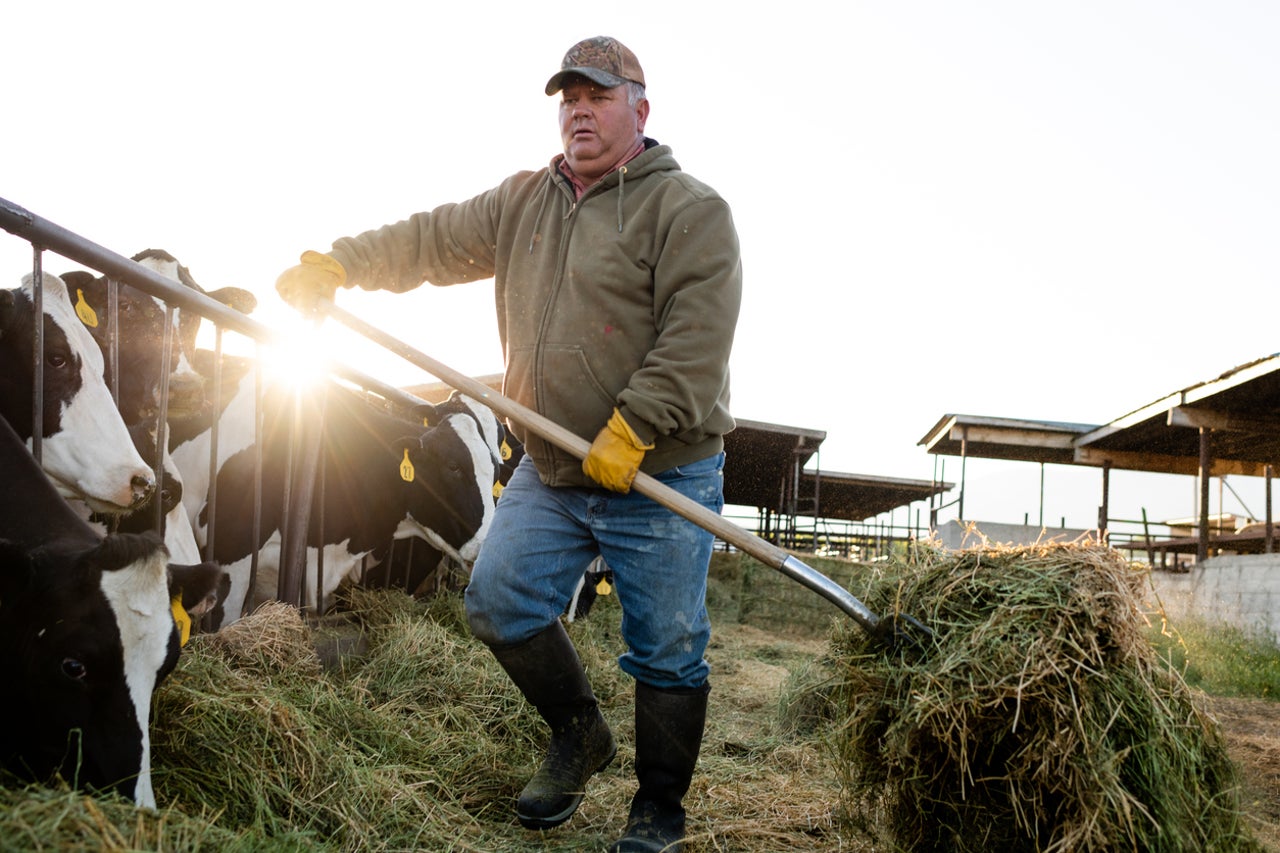
Farmers built up a cushion earlier in the year that has partially offset the litres lost over the summer.
But more widely, the consolidation of dairy farms in recent years has allowed for economies of scale and mechanisation to increase milk outputs while the herd size reduces.
The drop in expected milk deliveries is unlikely to lead to any noticeable impact on supplies or prices, although there could be a very slight knock-on effect on dairy products such as skimmed milk powder, cheese and butter.
But the ECIU warns that the figures show how climate impacts can severely hit the amount UK dairy farms are expected to produce, ultimately squeezing the already tight incomes of farmers even further.
Tom Cantillon, ECIU senior analyst, said: “With the UK dairy herd shrinking, future shocks like this will become progressively harder to recover from.”
Advertisement
Milk is an “unforgiving product in farming” because it cannot be stored or stockpiled, and a dip in expected yield cannot be made up for in autumn, he added.
Earlier this week, farmers told the Press Association that food and milk producers in England and Wales have come under increasing pressure from the extreme heat and drought, while Scottish producers say they are looking north to fill in the gaps.
Mr Cantillon said: “For months, UK dairy farms produced below a normal summer, and by August the scale of the impact was regularly worse than anything seen in 18 years.”
“The missing £83 million from farmers’ pockets has gone in a year when many were already milking at a loss.
“The costs don’t stop now that the rain has come. A second bad year for grass has pushed farmers into their winter forage early, with feed prices to follow.”
Mr Cantillon argued that farmers need help to roll out climate resilience measures such as more shade, trees and water.
But he also warned that summers “keep getting worse until we cut emissions to net zero and bring the climate back into balance”.
Elsewhere, the ECIU found that grass growth for the season to date as of September 4 stands at 86% of the 2019-2024 average, with the lost growth to date being enough to feed the national cattle herd for two months.
Many farmers have already begun giving winter feed to cattle, forcing them to supplement their winter feed stores with supplies sourced elsewhere and leaving them more exposed to soaring hay, silage and other feed prices in the colder months.
Debbie Wilkins, a dairy and beef farmer in Gloucestershire, said: “This has been a difficult summer.”
“We’ve been able to produce enough food for the winter, though the situation is still not ideal because cows eating grass in fields is far cheaper than paying contractors to make silage and then dealing with the costs and labour of maintaining slurry stores, cleaning out sheds, changing bedding and so on.
“The costs pile up when you have to bring the cows indoors, and the loss of milk production compounds the issue.”
Ruth Grice, a dairy farmer in Leicestershire, also called this summer was “very challenging”.
“Dairy farmers have been hit by a double whammy of significant increases in operational costs, while milk prices remained really low as a hangover from the enormous volumes of milk produced last year and at the start of this year.
“It’s an incredibly volatile time to be a UK dairy farmer, as there are so many more climate unknowns than there were even five years ago.”