If You Want Crispy Skin, Don’t Wrap Your Baked Potatoes in Foil

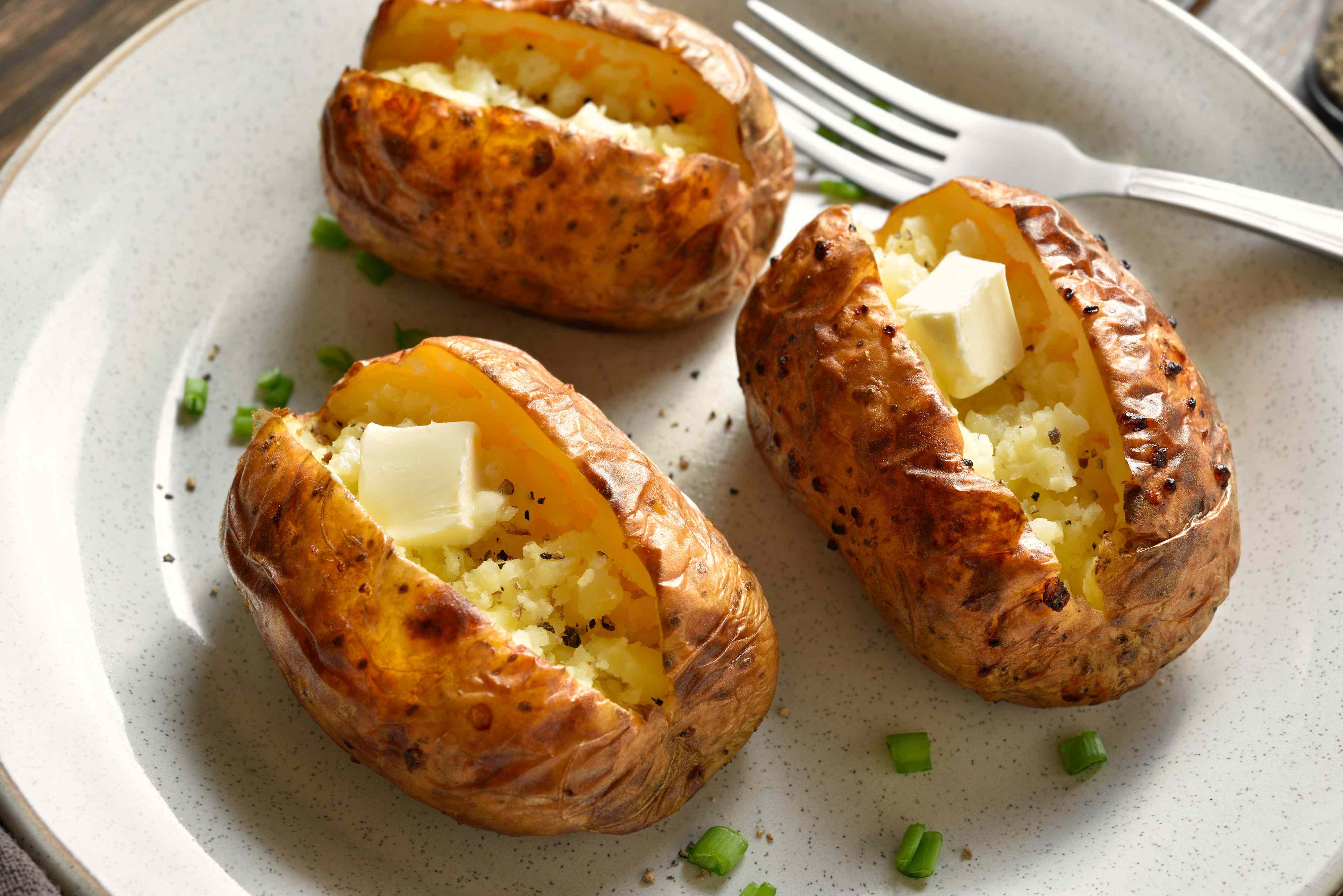
Whether you’re at home in your kitchen or out at a restaurant, baked potatoes are a comfort-food staple. They’re hearty, simple to make, budget-friendly, and easy to customize. However, many home cooks are missing out on a top-tier baked potato because of one common mistake.
Most people believe that wrapping potatoes in foil for baking delivers the tastiest results. In order to determine once and for all the best way to make a baked potato, I did a side-by-side comparison, baking one potato wrapped in aluminum foil and one without. It turns out that losing the foil will not only save you time, but also yields the crispiest skin and fluffiest interior.
Why You Should Ditch the Foil
Wrapping a baked potato in foil is a sure way to lock in moisture and create steam. As a result, the skin of the potato remains smooth and soft, with a damp and pliable texture, while the interior has a dense, slightly chewy consistency—similar to that of a boiled potato. In comparison to a fluffy roasted potato, those baked in foil have an earthier flavor (think dirt more so than aromatic), and can even smell and taste slightly metallic.
Contrary to what many people believe, baking a potato in aluminum foil actually slows down the cooking process. The foil acts as a shield, and so before the potato can bake through, the foil must absorb the heat of the oven first. The potato I baked in foil required nearly 20 minutes longer than the potato cooked on its own. If you don’t want to end up with a soft, dense potato that took longer to bake, ditch the foil.
How To Get the Crispiest Baked Potato Skin
Want crispy roasted skin, a fluffy and soft interior prime for all the fixings, plus some time saved in the cooking process? Along with making foil a distant memory, here are some other helpful tips.
Advertisement
It Starts With the Right Potato
The best baked potato begins with a russet. With its high starch content and thick skin, the exterior will be crunchy, crispy, and flavorful, and its dry interior will bake into tender, light, and fluffy clumps. Steer clear of waxy varieties such as red potatoes, fingerlings, and new potatoes.
Prep It Properly
Always begin by washing potatoes and scrubbing them well to remove dirt and residue. It is then imperative to dry them thoroughly and completely with a kitchen towel. Remember: Moisture creates steam, which softens the potato.
Next, poke the potato a few times with a fork or paring knife. Then, coat it generously with a high smoke-point fat, such as olive oil or bacon grease, and roll it generously in kosher salt or flaky salt. The goal is to fry the skin as it bakes.
Bake on High Heat
Begin by preheating the oven to 425°F. In order to crisp up the entire potato and prevent smoking from any oil that may drip, I place the prepared potatoes on a cooling rack over a parchment-lined sheet pan. Bake the potato for about one hour. When you smell the roasted exterior and nutty interior and press down on the dry skin to hear a crunch, the potato is done baking.
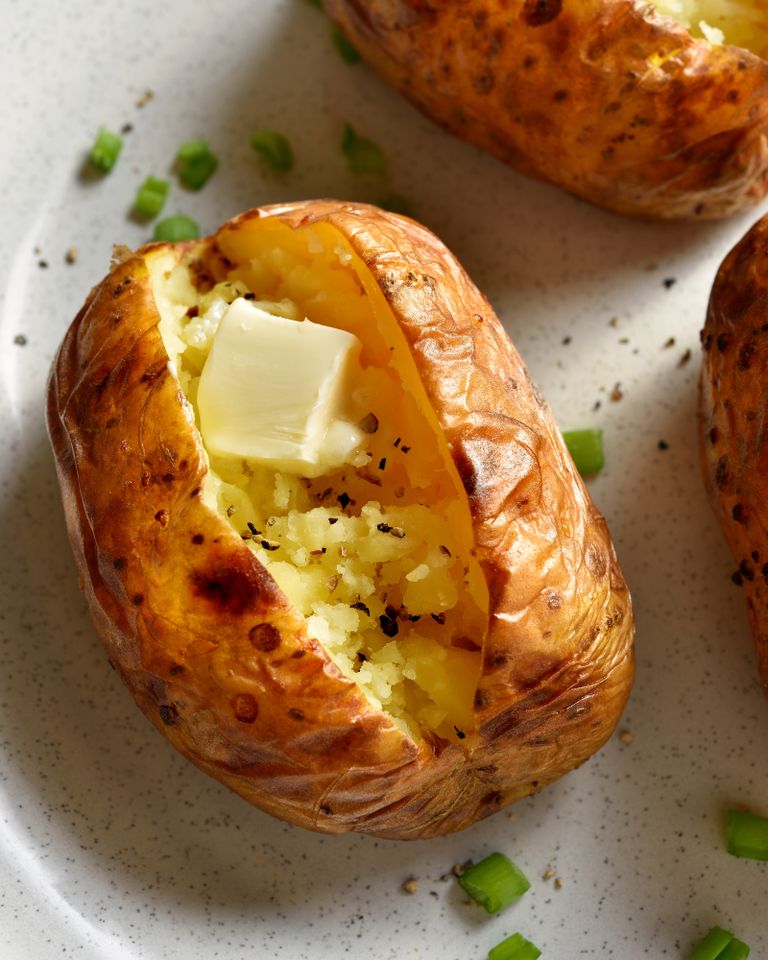
The skin of a perfectly baked potato will be rigid, crunchy, and firm. If you scrape a knife against the surface, it will resemble sandpaper. Upon cutting the potato open, the interior will be light, fluffy, and soft enough to break apart with a utensil. All you need now is a generous slab of butter, some salt and pepper, and all of your favorite baked potato fixings!
Read the original article on Simply Recipes