Showing posts with label Darrel Greene. Show all posts

Wednesday, January 19, 2022

Lucky 13


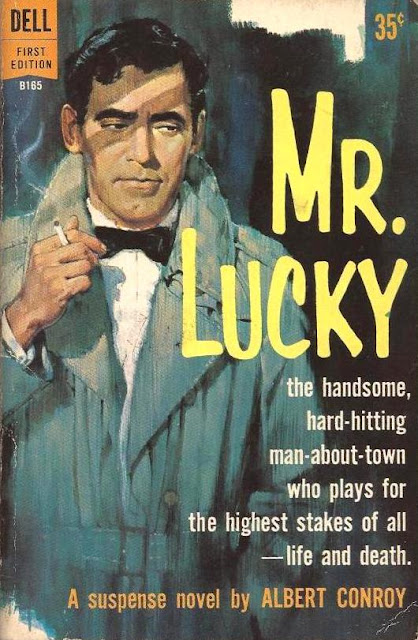
I can’t say that I have watched more than a few episodes of Mr. Lucky, the 1959-1960, Blake Edwards-created CBS-TV drama starring John Vivyan as an honest gambler and operator of a floating casino, with Ross Martin (later of The Wild Wild West) playing his right-hand man. Nor do I own the tie-in novel embedded above, the 1960 Dell release Mr. Lucky, by “Albert Conroy,” aka Marvin H. Albert (cover art by Mort Engel). But both came to mind as I thought about celebrating today’s 13th anniversary of Killer Covers’ launch.

The last year has been more trying than I had expected. This was partly due, of course, to the lingering COVID-19 pandemic, and partly because I’m extremely tired of working alone, bereft of office colleagues with whom I can bat ideas around and thereby help refine my thoughts on editorial coverage. Also discouraging—as I explained here earlier this month—was the fact that the exterior hard drive on which I had for so long been keeping much of my book-cover art, together with the vast majority of my video clips from old TV series, suddenly ceased operating. One day a few months ago, I went to retrieve something from those computer files … and nothing happened. The unit was plugged in, yet no electricity seemed to be reaching it. I hoped that my usual computer guru could fix things, tell me that all I needed was a new power cord, but he informed me that nothing could be done. I have spent more than a little time since, just trying to re-create files on which I have depended for posts in Killer Covers, The Rap Sheet, CrimeReads, and other sites.

Only with all of that done, can I finally look ahead to what the next year might bring. There are a couple of artist interviews I’d like to do for Killer Covers. In addition, I have in mind a few series of themed posts that should keep this blog’s readers entertained. And I want to get back to writing more regular pieces about individual paperback fronts of note. If I am lucky, all of those things will be possible.

Which brings me back to Mr. Lucky.

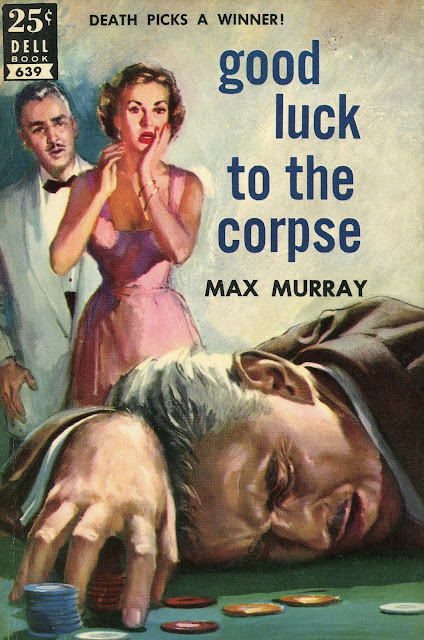
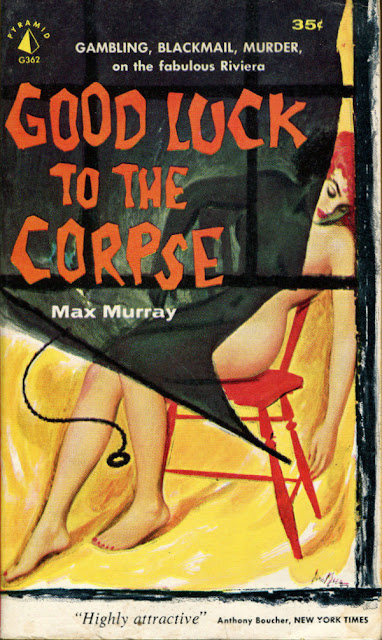
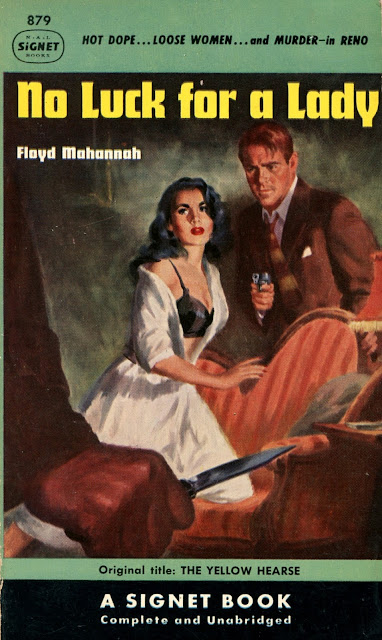
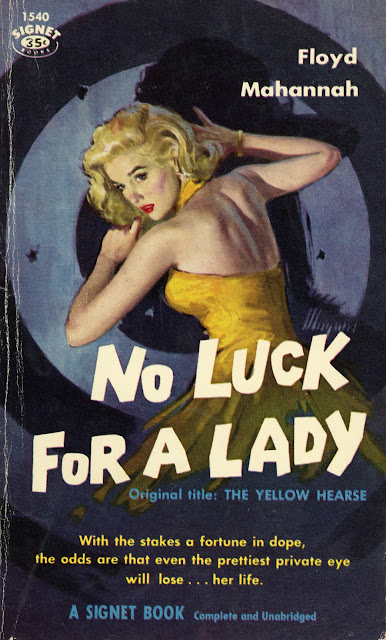
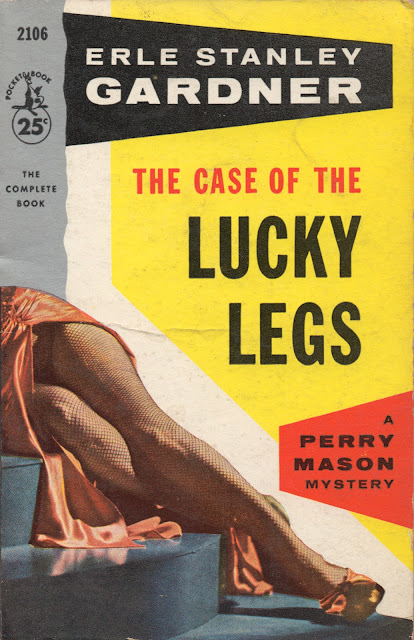
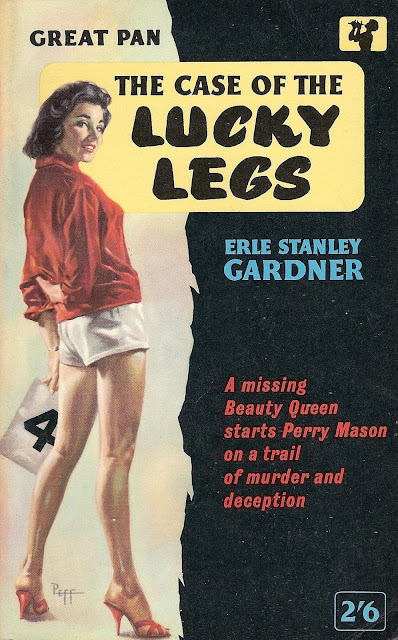
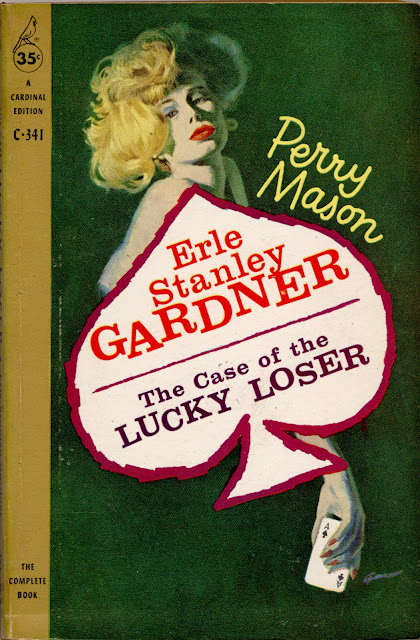
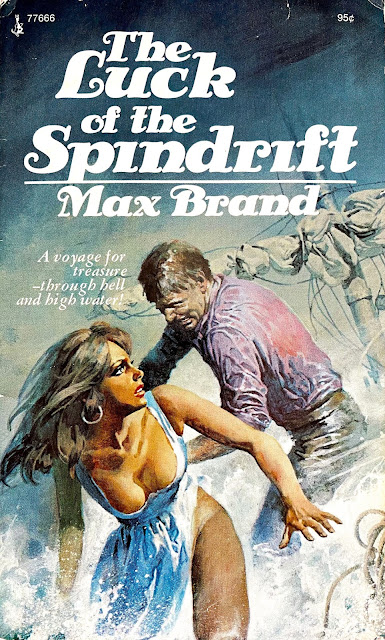
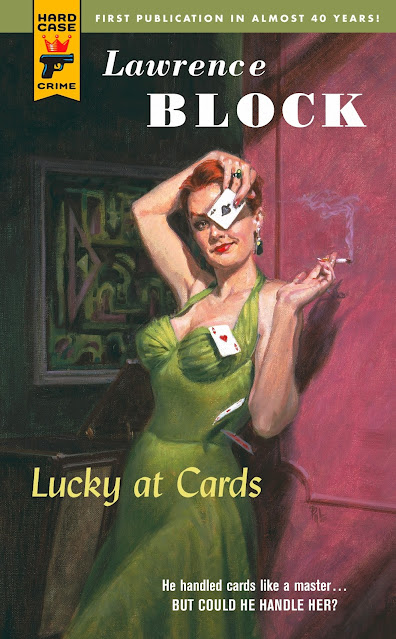
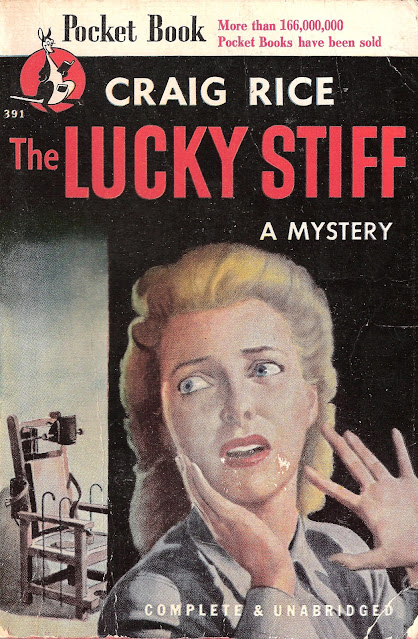
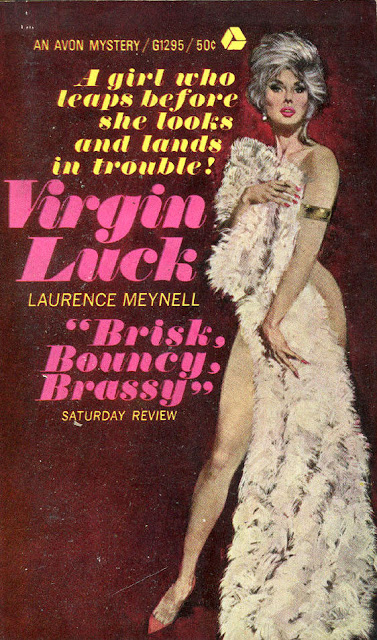
Despite occasional frustrations, I consider myself pretty damn fortunate to have found free time enough to keep Killer Covers going for these last 13 years. So let’s celebrate that success with 13 paperbacks that include “luck” in their titles. The fronts below feature the work of such artists as James Meese (the first Good Luck to the Corpse, 1952), Robert Maguire (the second No Luck for a Lady, 1958), Sam Peffer (the second Case of the Lucky Legs, 1960), Darrel Greene (The Case of the Lucky Loser, 1959), Chuck Pyle (Lucky at Cards, 2011), and Ron Lesser (Virgin Luck, 1960).

Let me just thank everyone who has followed Killer Covers over these last 12 months, ever since the blog’s last anniversary. With any luck, we’ll all be around for many years—and many covers—to come.

Sunday, May 22, 2016

Rap Party: “The Case of the One-Eyed Witness”

Toasting The Rap Sheet’s first decade with a cover countdown.


The Case of the One-Eyed Witness, by Erle Stanley Gardner (Cardinal, 1959). Illustration by Darrel Greene.

Th-the-th-th-that’s all folks! To learn more about The Rap Sheet’s landmark 10th anniversary, simply click here.

Tuesday, December 1, 2015

Would You Like to Have a Seat?


Frankly, I didn’t even notice it when I put up the front of Leslie Charteris’ Thanks to the Saint last week, but that Pocket edition’s cover painting by Darrel Greene shows a well-proportioned redhead seated in what’s known as a Butterfly chair, a style of sling chair often associated with mid-20th century architecture. After seeing my post, Art Scott, an authority on book-cover illustrations and the co-author of last year’s The Art of Robert E. McGinnis, wrote to point out that Thanks to the Saint doesn’t represent the only instance of a Butterfly chair landing on a classic crime novel’s façade.

In fact, Scott explains, “one of the sidelight digressions” of a paperback cover-art slideshow he has presented at Bouchercon and other events looks at “popular props,” including sling chairs. Or as he calls them, “Chinese finger traps for your butt.”

Probably like a great many of you, I have found myself sinking down into many Butterfly chairs over the years, but I’ve never known anything about their history. Until today. Anna Hoffman, a contributor to the Web site Apartment Therapy, writes that
The Butterfly Chair is known by many aliases: the Hardoy chair, the sling chair, or the BKF chair. In my college dorm room, it was the Nap Chair, as close to a hammock as we could get in the wintry Northeast. By any name, the chair has been wildly popular since its creation, offering users an easy-going surfer dude of a lounger. But despite these relaxed associations, the chair’s origins are rooted in serious history, from 19th-century military furniture to Le Corbusier’s architecture studio.

The first of the Butterfly chairs came out of the Argentinian architectural firm, Grupo Austral, in 1938. The Austral Group was comprised [sic] of Jorge Ferrari-Hardoy, Juan Kurchan and Antonio Bonet, who had met as assistants in Le Corbusier’s Paris atelier. The chair is occasionally known as the BKF chair, for Bonet-Kurchan-Ferrari, but an official letter from the firm attributed primary authorship of the design to Ferrari-Hardoy, which is why it is also occasionally known as the Hardoy chair.

The chair may have been designed for a project the Austral Group was building in Buenos Aires, but it was first introduced at the 3rd Salon de Artistas Decoradores, a design exhibition held in that city in 1940, where it won two prizes. …

First mass-produced in the U.S. by Alvar Aalto’s company Artek (the name a contraction of “art” and “technology”), the chair was composed of two bent tubular steel rods welded together, over which a leather sling was hooked, creating a suspended seat. … While the Butterfly chair was perhaps the first of its kind in tubular steel, similar constructions in wood had been around at least since the 1850s, when an English engineer named Joseph Beverly Fenby created a folding “campaign” sling chair for use by the British military …
Scott sent along half a dozen examples of other paperback fronts incorporating Butterfly chairs. At the top of this post, for instance, you’ll see The Living End, by Frank Kane (Dell, 1957), showcasing an illustration by Victor Kalin. On the right is Case of the Laughing Virgin, by Jonathan Craig (Gold Medal, 1960), with artwork again by Darrel Greene. And you’ll find embedded below: Felicia, by Mark Dane (a pseudonym used by the prolific Mike Avallone; Belmont, 1964); Gold Comes in Bricks, by A.A. Fair (actually, Erle Stanley Gardner; Dell, 1961), with a cover illustration by Robert McGinnis; Strangle Hold, by Mary McMullan (Dell, 1953), featuring cover by Fred Scotwood; and The Myopic Mermaid, by Carter Brown (Signet, 1961).

Click on any of these images to open an enlargement.


Thursday, November 26, 2015

A Day to Give Thanks … in Some Way


Thanks to the Saint, by Leslie Charteris (Pocket, 1959). Illustration by Darrel Greene. You’ll find another Thanksgiving-appropriate paperback cover here.
