AI wants to be your personal banker, but there’s a catch

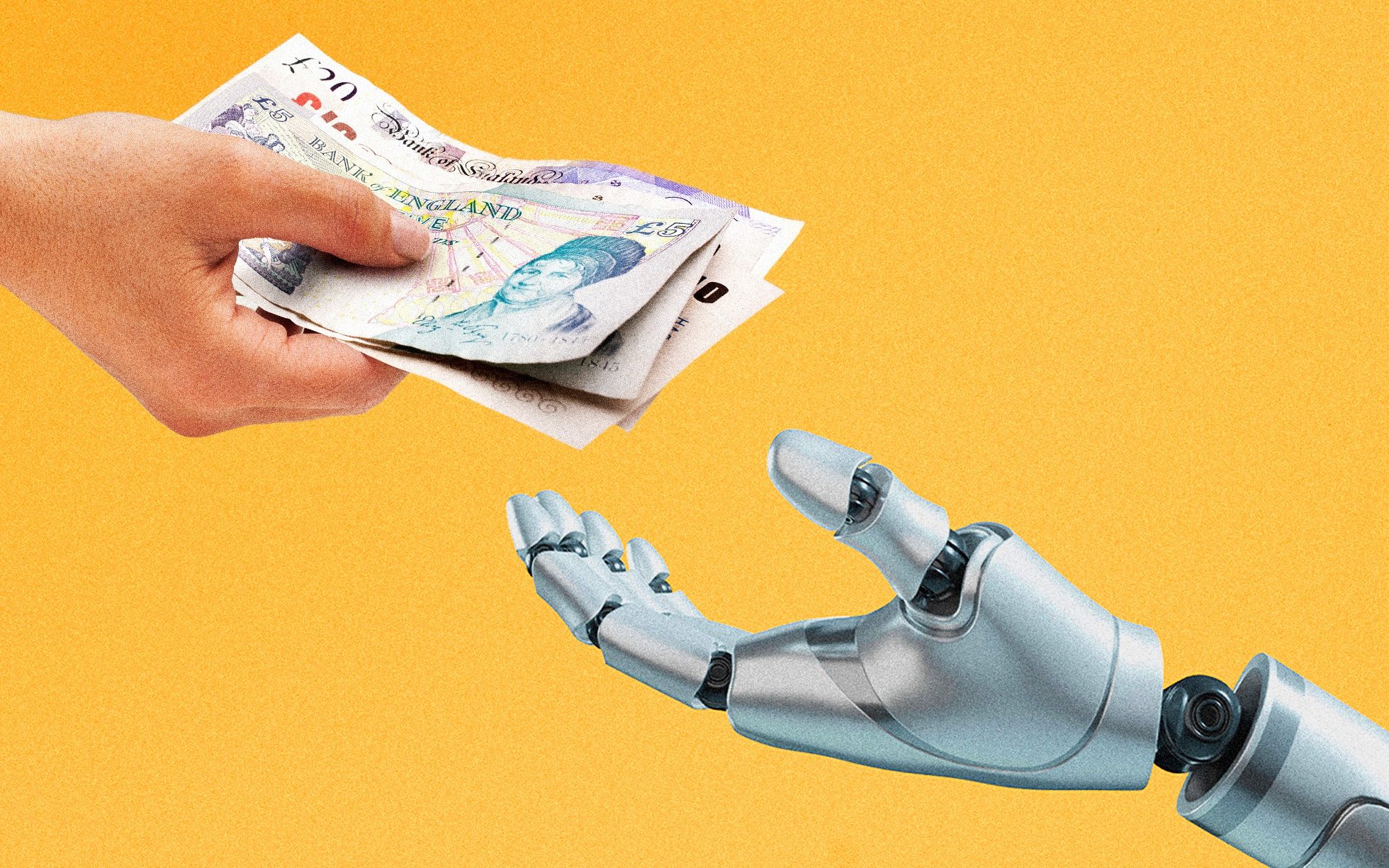
It was hardly surprising that Niccolò Gloazzo was an early adopter of AI.
As a start-up founder, it was second nature for the young tech entrepreneur to deploy the tech tool for all manner of business tasks.
But last year he took the plunge and started using it for tasks closer to home, namely his personal finances. Gloazzo aimed to build an AI-powered financial consultant for himself that could outperform most human advisers.
By stringing together Claude’s latest AI model and some programming code, he was able to build a tool that would provide monthly reports and issue stock-picking recommendations, tailored to him.
“It knows how much I make and what my savings rate is over a month,” Gloazzo says. “It knows that I purchased a house in the past, my age, how aggressive[ly] I want to invest.”
Gloazzo is one of a growing number of people looking to AI to arrange their finances.
According to a report by McKinsey, the consultancy, a quarter of UK consumers are using generative AI at least monthly for financial tasks, with that figure rising to nearly 60pc for high-income individuals.
That poses a threat to mainstream banks and wealth management businesses, especially as AI advances and becomes even more deeply integrated with people’s money.
For now, AI agents can recommend products and compare savings rates, but in the future they might be able to automatically move idle balances to accounts which earn you more money.
If just 5pc to 10pc of balances moved this way, deposit profits could plunge by 20pc or more, according to McKinsey. The consultancy expects this to happen within the next decade, but others in the industry expect the changes to come much sooner.
“I don’t believe it’ll be 10 years. I think we’re almost already there,” says Steve Le Roux, the founder and chief executive of Envel, one of the first AI-powered banks, which was later sold.
“I could literally build a system tomorrow that will automate almost everything. There’s a lot of activity right now that’s not being talked about that you won’t necessarily know about.”
Online-only banks have also been quick to introduce AI services into their apps.
Monzo recently rolled out an AI savings feature to allow users to work with a bot to come up with a savings plan – and then have that plan automated into their accounts to help them hit their goals.
The company also uses AI agents to handle routine customer requests, such as managing a savings pot or checking a transaction.
However, AI chatbots do not always work as intended. Revolut’s automated assistant was caught incorrectly telling customers looking to cancel their premium subscription that they must pay a break fee.
Revolut told customers in early August that it would swap its AI answer engine from Perplexity to ChatGPT in September.
In a statement at the time, Revolut apologised and said that it was not charging an early termination fee.
There are also broader risks, not just of individual AI errors or “hallucinations” but also of major incidents affecting a popular chatbot that might have broad implications.
Advertisement
Dame Meg Hillier, chair of the treasury select committee, warned earlier this year that while the City had raced to embrace AI, she wasn’t sure it would be prepared for a major event.
A new study from tech firm Saturn also recently showed that AI chatbots provided the wrong answer to financial queries 57pc of the time, raising questions about their usefulness.
Gloazzo has spent plenty of time building and upgrading his AI financial planner, but a human still remains in the loop.
“The tricky part is that you really need to trust AI … but ultimately it’s always me making the final call,” he says. “I’m never letting AI fully manage my portfolio. The AI is just giving me a recommendation and then I always make the final call based on that.”
Many in the wealth management industry believe that the value of a human touch should keep their jobs safe, at least in the medium term.
“There is what I would always call a spreadsheet decision, which is probably an AI decision as well, which is where you just crunch numbers,” says Olly Cheng, a senior financial planner at Rathbones.
“None of that takes into account you as a human at the other end, your feelings, your emotions, how it’s going to impact you when the ups and downs happen.”
Cheng says he has still seen more clients dabble in AI before approaching a professional adviser.
“We’re still getting new clients in the door where we’ll meet with them and they will openly say: ‘I’ve done this myself for a while. I use AI to do a bit of cash-flow modelling to see where I am, getting towards retirement’,” Cheng adds.
However, when those same clients have a big decision to make, they still prefer to have a real person with the experience of seeing hundreds of people go through the same process, he says.
More companies within the wealth and banking sector are experimenting with AI to see how they might be able to offer more services to more people.
At the same time, AI giants are also building products designed to take on the established players.
ChatGPT announced a “personal finance experience” for the chatbot’s paid users in the US several months ago.
The tool allows customers to securely connect their financial accounts, see a dashboard of where their money is going and ask ChatGPT questions based on their own finances. Anthropic is also reportedly testing a similar feature, called Claude Money.
However, risks remain – not just in terms of AI going haywire, but also the possibility that an individual’s confidential bank information might be used to train the next generation of AI models.
“We’re giving them a lot of data and a lot of information about our life that they’re using to train their next model and [that’s] something people never think about,” Le Roux said.
“It’s a very grey area. It’s an area that people really don’t want to talk about, but it’s a huge concern if you start to dig into that.”
Gloazzo, for his part, isn’t losing sleep over it.
But as Anthropic and OpenAI race to eat into the wealth management industry, what AI knows about you and what it does with that information will only become a more pressing concern.