The Genius Logic of the NATO Phonetic Alphabet: How It Was Created & How It Works

Most of us can rat­tle off the first few words-that-stand-for-let­ters of the NATO pho­net­ic alpha­bet. Alfa, Bra­vo, and Char­lie no doubt come right to mind, and depend­ing on how many war movies you’ve seen, so may Delta, Echo, and Fox­trot. But how many of us would rec­og­nize Kilo, Mike, and Sier­ra? For that mat­ter, how much do any of us know about how these par­tic­u­lar words came to be used to spell out oth­er words when com­mu­ni­cat­ing over walkie-talkies or oth­er low-fideli­ty com­mu­ni­ca­tion sys­tems? In the video above for his YouTube chan­nel Rob­Words, YouTu­ber Rob Watts explains the devel­op­ment of and log­ic behind the NATO pho­net­ic alpha­bet, wast­ing no time in clar­i­fy­ing that it isn’t a pho­net­ic alpha­bet, nor was it cre­at­ed by NATO.

What we actu­al­ly have here, Watts says, is a “spelling alpha­bet,” and its sto­ry goes back to the inven­tion of the tele­phone in the eigh­teen-sev­en­ties. “Ear­ly tele­phon­ists found that if ever they need­ed to spell some­thing out, like some­one’s name, one let­ter would get mis­heard as anoth­er.” The idea of express­ing each let­ter with a com­mon word start­ing with that let­ter arose nat­u­ral­ly, though fig­ur­ing out exact­ly which words to use took a lot more tri­al and error.

In the ear­ly nine­teen-tens, West­ern Union pub­lished a spelling alpha­bet con­sist­ing most­ly of the names of peo­ple and places: Adams, Boston, Chica­go, Den­ver, Edward, and so on. By World War I, the British army had also imple­ment­ed a rather more eccen­tric ver­sion, using words like Beer, Mon­key, Nuts, Orange, Pip, and York­er; by World War II, “every armed ser­vice in Britain and the U.S. had devel­oped its own spelling alpha­bet.”

In light of the rapid­ly glob­al­iz­ing nature of human affairs, and not just the mil­i­tary kind, the need for a sin­gle uni­ver­sal spelling alpha­bet became press­ing. It was­n’t until the estab­lish­ment of the Inter­na­tion­al Civ­il Avi­a­tion Orga­ni­za­tion, meant to over­see the skies in peace­time, that earnest work began on a revi­sion of the U.S.-U.K. com­bined forces’ exist­ing spelling alpha­bet, incor­po­rat­ing Eng­lish words eas­i­ly pro­nounce­able by non-Eng­lish speak­ers, while also being min­i­mal­ly con­fus­able for one anoth­er. By 1956, ICAO final­ized its list, which has remained the NATO pho­net­ic alpha­bet (or, offi­cial­ly, the Inter­na­tion­al Radiotele­pho­ny Spelling Alpha­bet) we all know today — or we at least par­tial­ly know. It may well be worth your time to mem­o­rize the rest, since you nev­er know when you’ll have to keep your Papas and Que­becs straight.

Relat­ed Con­tent:

The Alpha­bet Explained: The Ori­gin of Every Let­ter

The Evo­lu­tion of the Alpha­bet: A Col­or­ful Flow­chart, Cov­er­ing 3,800 Years, Takes You From Ancient Egypt to Today

The Enig­ma Machine: How Alan Tur­ing Helped Break the Unbreak­able Nazi Code

What Eng­lish Would Sound Like If It Was Pro­nounced Pho­net­i­cal­ly

Based in Seoul, Col­in Marshall writes and broad­casts on cities, lan­guage, and cul­ture. He’s the author of the newslet­ter Books on Cities as well as the books 한국 요약 금지 (No Sum­ma­riz­ing Korea) and Kore­an Newtro. Fol­low him on the social net­work for­mer­ly known as Twit­ter at @colinmarshall.

Why Reading Egyptian Hieroglyphics Is Easier Than You Think

We’ve fea­tured Egyp­tol­o­gist Ilona Regul­s­ki here on Open Cul­ture a few times before. Once, she explained how to read ancient Egypt­ian hiero­glyphs; anoth­er time, she told us what the Roset­ta Stone actu­al­ly says. It was, per­haps, inevitable that she would cross paths with Rob Watts, cre­ator of the YouTube chan­nel Rob­Words, whose videos we often post. When he made the jour­ney to Berlin’s Neues Muse­um, and specif­i­cal­ly to its Egypt­ian Muse­um, Regul­s­ki was the expert he sought out to tell him — and us — all about how hiero­glyphs, lit­er­al­ly “sacred carv­ings,” actu­al­ly make words.

Faced with a stone chis­eled full of hiero­glyphs, where do we start? Ancient Egypt­ian texts are all read from top to bot­tom, but some go left to right, and oth­ers right to left. To know which way, Regul­s­ki says, we must first look for sym­bols with a clear front and back, such as those in human or ani­mal shapes.

Some names are writ­ten in blocks, them­selves read from top to bot­tom — unless they con­tain a sign refer­ring to a god, which, of course, gets cus­tom­ar­i­ly ele­vat­ed to the top. But even if we under­stand the exact order in which we should read a giv­en string of hiero­glyphs, the ques­tion remains: how do we actu­al­ly do that read­ing?

Though many hiero­glyphs do appear to be fig­u­ra­tive, with their rec­og­niz­able forms of birds, bugs, arms, legs, and such, only some­times are they meant to rep­re­sent what they look like. Regul­s­ki explains that some of these signs are let­ters, and can be pro­nounced in much the same way as our own alpha­bet. What looks like a mouth sounds like an r; a high­ly abstract­ed bread loaf, t; a horned viper, ph; an owl, m. There is, of course, more to it. Signs can be com­bined not just to indi­cate sound, but also to dis­am­biguate mean­ing. As you may have noticed, hiero­glyph­ic writ­ing is also what Watts calls a “vow­el-free zone.” Exact­ly which of those sounds go where is, like cer­tain oth­er unre­solved aspects of hiero­glyphs, a mat­ter of ongo­ing expert inquiry. But Egyp­tol­o­gists, as see­ing Regul­s­ki in action reminds us, are a ded­i­cat­ed bunch.

Relat­ed con­tent:

How to Read Ancient Egypt­ian Hiero­glyphs: A British Muse­um Cura­tor Explains

How to Carve Hiero­glyphs Just Like the Ancient Egyp­tians Did

You Could Soon Be Able to Text with 2,000 Ancient Egypt­ian Hiero­glyphs

An Ani­mat­ed Intro­duc­tion to the Roset­ta Stone, and How It Unlocked Our Under­stand­ing of Egypt­ian Hiero­glyphs

What the Roset­ta Stone Actu­al­ly Says

What Ancient Egypt­ian Sound­ed Like & How We Know It

Based in Seoul, Col­in Marshall writes and broad­casts on cities, lan­guage, and cul­ture. He’s the author of the newslet­ter Books on Cities as well as the books 한국 요약 금지 (No Sum­ma­riz­ing Korea) and Kore­an Newtro. Fol­low him on the social net­work for­mer­ly known as Twit­ter at @colinmarshall.

Where Did Europe’s Countries—and the United Kingdom—Get Their Names?

The typ­i­cal stu­dent trav­el­ing on a Eurail pass will stop in such lands as Öster­re­ich, Italia, Česko and Schweiz — also known as Suisse, Svizzera, and Svizra. If that stu­dent hap­pens to hail from the Eng­lish-speak­ing world, the names Aus­tria, Italy, the Czech Repub­lic (the recent move­ment for Czechia notwith­stand­ing), and Switzer­land will sound more famil­iar. But the ques­tion inevitably comes to mind while rid­ing between one his­tor­i­cal­ly and cul­tur­al­ly rich cap­i­tal to anoth­er: where did all these coun­tries get their names in Eng­lish? How on Earth, for exam­ple, did Deutsch­land, known in cer­tain oth­er Euro­pean lan­guages as Alle­magne, Ale­ma­nia, or Ale­man­ha, get to be called Ger­many?

Lan­guage YouTu­ber Rob­Words has an expla­na­tion. “To the Romans, it was the land of the Ger­mani, their name for the weird peo­ple speak­ing gib­ber­ish lan­guages to the east of the Riv­er Rhine,” he says in the video above, stand­ing in a for­est con­ve­nient­ly locat­ed in Ger­many itself.

They “also used the word ale­man­ni to describe a con­fed­er­a­tion of Ger­man­ic peo­ple, and that’s where a load of oth­er lan­guages get their word for Ger­many too.” And the mean­ing of Deutsch­land? “Land of the Dutch,” that last actu­al­ly being the descen­dant of an old Ger­man­ic word mean­ing ‘pop­u­lar’ or ‘peo­ple’ ” — which, before that time, referred not sim­ply to human beings, but the pop­u­la­tion who spoke the region’s wide­ly under­stood “pop­u­lar lan­guages.”

Behind most every Euro­pean coun­try’s Eng­lish name lies a sto­ry, if some­times an ambigu­ous, con­test­ed, and con­tro­ver­sial one. Most are also his­tor­i­cal­ly illu­mi­nat­ing: take Bel­gium, once con­sid­ered part of the Nether­lands (home of the peo­ple we now call Dutch), whose name derives from a tribe, or con­fed­er­a­tion of tribes, known in Latin as the Bel­gae: a word “adopt­ed by peo­ple liv­ing in the south­ern Low Coun­tries dur­ing the region’s strug­gle for inde­pen­dence from Spain in the six­teenth cen­tu­ry.” Rob­Words has more such sur­pris­ing facts to reveal in the video just above, in which he breaks down the names of all the coun­tries in the Unit­ed King­dom, cov­er­ing Ire­land, Scot­land, Wales, his native Eng­land, and also the word Britain itself, as well as the Great often attached to it. The lat­ter isn’t a boast, he stress­es, but rather a means of dis­tin­guish­ing the island from part of France. As for which part, you’ll have to watch to find out.

Relat­ed Con­tent:

A Map Shows What Every Coun­try in the World Calls Itself in its Own Lan­guage: Explore the “Endonyms of the World” Map

The Sur­pris­ing Pat­tern Behind the Names of Col­ors Around the World

A Map of How the Word “Tea” Spread Across the World

Wel­come to Llan­fair­p­wll­gwyn­gyll­gogerych­wyrn­drob­wl­l­l­lan­tysil­i­o­gogogoc, the Town with the Longest Name in Europe

The His­to­ry of Europe from 400 BC to the Present, Ani­mat­ed in 12 Min­utes

The Entire His­to­ry of Eng­lish in 22 Min­utes

Based in Seoul, Col­in Marshall writes and broad­casts on cities, lan­guage, and cul­ture. He’s the author of the newslet­ter Books on Cities as well as the books 한국 요약 금지 (No Sum­ma­riz­ing Korea) and Kore­an Newtro. Fol­low him on the social net­work for­mer­ly known as Twit­ter at @colinmarshall.

Hear the First Book of Homer’s Iliad Read Aloud in the Original Greek

You can, of course, learn the Greek lan­guage as it’s spo­ken today. You can also learn Greek as it was spo­ken in antiq­ui­ty — and as it was, until fair­ly recent­ly in his­tor­i­cal time, taught to stu­dents in the mod­ern West. But it’s a fair­ly dif­fer­ent endeav­or again to learn Greek as Homer spoke it. The fact of the mat­ter is that no human being ever real­ly spoke like Achilles, Agamem­non, Odysseus, Pene­lope, or any of the oth­er char­ac­ters in the Ili­ad and Odyssey. Home­r’s many lit­er­ary achieve­ments through these works include the cre­ation and com­mand of a kind of syn­the­sized poet­ic Greek, com­bin­ing qual­i­ties of region­al Ion­ic and Aeolic dialects with var­i­ous forms and expres­sions that were out­dat­ed even in the eighth cen­tu­ry BC. If it served the meter, Homer used it.

Need­less to say, when most of us attempt to read Homer aloud in the orig­i­nal, we get it all or most­ly wrong, even if we’re famil­iar with mod­ern Greek. We’d have to spend a long time indeed in the world of clas­si­cists before hear­ing a more accu­rate record­ing than the one above, deliv­ered by a YouTu­ber called Thomas Whichel­lo.

On his chan­nel, Whichel­lo spe­cial­izes in per­form­ing ven­er­a­ble lit­er­ary texts with a pro­nun­ci­a­tion and cadence as close to peri­od-accu­rate as pos­si­ble, often in the orig­i­nal lan­guage, some­times with his own musi­cal accom­pa­ni­ment. He’s done read­ings of the Bible, Shake­speare, Keats, and Wilde, but none so far has been so pop­u­lar as his ren­di­tion of the first book of the Ili­ad, accom­pa­nied by sub­ti­tles of Home­r’s text and an Eng­lish trans­la­tion.

A Greek here in 2026 with no par­tic­u­lar knowl­edge of the clas­si­cal lan­guage may under­stand a quar­ter of the indi­vid­ual words Whichel­lo uses, and maybe half of them in cer­tain pas­sages. Actu­al­ly being able to fol­low the sto­ry, how­ev­er, is anoth­er mat­ter. Still, you can get a sur­pris­ing amount out of the video even if you under­stand noth­ing at all, since Whichel­lo is aim­ing not just for lin­guis­tic accu­ra­cy, but also emo­tion­al res­o­nance in his deliv­ery. Ignore his glass­es, but­ton-down shirt, micro­phone, and win­dow frame, and you could almost be sit­ting around a camp­fire with him near­ly 30 cen­turies ago. Note, also, that the com­menters include gen­uine clas­si­cists who call his the best read­ing they’ve ever heard — as well as view­ers, cre­den­tialed or oth­er­wise, eager to hear him name all those mighty Achaean ships in Book 2.

Relat­ed con­tent:

Watch All 18,225 Lines of the Ili­ad Read by 66 Actors in a Marathon Event For an Audi­ence of 50,000

Hear What Homer’s Odyssey Sound­ed Like When Sung in the Orig­i­nal Ancient Greek

Learn Ancient Greek in 118 Free Lessons: A Free Online Course from Bran­deis & Har­vard

The Ancient Greeks: A Free Online Course from Wes­leyan Uni­ver­si­ty

Lis­ten to The Epic of Gil­gamesh Being Read in its Orig­i­nal Ancient Lan­guage, Akka­di­an

Hear Beowulf and Gawain and the Green Knight Read in Their Orig­i­nal Old and Mid­dle Eng­lish by an MIT Medieval­ist

Based in Seoul, Col­in Marshall writes and broad­casts on cities, lan­guage, and cul­ture. He’s the author of the newslet­ter Books on Cities as well as the books 한국 요약 금지 (No Sum­ma­riz­ing Korea) and Kore­an Newtro. Fol­low him on the social net­work for­mer­ly known as Twit­ter at @colinmarshall.

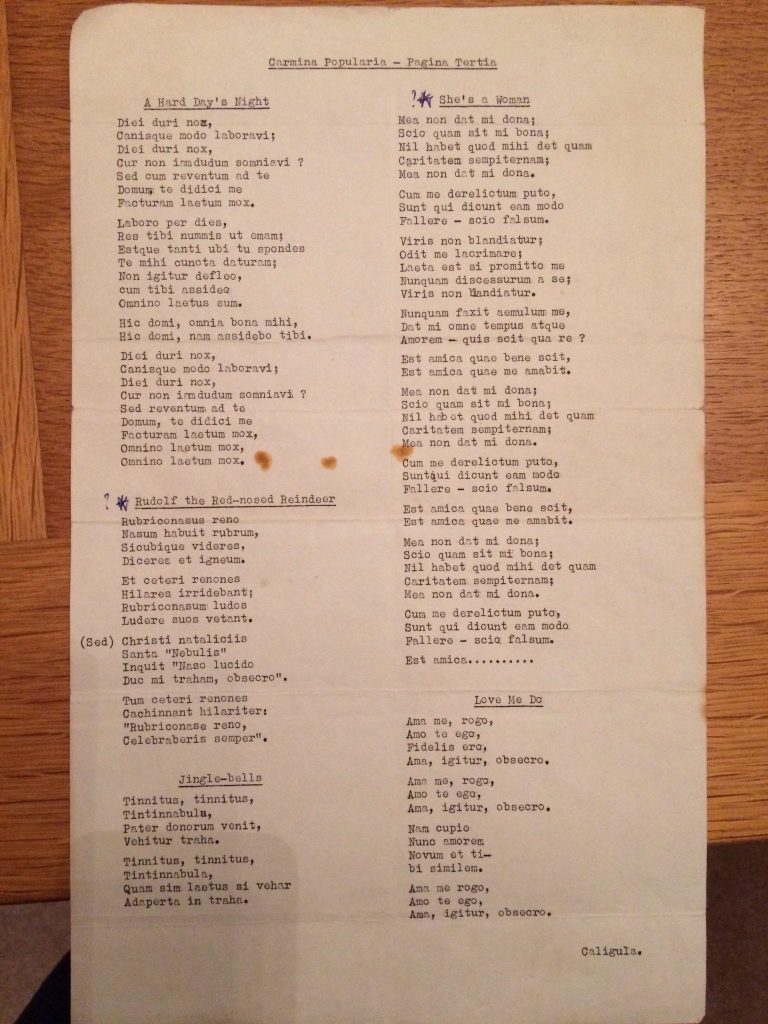
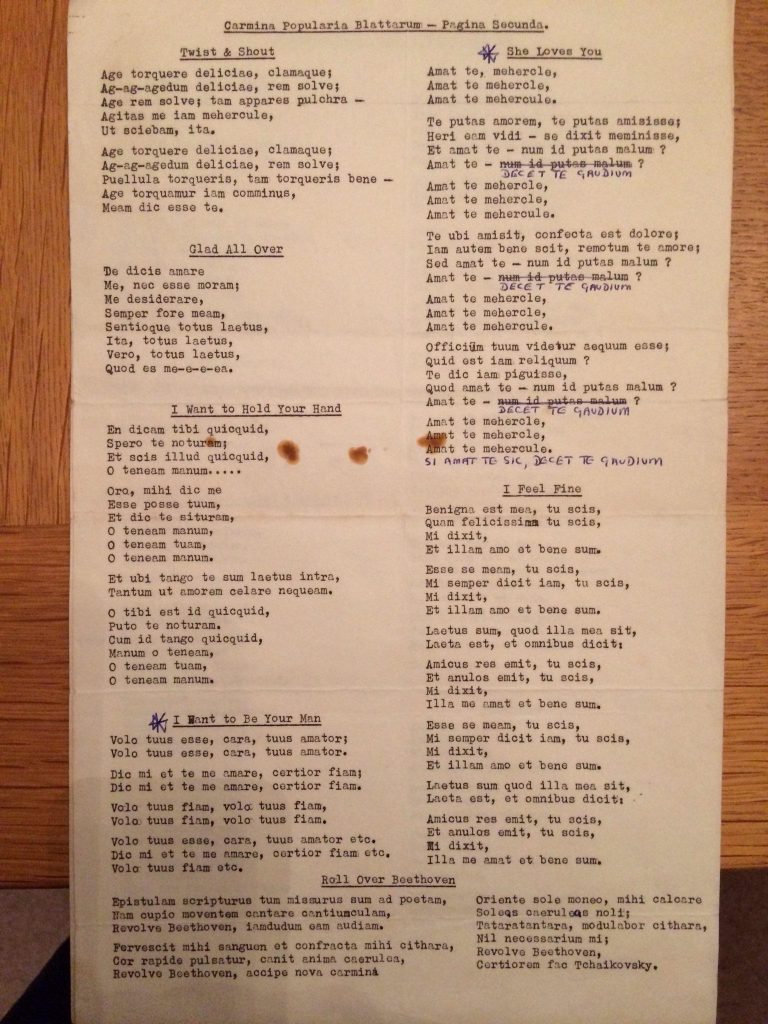
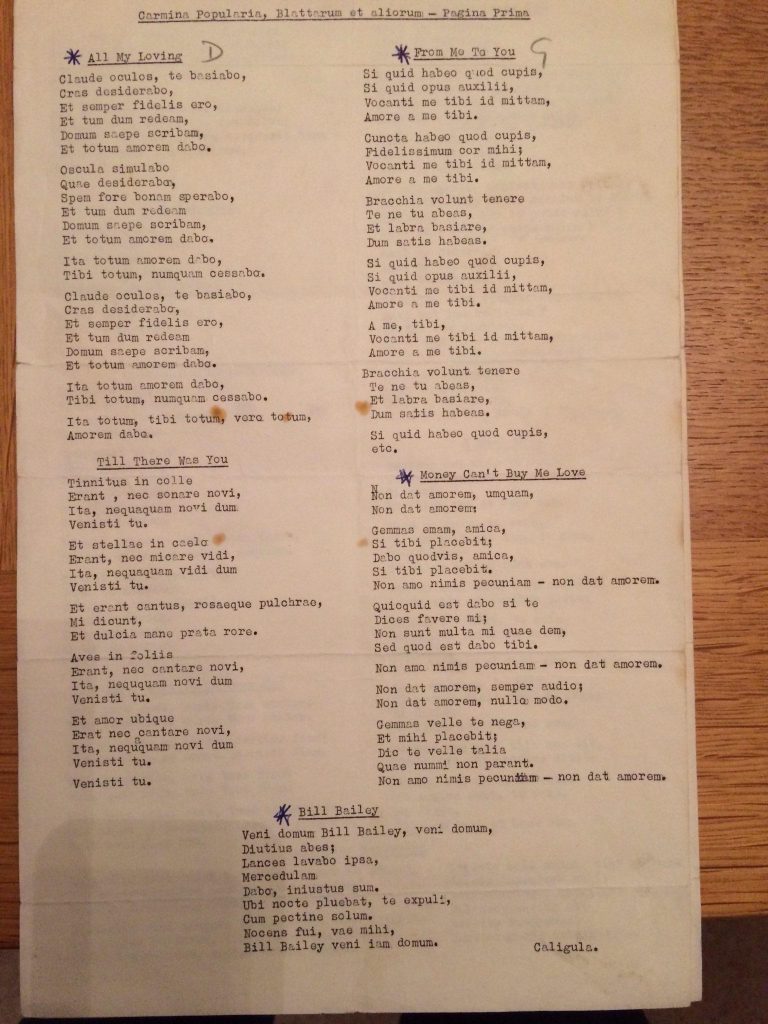
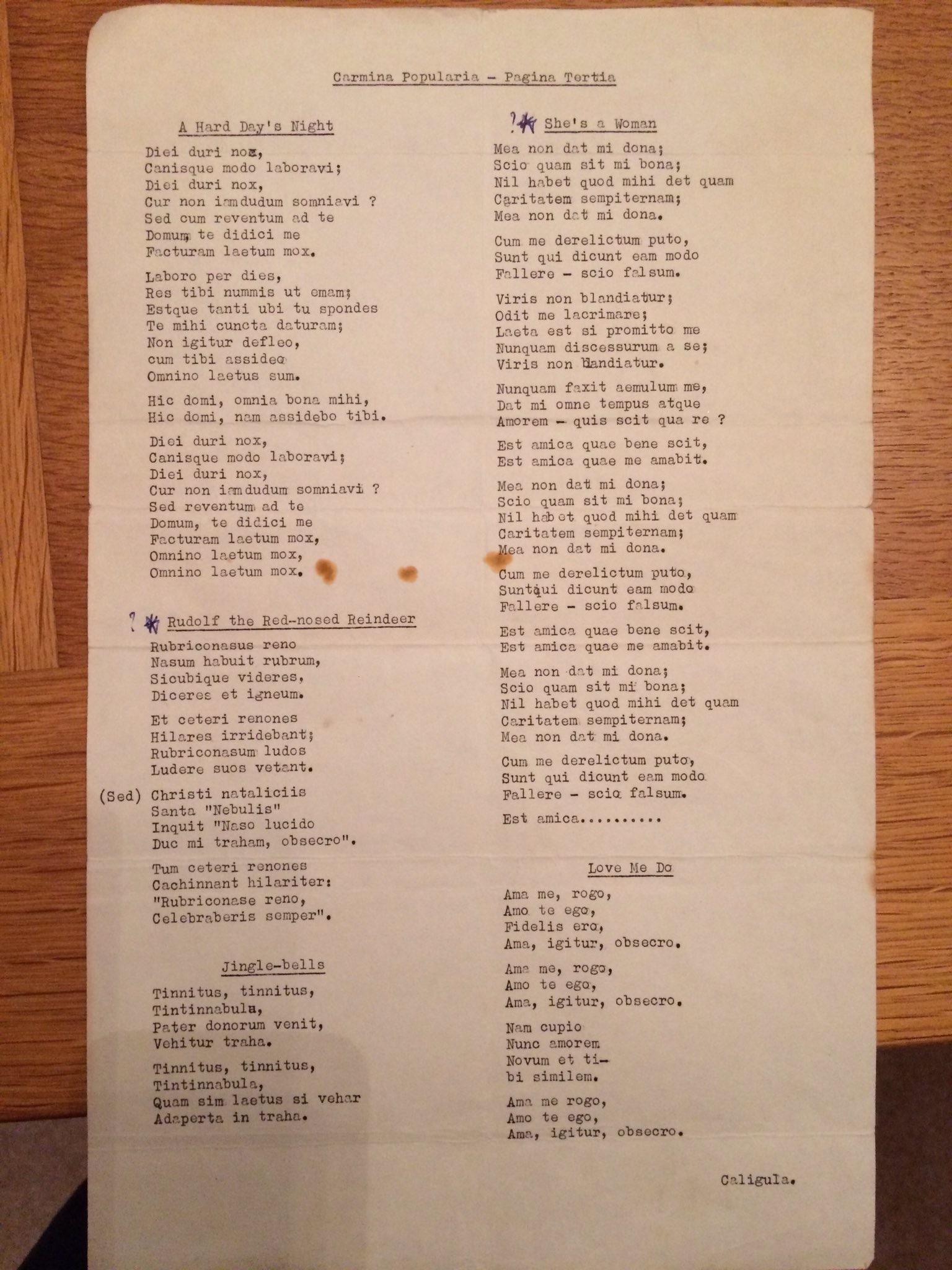
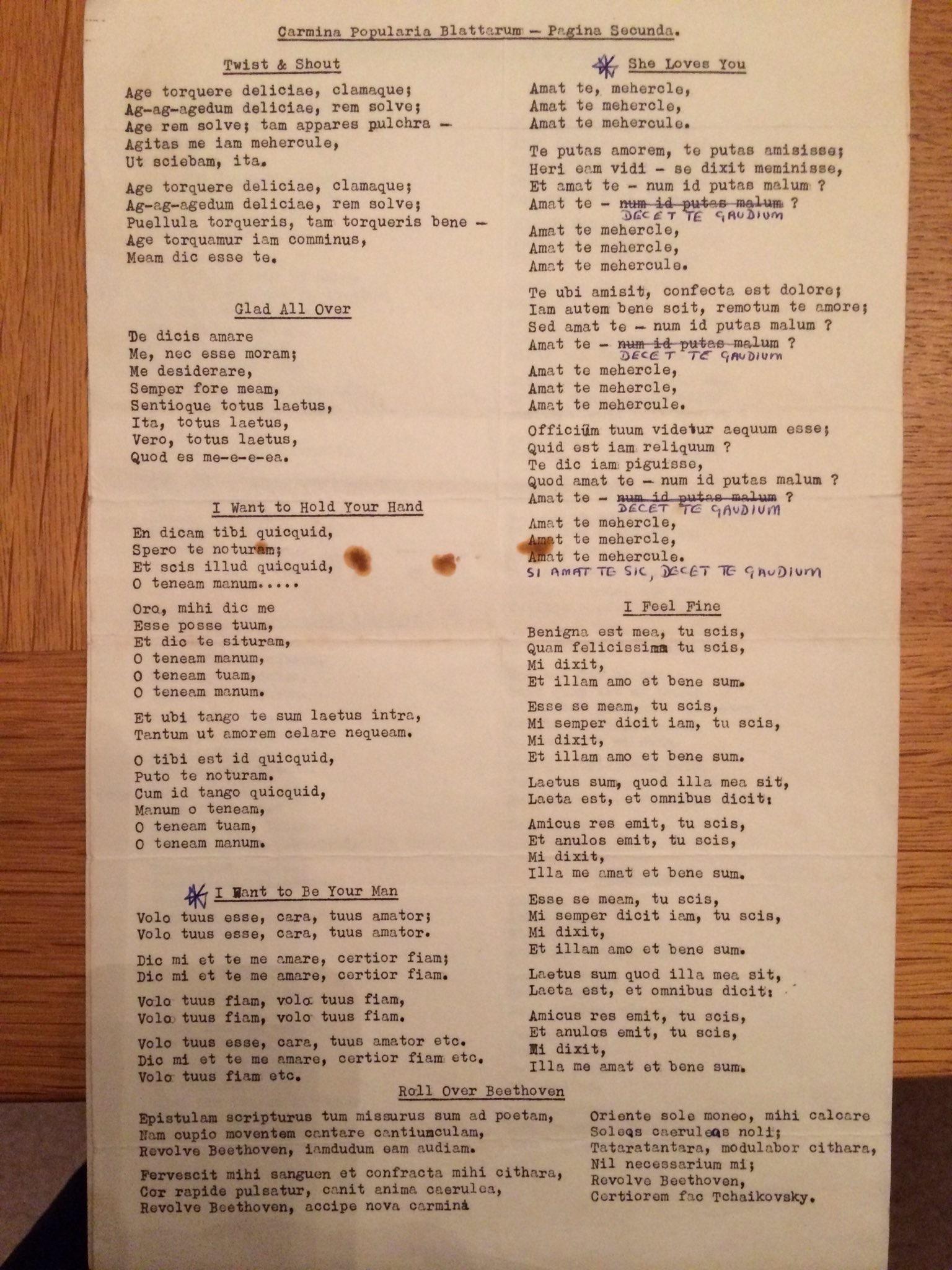
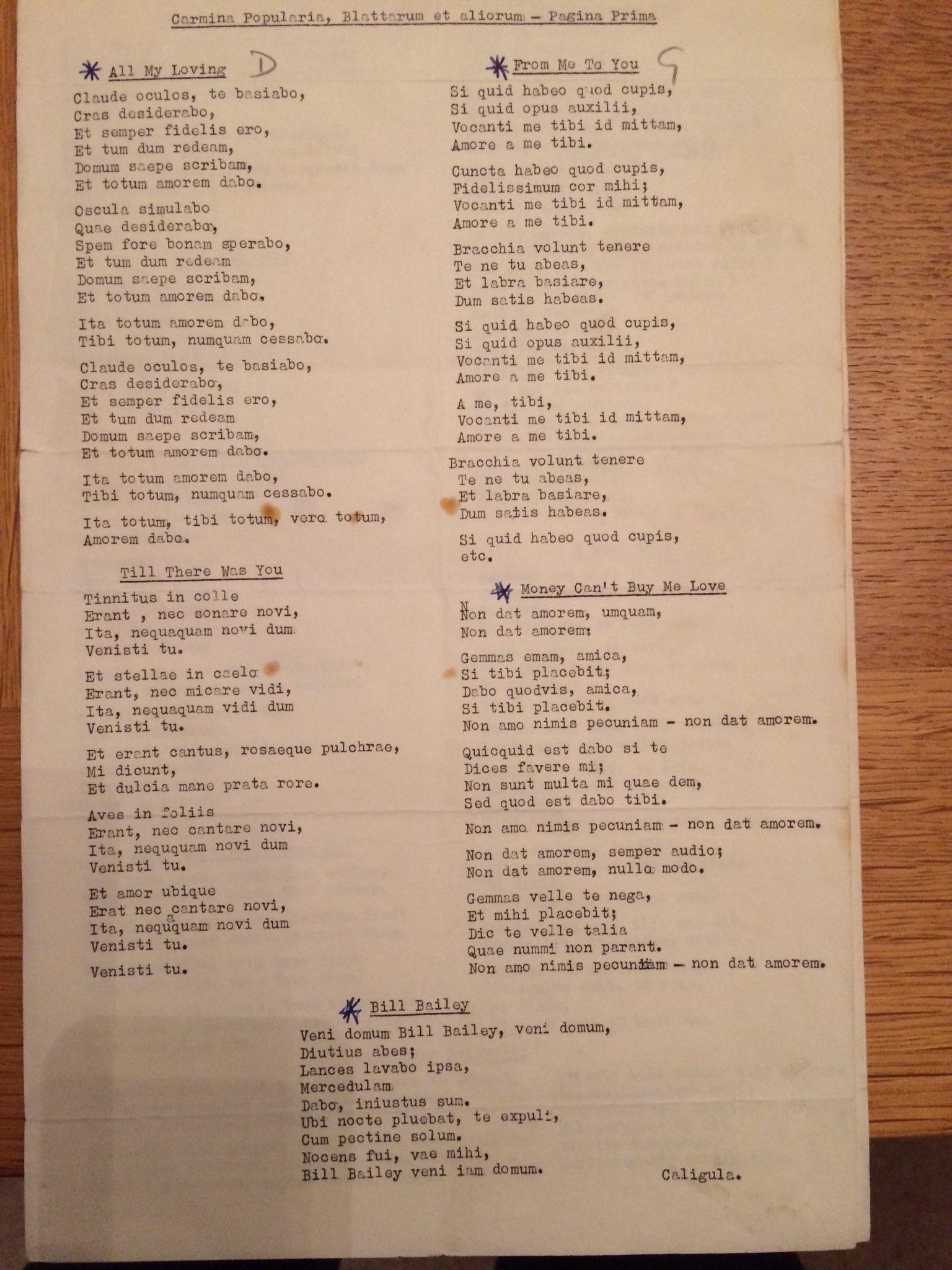
Hip 1960s Latin Teacher Translated Beatles Songs into Latin for His Students: Read Lyrics for “O Teneum Manum,” “Diei Duri Nox” & More

I’ve inter­act­ed with many enter­tain­ing lan­guage-learn­ing resources in var­i­ous classes—from minis­eries in Span­ish to com­ic books in French—all geared toward mak­ing the unfa­mil­iar lan­guage rel­e­vant to dai­ly life. Learn­ing coun­ter­in­tu­itive pro­nun­ci­a­tions, pars­ing a new sys­tem of gram­mar, or mem­o­riz­ing the gen­ders of word after word can be labo­ri­ous and intim­i­dat­ing in the class­room. Doing so in every­day pop cul­tur­al set­tings, not as much.

When it comes to the teach­ing of dead lan­guages, the resources can seem less approach­able. I cer­tain­ly appre­ci­ate the lit­er­ary and rhetor­i­cal genius of Vir­gil, Ovid, Horace, Cicero, and Julius Cae­sar. But dur­ing my high school years, I did not always find their work easy to read in Eng­lish, much less in for­mal clas­si­cal Latin. The ela­tion I felt after suc­cess­ful­ly trans­lat­ing a pas­sage was some­times damp­ened as I puz­zled over his­tor­i­cal notes and gloss­es that often left me with more ques­tions than answers.

That’s not at all to say that stu­dents of Latin shouldn’t be exposed to cul­tur­al and his­tor­i­cal con­text or read the finest exem­plars of the writ­ten lan­guage. Only that a break from the heavy stuff now and then goes a long way. Might I sub­mit to Latin instruc­tors one inge­nious tool from Eddie O’Hara, for­mer British Labour Par­ty MP and clas­sics teacher? O’Hara passed away in May 2016, and not long after his death, his son Ter­ry O’Hara tweet­ed these trans­la­tions of Bea­t­les songs (includ­ing two Christ­mas tunes) his father made in the 60s for his stu­dents. At the time, these were the height of pop cul­ture rel­e­vance, and, while a far cry from the com­plex­i­ties of the Aeneid, a fun way for Latin learn­ers to relate to a lan­guage that can seem cold and impos­ing.

I will admit, my Latin has fall­en into such a state that I can’t imme­di­ate­ly vouch for the accu­ra­cy or ele­gance of these trans­la­tions (“cue fierce argu­ments among Latin gram­mar­i­ans,” replies one Twit­ter user), but there’s no rea­son to doubt Mr. O’Hara knew his stuff. ““He was a born edu­ca­tor,” his son remem­bers, “He was a teacher and clas­si­cist by back­ground and he had a strong inter­est in edu­ca­tion­al mat­ters and Greek cul­tur­al her­itage.” Edu­cat­ed him­self at Mag­dalen Col­lege, Oxford, O’Hara taught at Perse School, Cam­bridge, Birken­head School, and in the ear­ly 70s, C.F. Mott Col­lege in the Bea­t­les’ own Liv­er­pool.

In addi­tion to his role as a states­man, the Liv­er­pool Echo remem­bers O’Hara’s many decades as “a pop­u­lar teacher who brought class­es to life trans­lat­ing Bea­t­les lyrics into Latin.” We do not have any indi­ca­tion of whether he actu­al­ly tried to sing the lyrics, though his stu­dents sure­ly must have attempt­ed it. What must the cho­rus of “All My Lov­ing” sound like as “Ita totum amorem dabo, Tibi totum, numquam cess­a­ba”? Or “She Loves You” as “Amat te, mehercle”? Singing them to myself, I can see that O’Hara was sen­si­tive to the meter of the orig­i­nal Eng­lish in his Latin ren­der­ings. But I’d real­ly love to see some­one set these to music and make a video. Any of our read­ers up to the chal­lenge?

Final­ly, since ear­ly six­ties Bea­t­les lyrics aren’t as like­ly to engage stu­dents in 2017, what pop cul­tur­al mate­r­i­al would you trans­late today—classics teach­ers out there—to reach the bemused, bewil­dered, and the bored? If you’re already hard at work using hip resources in the class­room, please do share them with us in the com­ments!

Note: To view the images in a larg­er for­mat, please click on the links to these indi­vid­ual images: Image 1 - Image 2Image 3. When the image opens, click on it again to zoom in.

Note 2: An ear­li­er ver­sion of this post appeared on our site in 2017.

Relat­ed Con­tent:

Hear Nirvana’s “Smells Like Teen Spir­it” Per­formed in Clas­si­cal Latin

Can Mod­ern-Day Ital­ians Under­stand Latin? A YouTu­ber Puts It to the Test on the Streets of Rome

They Might Be Giants’ John Lin­nell Releas­es an EP of Songs in Latin

The Sto­ry of Lorem Ipsum: How Scram­bled Text by Cicero Became Used by Type­set­ters Every­where

Josh Jones is a writer and musi­cian based in Durham, NC. 

by | Permalink | Make a Comment ( 1 ) |

Discover Khipu, the Ancient Incan Record & Writing System Made Entirely of Knots

Khi­pus, the portable infor­ma­tion archives cre­at­ed by the Inca, may stir up mem­o­ries of 1970s macrame with their long strands of intri­cate­ly knot­ted, earth-toned fibers, but their func­tion more close­ly resem­bled that of a dense­ly plot­ted com­put­er­ized spread­sheet.

As Cecil­ia Par­do-Grau, lead cura­tor of the British Museum’s cur­rent exhi­bi­tion Peru: a jour­ney in time explains in the above Cura­tors Cor­ner episode, khi­pus were used to keep track of every­thing from inven­to­ries and cen­sus­es to his­tor­i­cal nar­ra­tives, using a sys­tem that assigned mean­ing to the type and posi­tion of knot, spaces between knots, cord length, fiber col­or, etc.

Much of the infor­ma­tion pre­served with­in khi­pus has yet to be deci­phered by mod­ern schol­ars, though the Open Khipu Repos­i­to­ry — com­pu­ta­tion­al anthro­pol­o­gist Jon Clin­daniel’s open-source data­base — makes it pos­si­ble to com­pare the pat­terns of hun­dreds of khi­pus resid­ing in muse­um and uni­ver­si­ty col­lec­tions.

Even in the Incan Empire, few were equipped to make sense of a khipu. This task fell to quipu­ca­may­ocs, high­born admin­is­tra­tive offi­cials trained since child­hood in the cre­ation and inter­pre­ta­tion of these organ­ic spread­sheets.

Fleet mes­sen­gers known as chask­is trans­port­ed khipus on foot between admin­is­tra­tive cen­ters, cre­at­ing an infor­ma­tion super­high­way that pre­dates the Inter­net by some five cen­turies. Khi­pus’ stur­dy organ­ic cot­ton or native camelid fibers were well suit­ed to with­stand­ing both the rig­ors of time and the road.

A 500-year-old com­pos­ite khipu that found its way to the British Muse­um organ­ics con­ser­va­tor Nicole Rode pri­or to the exhi­bi­tion was intact, but severe­ly tan­gled, with a brit­tle­ness that betrayed its age. Below, she describes falling under the khipu’s spell, dur­ing the painstak­ing process of restor­ing it to a con­di­tion where­by researchers could attempt to glean some of its secrets.

Vis­it Museo Chileno de Arte Precolombino’s web­site to learn more about khipu in a series of fas­ci­nat­ing short arti­cles that accom­pa­nied their ground­break­ing 2003 exhib­it QUIPU: count­ing with knots in the Inka Empire.

Note: An ear­li­er ver­sion of this post appeared on our site in 2022.

Relat­ed Con­tent: 

How the Incas Per­formed Skull Surgery More Suc­cess­ful­ly Than U.S. Civ­il War Doc­tors

How the Inca Used Intri­cate­ly-Knot­ted Cords, Called Khipu, to Write Their His­to­ries, Send Mes­sages & Keep Records

Explore the Flo­ren­tine Codex: A Bril­liant 16th Cen­tu­ry Man­u­script Doc­u­ment­ing Aztec Cul­ture Is Now Dig­i­tized & Avail­able Online

Ancient Maps that Changed the World: See World Maps from Ancient Greece, Baby­lon, Rome, and the Islam­ic World

Ayun Hal­l­i­day is the Chief Pri­ma­tol­o­gist in NYC.

by | Permalink | Make a Comment ( 1 ) |

Dictionary of the Oldest Written Language–It Took 90 Years to Complete, and It’s Now Free Online

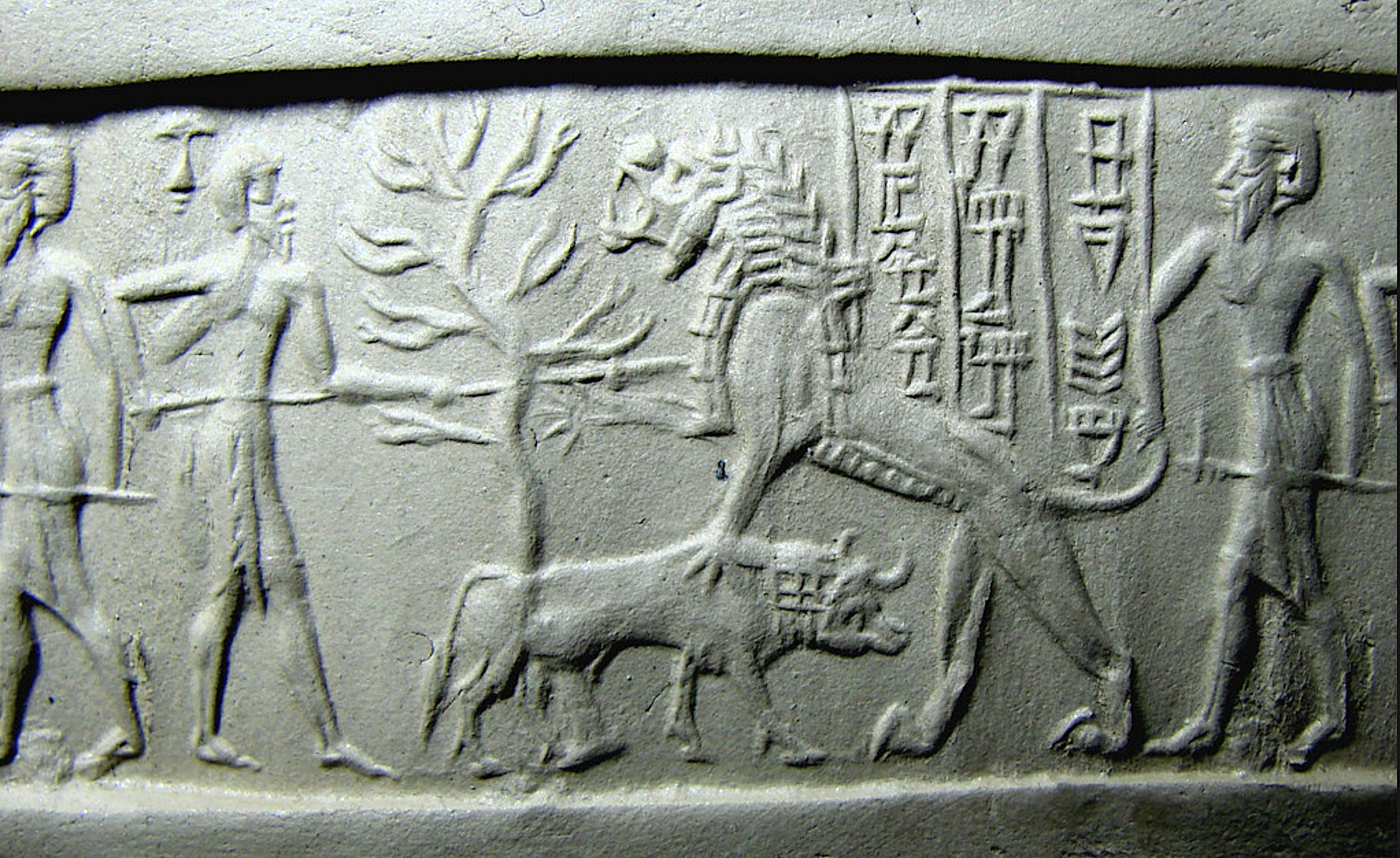
It took 90 years to com­plete. But, in 2011, schol­ars at the Uni­ver­si­ty of Chica­go final­ly pub­lished a 21-vol­ume dic­tio­nary of Akka­di­an, the lan­guage used in ancient Mesopotamia. Unspo­ken for 2,000 years, Akka­di­an was pre­served on clay tablets and in stone inscrip­tions until schol­ars deci­phered it dur­ing the last two cen­turies.

In the past, we’ve pub­lished audio that lets you hear the recon­struct­ed sounds of Akka­di­an (Hear The Epic of Gil­gamesh Read in the Orig­i­nal Akka­di­an and Enjoy the Sounds of Mesopotamia). Now, should you wish, you can down­load PDFs of U. Chicago’s Akka­di­an dic­tio­nary for free. All 21 vol­umes would cost well over $1,945 if pur­chased in hard copy. But the PDFs, they won’t run you a dime.

Relat­ed Con­tent:

The Largest His­tor­i­cal Dic­tio­nary of Eng­lish Slang Now Free Online: Cov­ers 500 Years of the “Vul­gar Tongue”

Learn Ancient Greek in 64 Free Lessons: A Free Online Course from Bran­deis & Har­vard

Who Decides What Words Get Into the Dic­tio­nary?

Lis­ten to The Epic of Gil­gamesh Being Read in its Orig­i­nal Ancient Lan­guage, Akka­di­an

by | Permalink | Make a Comment ( 1 ) |

How Far Back in History Can You Start to Understand English?

It’s easy to imag­ine the myr­i­ad dif­fi­cul­ties with which you’d be faced if you were sud­den­ly trans­port­ed a mil­len­ni­um back in time. But if you’re a native (or even pro­fi­cient) Eng­lish speak­er in an Eng­lish-speak­ing part of the world, the lan­guage, at least, sure­ly would­n’t be a prob­lem. Or so you’d think, until your first encounter with utter­ances like “þat troe is daed on gaerde” or “þa rokes for­leten urne tun.” Both of those sen­tences appear in the new video above from Simon Rop­er, in which he deliv­ers a mono­logue begin­ning in the Eng­lish of the fifth cen­tu­ry and end­ing in the Eng­lish of the end of the last mil­len­ni­um.

An Eng­lish­man spe­cial­iz­ing in videos about lin­guis­tics and anthro­pol­o­gy, Rop­er has pulled off this sort of feat before: we pre­vi­ous­ly fea­tured him here on Open Cul­ture for his per­for­mance of a Lon­don accent as it evolved through 660 years.

But writ­ing and deliv­er­ing a mono­logue that works its way through a mil­len­ni­um and a half of change in the Eng­lish lan­guage is obvi­ous­ly a thornier endeav­or, not least because it involves lit­er­al thorns — the þ char­ac­ters, that is, used in the Old Eng­lish Latin alpha­bet. They’re pro­nounced like th, which you can hear when Rop­er speaks the sen­tences quot­ed ear­li­er, which trans­late to “The tree is dead in the yard” and “The rooks aban­doned our town.”

The word trans­late should give us pause, since we’re only talk­ing about Eng­lish. But then, Eng­lish has under­gone such a dra­mat­ic evo­lu­tion that, at far enough of a remove, we might as well be talk­ing about dif­fer­ent lan­guages. What Rop­er empha­sizes is that the changes did­n’t hap­pen sud­den­ly. Non-Scan­di­na­vian lis­ten­ers may lack even an inkling that his farmer of the year 450 is talk­ing about sheep and pigs with the words skēpu and swīnu, but his final lines, in which he speaks of pos­sess­ing “all the hot cof­fee I need” and “friends I did­n’t have in New York” in the year 2000, will pose no dif­fi­cul­ty to Anglo­phones any­where in the world. Even his list of agri­cul­tur­al wealth around the ear­ly thir­teenth cen­tu­ry — “We habben an god hus, we habben mani felds” — could make you believe that a trip 600 years in the past would be, as they said in Mid­dle Eng­lish, no trou­ble.

Relat­ed Con­tent:

Trac­ing Eng­lish Back to Its Old­est Known Ances­tor: An Intro­duc­tion to Pro­to-Indo-Euro­pean

Hear the Evo­lu­tion of the Lon­don Accent Over 660 Years: From 1346 to 2006

What Shakespeare’s Eng­lish Sound­ed Like, and How We Know It

Where Did the Eng­lish Lan­guage Come From?: An Ani­mat­ed Intro­duc­tion

A Brief Tour of British & Irish Accents: 14 Ways to Speak Eng­lish in 84 Sec­onds

The Entire His­to­ry of Eng­lish in 22 Min­utes

Based in Seoul, Col­in Marshall writes and broad­casts on cities, lan­guage, and cul­ture. His projects include the Sub­stack newslet­ter Books on Cities and the book The State­less City: a Walk through 21st-Cen­tu­ry Los Ange­les. Fol­low him on the social net­work for­mer­ly known as Twit­ter at @colinmarshall.

More in this category... »
Quantcast