How Alan Turing and His Fellow Codebreakers Broke the Nazis’ “Unbreakable” Enigma Code

There was a time when you could just go out and buy an Enig­ma machine. In the ear­ly nine­teen-twen­ties, any orga­ni­za­tion with a need to keep its com­mu­ni­ca­tions secret could order a few of those brand-new devices from Ger­many and rest assured that any mes­sages encod­ed using them would be safe from pry­ing eyes. It did­n’t take long for the mil­i­tary to catch on to the Enig­ma’s use­ful­ness. Just a few years after the machine came on the mar­ket, it had been adopt­ed by the Ger­man Navy, Army, and Air Force, and made pos­si­ble the rapid, secret coor­di­na­tion cen­tral to the tech­nique we now call blitzkrieg. When World War II began, Axis forces were con­fi­dent, as any­one in pos­ses­sion of an unbreak­able code might well be.

As his­to­ry played out, of course, that code turned out to be break­able. That this came as a sur­prise to the Nazis makes sense if you watch the new video above from Ver­i­ta­si­um, which opens up an actu­al Enig­ma machine and explains its inner work­ings. Each let­ter typed into its key­board pass­es through a series of inter­change­able rotors wired togeth­er, then comes back through in the oppo­site direc­tion, result­ing in a par­tic­u­lar sub­sti­tute let­ter.

Each char­ac­ter entered advances at least one of the rotors, each of which turns at a dif­fer­ent speed, mean­ing that the already com­plex sub­sti­tu­tion cipher con­stant­ly changes. To make it even trick­i­er, the Nazis made mod­i­fi­ca­tions to their Enig­ma machines, includ­ing a tele­phone-oper­a­tor-style plug­board that expand­ed the pos­si­ble encryp­tion keys to 7 x 10¹⁸: an infi­nite-seem­ing num­ber that fair­ly cried out for the math­e­mat­i­cal ser­vices of Alan Tur­ing.

Already famous for hav­ing come up with the “Tur­ing machine,” which could the­o­ret­i­cal­ly manip­u­late strings of sym­bols in what we’d now call an algo­rith­mic fash­ion, he was recruit­ed by Britain’s wartime code­break­ing head­quar­ters at Bletch­ley Park, where experts were already hard at work reverse-engi­neer­ing the Enig­ma machine. There he con­sid­ered flaws in the design of the device, such as its inabil­i­ty to encrypt any giv­en let­ter as itself, and the ways in which its human oper­a­tors used it, such as mak­ing pre­dictable weath­er reports. Exploit­ing these weak­ness­es required build­ing a non-the­o­ret­i­cal com­pu­ta­tion engine, the Bombe, to grind through all pos­si­bil­i­ties at what would then have seemed an unfath­omable speed. The intel­li­gence the Bombe pro­duced con­tributed to the suc­cess of the sur­prise D‑Day inva­sion and may have tak­en years off the poten­tial rav­ages of World War II. It would­n’t have hap­pened with­out Tur­ing’s for­mi­da­ble intel­li­gence — or his under­stand­ing that you need a machine to out­smart a machine.

Relat­ed Con­tent:

The Enig­ma Machine: How Alan Tur­ing Helped Break the Unbreak­able Nazi Code

How British Code­break­ers Built the First Elec­tron­ic Com­put­er

The LEGO Tur­ing Machine Gives a Quick Primer on How Your Com­put­er Works

A Tur­ing Machine Hand­made Out of Wood

Can You Crack the Uncrack­able Code in Kryp­tos, the CIA’s Work of Pub­lic Art?

The Sto­ry of Elize­beth Fried­man, the Pio­neer­ing Cryp­tol­o­gist Who Thwart­ed the Nazis & Got Burned by J. Edgar Hoover

Based in Seoul, Col­in Marshall writes and broad­casts on cities, lan­guage, and cul­ture. He’s the author of the newslet­ter Books on Cities as well as the books 한국 요약 금지 (No Sum­ma­riz­ing Korea) and Kore­an Newtro. Fol­low him on the social net­work for­mer­ly known as Twit­ter at @colinmarshall.

Rage Against the Machines: From the Luddites to the AI Data Center Backlash

One often-repeat­ed anec­dote about Mil­ton Fried­man has the famous econ­o­mist vis­it­ing a canal under con­struc­tion in nine­teen-six­ties Chi­na. Notic­ing the sheer num­ber of human labor­ers dig­ging away with shov­els, he asked the offi­cial in charge why they weren’t get­ting the work done faster with exca­va­tors and oth­er mod­ern machines. The bureau­crat explained to him that doing it by hand cre­at­ed more jobs. Fried­man’s reply: “If it’s jobs you want, you should give those men spoons instead.” Whether or not this exchange ever actu­al­ly hap­pened, it illus­trates a con­flict that’s arisen more than once in the his­to­ry of civ­i­liza­tion, pos­si­bly since the dawn of indus­tri­al­iza­tion — and at least since the hey­day of the Lud­dites.

Accord­ing to the Uni­ver­si­ty of Cam­bridge, that hey­day came in 1812, the year of “an assault by some 150 armed labor­ers on a Hud­der­s­field mill, in which sol­diers opened fire on the mob to stop them break­ing into the premis­es, fatal­ly wound­ing two attack­ers.” This was the cul­mi­na­tion of a series of protests across Eng­land, all of them inspired by anger at “new tech­nolo­gies, like auto­mat­ed looms, which were being used in the tex­tile indus­try in place of the skilled work of arti­sans, threat­en­ing their liveli­hoods as a result.” These des­per­ate­ly infu­ri­at­ed pro­test­ers, whose doc­u­ment­ed actions include the mur­der of a York­shire mill own­er, loud­ly expressed alle­giance to one Ned Ludd, a weaver said to have tak­en the bold step of smash­ing a cou­ple of new­fan­gled stock­ing frames some 25 years before.

The sto­ry of Lud­d’s ear­ly stand against mech­a­niza­tion may be even more ques­tion­able than the one about Mil­ton Fried­man and the spoons, but his name sur­vives today nev­er­the­less. In fact, it’s under­gone some­what of a revival thanks to the arti­fi­cial-intel­li­gence boom of recent years, dur­ing which even the mod­ern “knowl­edge work­ers” have come to fear the tram­pling of their liveli­hoods under tech­nol­o­gy’s inex­orable march. Their calls for restric­tions on the devel­op­ment and deploy­ment of AI are, in one side’s fram­ing of the argu­ment, mere­ly the lat­est pub­lic spasm of Lud­dism, a move­ment explained in the video above from The His­to­ry Guy. How many here in the twen­ty-first cen­tu­ry, after all, would argue that the mass pro­duc­tion of socks ulti­mate­ly con­sti­tut­ed a real loss for human­i­ty?

Lud­dism nev­er did count a large pro­por­tion of the Eng­lish labor force as its own. Rather, the move­ment appealed to “a rel­a­tive­ly ‘elite’ group” of legal­ly pro­tect­ed work­ers only allowed into their pro­fes­sions after years of appren­tice­ship, at which point “they tend­ed to feel that they were owed a liv­ing.” Nor did the con­di­tions, hours, and com­pen­sa­tion at the fac­to­ries then spring­ing up seem favor­able com­pared to the way of life enjoyed by their pre­de­ces­sors. Sim­i­lar sen­ti­ments may under­lie the “Lud­dite clubs” form­ing on col­lege cam­pus­es, on which NPR has report­ed, or this year’s social media-free “Sum­mer of Ludd” at the New School, to say noth­ing of ongo­ing protests against data-cen­ter con­struc­tion. It would be fas­ci­nat­ing to hear what gen­uine nine­teenth-cen­tu­ry Lud­dites would make of our sit­u­a­tion. Per­haps, one day, we can use AI to res­ur­rect them.

Relat­ed con­tent:

Hear Alan Watts’s 1960s Pre­dic­tion That Automa­tion Will Neces­si­tate a Uni­ver­sal Basic Income

Experts Pre­dict When Arti­fi­cial Intel­li­gence Will Take Our Jobs: From Writ­ing Essays, Books & Songs, to Per­form­ing Surgery and Dri­ving Trucks

The Inge­nious Engi­neer­ing of Silk: How the 2,000-Year-Old Pat­tern Loom Pow­ered the Silk Road and the Wealth of Ancient Chi­na

How Qatar Built Sta­di­ums with Forced Labor

Based in Seoul, Col­in Marshall writes and broad­casts on cities, lan­guage, and cul­ture. He’s the author of the newslet­ter Books on Cities as well as the books 한국 요약 금지 (No Sum­ma­riz­ing Korea) and Kore­an Newtro. Fol­low him on the social net­work for­mer­ly known as Twit­ter at @colinmarshall.

The Ancient Greek Water Clock That Kept the Most Accurate Time for 1,800 Years

Today, we’re sur­round­ed by tech­nolo­gies we could jus­ti­fi­ably describe as time thieves. In ancient Greece, those who want­ed to know where their time was going con­sult­ed a device they called a “water thief.” The roots of the clep­sy­dra, or water clock, go back as far as the six­teenth cen­tu­ry BC, with evi­dence of such devices found in mod­ern-day Iraq, Iran, and Egypt, and more ambigu­ous evi­dence unearthed in places like India and Chi­na. The mech­a­nism in the ear­li­est exam­ples takes not much more com­plex a form than a bowl out of which water slow­ly drips, albeit not at a reg­u­lar pace. That nat­ur­al imped­i­ment to hydraulic time­keep­ing was­n’t cor­rect­ed until the third cen­tu­ry BC, when a Greek inven­tor called Cte­si­bius set about mak­ing his own improve­ments.

Cte­si­bius’ auto­mat­ic water clock used a ver­ti­cal cylin­der, rotat­ing once year­ly, marked with straight ver­ti­cal lines rep­re­sent­ing the months of the year and curved hor­i­zon­tal lines rep­re­sent­ing the hours of the day. A point­er next to it indi­cat­ed the cur­rent hour, its posi­tion changed by the water lev­el of the cylin­der in which it float­ed. That cylin­der was filled through a feed­ing reser­voir, itself con­stant­ly sup­plied with water.

The idea behind this arrange­ment was to keep the rate of flow steady, and thus the speed of the point­er con­stant. To emp­ty the reser­voir with­out the need for human inter­ven­tion, Cte­si­bius incor­po­rat­ed a siphon that let water out every 24 hours, reset­ting the clock­’s dai­ly cycle. A water wheel attached to a sim­ple sys­tem of gears kept the cylin­der turn­ing, so that its “dis­play” could keep up with the ever-chang­ing length of the day­light-based ancient Greek hour.

All this is explained with detailed visu­al aids in the ani­mat­ed Decon­struct­ed video above. “In a world with­out elec­tric­i­ty, dig­i­tal log­ic, or even mechan­i­cal clocks,” says its nar­ra­tor, “this ancient inven­tion laid the foun­da­tion for automa­tion and time­keep­ing as we know them today.” Indeed, Cte­si­bius’ clep­sy­dra “kept bet­ter time than any­thing else on Earth for 1800 years,” until Chris­ti­aan Huy­gens invent­ed the pen­du­lum clock in 1656. There’s some­thing in the swing­ing of such a mech­a­nism that appeals to the innate human attrac­tion to rhythm, and the metaphor­i­cal val­ue of the grains of sand pass­ing through an hour­glass (an inter­me­di­ary inven­tion between Cte­si­bius and Huy­gens) remains strong even now. But it’s prob­a­bly not a coin­ci­dence that the flow of time and the flow of water, at least from the human per­spec­tive, feel like two aspects of the same pri­mal phe­nom­e­non.

Relat­ed Con­tent:

The Plan­e­tar­i­um Table Clock: Mag­nif­i­cent 1775 Time­piece Tracks the Pass­ing of Time & the Trav­el of the Plan­ets

An Ani­mat­ed Intro­duc­tion to the Antikythera Mech­a­nism: The World’s First Ana­log Com­put­er from Ancient Greece

The Advanced Tech­nol­o­gy of Ancient Rome: Auto­mat­ic Doors, Water Clocks, Vend­ing Machines & More

How Medieval Islam­ic Engi­neer­ing Brought Water to the Alham­bra

Ancient Egypt­ian Pyra­mids May Have Been Built with Water: A New Study Explore the Use of Hydraulic Lifts

How Clocks Changed Human­i­ty For­ev­er, Mak­ing Us Mas­ters and Slaves of Time

Based in Seoul, Col­in Marshall writes and broad­casts on cities, lan­guage, and cul­ture. He’s the author of the newslet­ter Books on Cities as well as the books 한국 요약 금지 (No Sum­ma­riz­ing Korea) and Kore­an Newtro. Fol­low him on the social net­work for­mer­ly known as Twit­ter at @colinmarshall.

Why Inventing Color TV Was So Difficult

Many who read this will remem­ber watch­ing tele­vi­sion on a black-and-white set at some point in their lives. Few­er will remem­ber doing so because only black-and-white sets exist­ed. Of course, your own expe­ri­ence will depend upon your coun­try of ori­gin. The Unit­ed States began the tran­si­tion to col­or tele­vi­sion in 1953, and more than half of its pop­u­la­tion owned col­or sets less than twen­ty years there­after. France’s sta­tions start­ed to change over in 1967, and the last one did so in 1983. South Korea, where I live, start­ed its own reg­u­lar col­or broad­casts in 1980, though at that point, those from the Amer­i­can Forces Net­work, Japan, and even North Korea could already be tuned in for years.

Today we all take col­or TV for grant­ed, but as the Pri­mal Space video above explains, its inven­tion was no sim­ple mat­ter. Still, it occurred much ear­li­er than most of us would imag­ine. In 1925, Scot­tish inven­tor John Logie Baird came up with the first tele­vi­sion, which involved pass­ing light through holes in a spin­ning disc onto a pho­to­elec­tric cell for trans­mis­sion through cables or radio waves. This sys­tem could only reg­is­ter the bright­ness of the light, pro­duc­ing a black-and-white image. But the mech­a­nism itself sug­gest­ed a means of intro­duc­ing col­or: enlarge the disc, add sep­a­rate sets of holes for red, green, and blue, and repro­duce a frame of each in quick, cycli­cal suc­ces­sion at the oth­er end, tak­ing advan­tage of the human eye­’s ten­den­cy to col­lapse them into a sin­gle image.

Baird first demon­strat­ed his col­or tele­vi­sion sys­tem in 1928. Though impres­sive, it also looked unlike­ly to per­form at a scale that could pro­duce a sharp, smooth mov­ing pic­ture. Oth­er engi­neers saw more tele­vi­su­al promise in the tech­nol­o­gy of the cath­ode ray tube, or CRT, which Japan­ese inven­tor Ken­jiro Takayana­gi had already har­nessed for his own black-and-white mechan­i­cal tele­vi­sion in the year before. The key com­po­nent was the icono­scope invent­ed by Vladimir Zworykin in 1933. “Essen­tial­ly the world’s first video cam­era,” it employed an inter­nal elec­tron gun to “scan” a cap­tured image into a trans­mis­si­ble elec­tri­cal sig­nal. Still, the ques­tion remained: how to do it in col­or?

Enter the Radio Cor­po­ra­tion of Amer­i­ca, whose abbre­vi­at­ed name more than a few of us will remem­ber from our child­hood TV sets. Hav­ing devel­oped a video cam­era “that took the incom­ing light and fil­tered it through spe­cial prisms to sep­a­rate the red, green, and blue,” con­vert­ing each into its own sig­nal, RCA then faced the prob­lem of deliv­er­ing the result to view­ers at home. None of the more than five mil­lion black-and-white sets already extant in the U.S. could receive those three sig­nals at all. The solu­tion involved using one elec­tron gun per col­or, each of whose sig­nals would be encod­ed so as to be hid­den in the exist­ing black-and-white tele­vi­sion sig­nal and then decod­ed by col­or sets. Con­sumers may not have tak­en up the tech­nol­o­gy all at once, but those who did in time for The Wiz­ard of Oz’s first broad­cast in 1956 sure­ly under­stood that col­or TV had a future.

Relat­ed Con­tent:

Watch a Tele­vi­sion Sta­tion Switch From Black & White to Col­or for First Time (1967)

How Tech­ni­col­or Rev­o­lu­tion­ized Cin­e­ma with Sur­re­al, Elec­tric Col­ors & Changed How We See Our World

Watch David Bowie Per­form “Star­man” on Top of the Pops: Vot­ed the Great­est Music Per­for­mance Ever on the BBC (1972)

Dis­cov­er the Lost Ear­ly Com­put­er Art of Telidon, Canada’s TV Pro­to-Inter­net from the 1970s

When Movies Came on Vinyl: The Ear­ly-80s Engi­neer­ing Mar­vel and Mar­ket­ing Dis­as­ter That Was RCA’s Selec­taVi­sion

The Great­est Shot in Tele­vi­sion: Sci­ence His­to­ri­an James Burke Had One Chance to Nail This Scene … and Nailed It

Based in Seoul, Col­in Marshall writes and broad­casts on cities, lan­guage, and cul­ture. He’s the author of the newslet­ter Books on Cities as well as the books 한국 요약 금지 (No Sum­ma­riz­ing Korea) and Kore­an Newtro. Fol­low him on the social net­work for­mer­ly known as Twit­ter at @colinmarshall.

How Phone Addiction Keeps You from Achieving a Productive “Flow State”

If you have an iPhone, try push­ing its side but­ton three times in a row. Just like mag­ic, the screen should turn from col­or into black-and-white, or rather grayscale. (To do the same on an Android phone, you’ll have to dive into set­tings, then “acces­si­bil­i­ty,” “vision enhance­ments,” and “col­or cor­rec­tion.”) Why would you want that in the first place? As Har­vard Kennedy School and Har­vard Busi­ness School pro­fes­sor Arthur C. Brooks explains in the Big Think video above, “one of the ways that you can actu­al­ly get less hooked by social media, or any screen-based tech­nol­o­gy, is by turn­ing off the col­or.” When you get only black, white, and the shades of gray in between, “you will care less about your screen, and you will look at it less.”

This may ring true to those of us who remem­ber pure­ly mono­chro­mat­ic cell­phones, and how lit­tle time we spent star­ing at them. But no mat­ter your gen­er­a­tion, Brooks has plen­ty of use­ful advice about how to break the depen­den­cy on your phone from which, as a twen­ty-first-cen­tu­ry inter­net user, you almost cer­tain­ly suf­fer.

“You notice when some­body is addict­ed to hero­in, because it’s not that com­mon for ordi­nary peo­ple,” he says. “You don’t notice when some­body’s addict­ed to their phone, because lit­er­al­ly every­body is addict­ed to their phones.” There­fore, we could all ben­e­fit from turn­ing off noti­fi­ca­tions, set­ting defined “tech times,” exer­cis­ing with­out our devices, and going on mul­ti-day med­i­ta­tion retreats — though we may have to work up to that last one.

The func­tion­al phone addict may believe that all his dai­ly scrolling may not have that much of a neg­a­tive impact on his life, and even that it helps him unwind. What he does­n’t real­ize, in Brooks’ view, is the extent to which dig­i­tal dis­trac­tions keep him out of what psy­chol­o­gist Mihaly Csik­szent­mi­ha­lyi called “flow.” (These com­ments come around the 27:06 mark.) Flow hap­pens “when you’re involved immer­sive­ly in some­thing, and hours turn to min­utes. You lose track of time. It’s intense­ly plea­sur­able,” almost “like a state of Bud­dhist med­i­ta­tion.” Con­scious­ly or uncon­scious­ly, we use our phones and oth­er dig­i­tal devices in a way that pre­vents flow, “mul­ti­task­ing” between numer­ous tasks and dis­trac­tions, nev­er pay­ing sus­tained atten­tion to any one thing. At the root of this impulse is a fear of bore­dom, which must be endured in order to accom­plish any­thing mean­ing­ful. The irony of our new­found abil­i­ty to evade bore­dom every moment is that, if we do so, the whole of life turns out to be pret­ty bor­ing.

Relat­ed con­tent:

How to Enter a ‘Flow State’ on Com­mand: Peak Per­for­mance Mind Hack Explained in 7 Min­utes

The Sur­pris­ing Pow­er of Bore­dom: It Lets You Con­front Big Ques­tions & Give Life Mean­ing

How to Enter Flow State, Increase Your Abil­i­ty to Con­cen­trate, and Let Your Ego Fall Away : An Ani­mat­ed Primer

Why Smart Peo­ple Feel Like Frauds: The Psy­chol­o­gy of Impos­tor Syn­drome and Its Hid­den Ben­e­fits

How to Get into a Cre­ative “Flow State”: A Short Mas­ter­class

Lyn­da Bar­ry on How the Smart­phone Is Endan­ger­ing Three Ingre­di­ents of Cre­ativ­i­ty: Lone­li­ness, Uncer­tain­ty & Bore­dom

Based in Seoul, Col­in Marshall writes and broad­casts on cities, lan­guage, and cul­ture. He’s the author of the newslet­ter Books on Cities as well as the books 한국 요약 금지 (No Sum­ma­riz­ing Korea) and Kore­an Newtro. Fol­low him on the social net­work for­mer­ly known as Twit­ter at @colinmarshall.

Why AI Companies Are Buying—And Then Destroying—Old Books

We’ve long joked about delay­ing bed­time in order to read the entire inter­net, but the prospect of actu­al­ly doing so does­n’t sound as appeal­ing as it used to. An ever-grow­ing pro­por­tion of text online, we may sense, has­n’t been writ­ten by humans, but gen­er­at­ed by arti­fi­cial intel­li­gence. One solu­tion is to return to read­ing on paper, and beyond that, spend­ing our time only with books pub­lished before the advent — and thus uncor­rupt­ed by the out­put — of large lan­guage mod­els. Iron­i­cal­ly, that’s what large lan­guage mod­els them­selves have had to do, and in order to ensure them a steady diet of man­made text, their own­ers are resort­ing to con­tro­ver­sial­ly destruc­tive meth­ods.

Sus­pi­cions first arose when book deal­ers noticed a spike in their income due to large orders from mys­te­ri­ous buy­ers for titles they assumed they’d nev­er unload. Books on home oxy­gen treat­ment in Italy, mar­riage lit­i­ga­tion in medieval Eng­land, Texas civ­il pro­ce­dure in the twen­ty-tens, Swedish com­e­dy in the six­ties: these enti­ties bought them all, and for what­ev­er price the sell­er hap­pened to be ask­ing.

404 Media reporter Emanuel Maiberg tracked the path of one such book, which even­tu­al­ly wound up at a Las Vegas scan­ning facil­i­ty run by Ama­zon. Though under­gird­ed by advanced tech­nol­o­gy, the work done there is sim­ple: dig­i­tize as many books as pos­si­ble, then destroy them.

“In order to scan them real­ly fast, they cut the spines off the books and fed the pages to the scan­ner,” Maiberg explained to NPR. Many are tech­ni­cal­ly rare, albeit eso­teric obscu­ri­ties like van­i­ty pub­li­ca­tions and old instruc­tion man­u­als rather than first-edi­tion clas­sics. Humans may not val­ue them, but LLMs do: their con­sump­tion fore­stalls “a prob­lem called mod­el col­lapse, where if an AI trains on AI train­ing data, it gets worse.” Ama­zon and Anthrop­ic have both been found to use the book-sac­ri­fic­ing method to har­vest text, but every com­pa­ny with mod­els to train needs a solu­tion. All this makes for “an unusu­al­ly on-the-nose exam­ple of dig­i­tal tech­nol­o­gy devour­ing lit­er­ary cul­ture,” as the Wall Street Jour­nal’s Melis­sa Korn puts it. But when you real­ly have read the entire inter­net, per­haps extreme mea­sures are inevitable.

Relat­ed Con­tent:

How the Inter­net Archive Dig­i­tizes 3,500 Books a Day–the Hard Way, One Page at a Time

Libraries & Archivists Are Dig­i­tiz­ing 480,000 Books Pub­lished in 20th Cen­tu­ry That Are Secret­ly in the Pub­lic Domain

How Will AI Change the World?: A Cap­ti­vat­ing Ani­ma­tion Explores the Promise & Per­ils of Arti­fi­cial Intel­li­gence

How to Read Many More Books in a Year: Watch a Short Doc­u­men­tary Fea­tur­ing Some of the World’s Most Beau­ti­ful Book­stores

How 99% of Ancient Lit­er­a­ture Was Lost

Based in Seoul, Col­in Marshall writes and broad­casts on cities, lan­guage, and cul­ture. He’s the author of the newslet­ter Books on Cities as well as the books 한국 요약 금지 (No Sum­ma­riz­ing Korea) and Kore­an Newtro. Fol­low him on the social net­work for­mer­ly known as Twit­ter at @colinmarshall.

Dolly Parton’s “Jolene” Slowed Down to 33 RPM Sounds Great and Takes on New, Unexpected Meanings (RIP)

Note: We were sad to see the news that Dol­ly Par­ton passed away. Today we are bring­ing back one of our favorite Dol­ly Par­ton posts. She will be missed.

The Wal­rus isDol­ly Par­ton?

Not every record yields gold when played back­wards or spun more slow­ly than rec­om­mend­ed, but a 45 of Parton’s 1973 hit “Jolene” played at 33 RPM not only sounds won­der­ful, it also man­ages to reframe the nar­ra­tive.

As Andrea Den­Hoed notes in The New York­er, “Slow Ass Jolene,” above, trans­forms Parton’s “baby-high sopra­no” into some­thing deep, soul­ful and seem­ing­ly, male.

In its orig­i­nal ver­sion, the much-cov­ered “Jolene” is a straight up woman-to-woman chest-bar­ing. Our nar­ra­tor knows her man is obsessed with the sexy, auburn-haired Jolene, to the point where he talks about her in his sleep.

Appar­ent­ly she also knows bet­ter than to raise the sub­ject with him. Instead, she appeals to Jolene’s sense of mer­cy:

You could have your choice of men

But I could nev­er love again

He’s the only one for me, Jolene

The song is some­what auto­bi­o­graph­i­cal, though the sit­u­a­tion was nowhere near as dire as lis­ten­ers might assume. In an inter­view with NPR, Par­ton recalled a red-haired bank teller who devel­oped a big crush on her hus­band when she was a young bride:

And he just loved going to the bank because she paid him so much atten­tion. It was kin­da like a run­ning joke between us — when I was say­ing, ‘Hell, you’re spend­ing a lot of time at the bank. I don’t believe we’ve got that kind of mon­ey.’ So it’s real­ly an inno­cent song all around, but sounds like a dread­ful one. 

For the record, the teller’s name wasn’t Jolene.

Jolene was a pret­ty lit­tle girl who attend­ed an ear­ly Par­ton con­cert. Par­ton was so tak­en with the child, and her unusu­al name, that she resolved to write a song about her.

Yes, the kid had red hair and green eyes.

Wouldn’t it be wild if she grew up to be a bank teller?

I digress…

In the orig­i­nal ver­sion, the irre­sistible cho­rus where­in the soon-to-be-spurned par­ty invokes Jolene’s name again and again is plain­tive and fierce.

In the slow ass ver­sion, it’s plain­tive and sad.

The pain is the same, but the sit­u­a­tion is much less straight­for­ward, thanks to blur­ri­er gen­der lines.

Par­ton told NPR that women are “always threat­ened by oth­er women, peri­od.”

Jolene’s prodi­gious fem­i­nine assets could also prove wor­ri­some to a gay man whose bisex­u­al lover’s eye is prone to wan­der.

Or maybe the singer and his man live in a place where same-sex unions are frowned on. Per­haps the singer’s man craves the com­fort of a more social­ly accept­able domes­tic sit­u­a­tion.

Or per­haps Jolene is one hot female-iden­ti­fied toma­to, and as far as the singer’s man’s con­cerned, his pas­tor and his granny can go to hell! Jolene’s the only one for him.

Or, as one wag­gish Youtube com­menter suc­cinct­ly put it, “Jolene bet­ter stay the hell away from Roy Orbi­son’s man!”

Jolene, Jolene, Jolene, Jolene

I’m beg­ging of you please don’t take my man

Jolene, Jolene, Jolene, Jolene

Please don’t take him just because you can

Your beau­ty is beyond com­pare

With flam­ing locks of auburn hair

With ivory skin and eyes of emer­ald green

Your smile is like a breath of spring

Your voice is soft like sum­mer rain

And I can­not com­pete with you, Jolene

He talks about you in his sleep

There’s noth­ing I can do to keep

From cry­ing when he calls your name, Jolene

And I can eas­i­ly under­stand

How you could eas­i­ly take my man

But you don’t know what he means to me, Jolene

Jolene, Jolene, Jolene, Jolene

I’m beg­ging of you please don’t take my man

Jolene, Jolene, Jolene, Jolene

Please don’t take him just because you can

You could have your choice of men

But I could nev­er love again

He’s the only one for me, Jolene

I had to have this talk with you

My hap­pi­ness depends on you

And what­ev­er you decide to do, Jolene

Jolene, Jolene, Jolene, Jolene

I’m beg­ging of you please don’t take my man

Jolene, Jolene, Jolene, Jolene

Please don’t take him even though you can

Jolene, Jolene

via @WFMU

Note: An ear­li­er ver­sion of this post appeared on our site in 2018.

Relat­ed Con­tent:

Feel Strange­ly Nos­tal­gic as You Hear Clas­sic Songs Reworked to Sound as If They’re Play­ing in an Emp­ty Shop­ping Mall: David Bowie, Toto, Ah-ha & More

Hear Nirvana’s “Smells Like Teen Spir­it” Shift­ed from Minor to Major Key, and Radiohead’s “Creep” Moved from Major to Minor

R.E.M.’s “Los­ing My Reli­gion” Reworked from Minor to Major Scale

Ayun Hal­l­i­day is an author, illus­tra­tor, and the­ater mak­er in NYC.

by | Permalink | Make a Comment ( 1 ) |

Discover the Mundaneum, an Early 20th-Century “Internet” That Put the World’s Knowledge on Millions of Index Cards

Pitch to friends or fam­i­ly the idea of a trip to Mons, Bel­gium to vis­it the Mun­da­neum, and you may be met with a less-than-enthu­si­as­tic recep­tion. That’s unfor­tu­nate, since such an expe­ri­ence could fun­da­men­tal­ly change the way they regard tech­nol­o­gy they use every day. Though its name may seem to promise unre­lieved dull­ness today, the Mun­da­neum arose out of enor­mous high-tech ambi­tions. The idea behind it, as con­ceived by Bel­gian lawyers Paul Otlet and Hen­ri La Fontaine, was to gath­er, clas­si­fy, cen­tral­ize, and make uni­ver­sal­ly avail­able all human knowl­edge. This may sound famil­iar to any­one who’s used the inter­net, but it was a rather bold­er propo­si­tion at the turn of the twen­ti­eth cen­tu­ry.

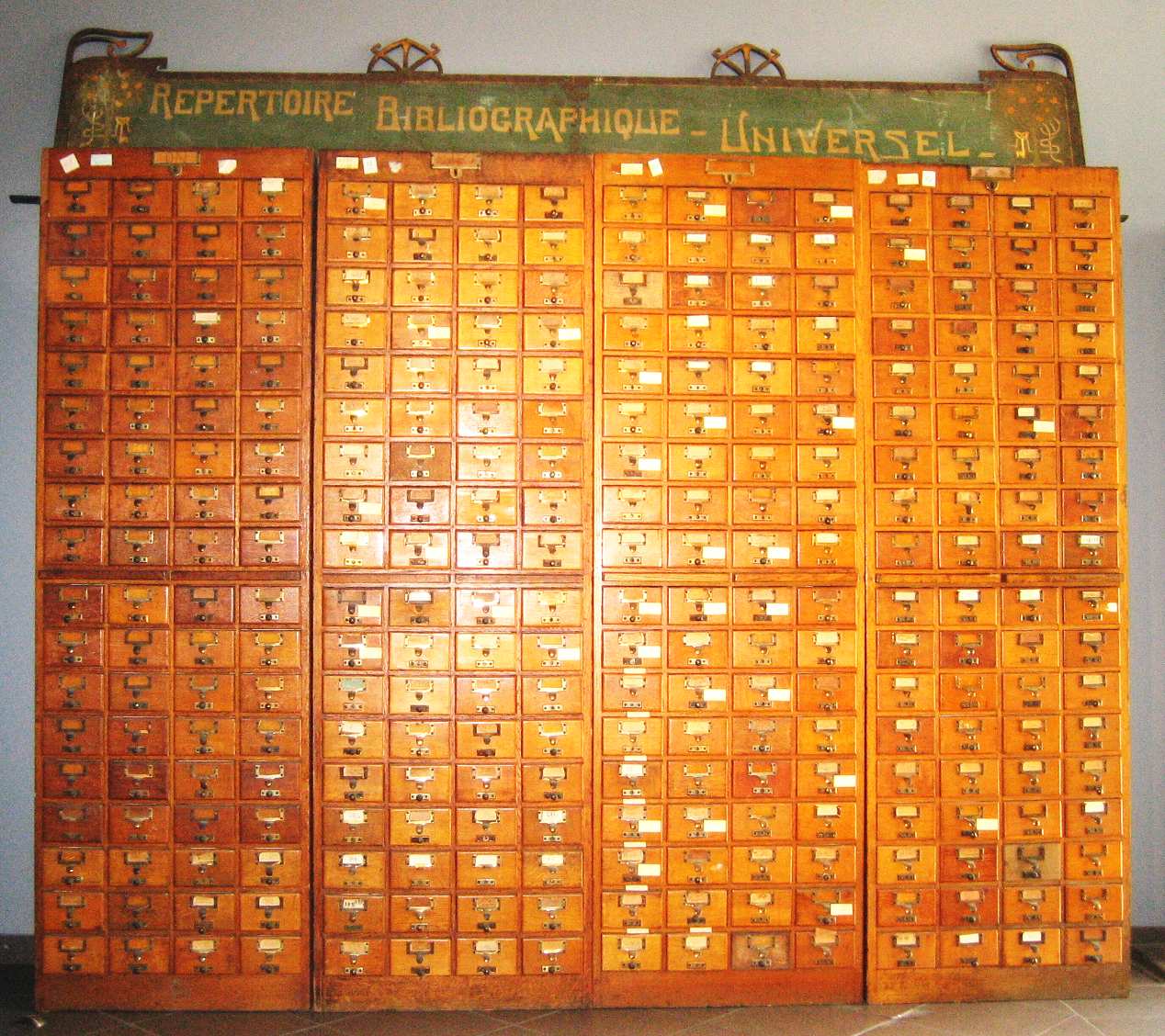
Otlet and La Fontaine’s “city of knowl­edge” may not have been ful­ly real­iz­able at that time, but tech­nol­o­gy had made it imag­in­able. The Dewey Dec­i­mal Sys­tem, with its stan­dard­ized card cat­a­logs, had been around since 1876. Start­ing in 1895, Otlet adapt­ed that basic tool to a far larg­er project: the Mun­da­neum took shape as a vast paper archive. Mil­lions of index cards, each record­ing bib­li­o­graph­ic details about a sin­gle book, arti­cle, or doc­u­ment, were filed away in row upon row of cat­a­log draw­ers. (See image below.)

“Otlet made this card cen­tral to his sys­tem,” writes Sid­ney Perkowitz at JSTOR. “Aim­ing to cap­ture every book ever pub­lished, the Mun­da­neum stored bib­li­o­graph­ic data for books under the UDC [Uni­ver­sal Dec­i­mal Clas­si­fi­ca­tion], along with mag­a­zine arti­cles, images, and more on over 15 mil­lion cards crammed into cat­a­log draw­ers.” Orig­i­nal­ly housed in Brus­sels’ Cinquan­te­naire Palace, the Mun­da­neum was meant to get its own build­ing designed by the for­ward-think­ing Le Cor­busier by the end of the nine­teen-twen­ties. Alas, it was nev­er built, and after the Nazi inva­sion of 1940, the Mun­da­neum was scrapped for a Third Reich art exhi­bi­tion.

Dis­cus­sions of the Mun­da­neum in our time often high­light what Otlet (1868–1944), despite the pro­jec­t’s many tribu­la­tions, even­tu­al­ly envi­sioned as “a glob­al ‘réseau’ or net­work of ‘elec­tric tele­scopes.’ These ear­ly work­sta­tions were to be linked to the Mun­da­neum by tele­phone and the new tech­nol­o­gy of tele­vi­sion. A user would phone in a query, and the answer in a book or oth­er source would appear dis­played on a per­son­al screen, which could be split to show mul­ti­ple results.” Con­vinced that all homes would even­tu­al­ly have access to the net­work, he con­sid­ered even the pos­si­bil­i­ty of “data shar­ing and social inter­ac­tions among its users.” This dream of the inter­net avant la tech­nolo­gie is now enshrined at the Mun­da­neum muse­um, which is open five days a week. Alter­na­tive­ly, you can point your elec­tric tele­scope to its online cat­a­log any time.

Image by Zin­neke, via Wiki­me­dia Com­mons

via JSTOR

Relat­ed Con­tent:

The Rise and Fall of the Great Library of Alexan­dria: An Ani­mat­ed Intro­duc­tion

The First Music Stream­ing Ser­vice Was Invent­ed in 1881: Dis­cov­er the Théâtro­phone

Mark Twain Pre­dicts the Inter­net in 1898: Read His Sci-Fi Crime Sto­ry, “From The ‘Lon­don Times’ in 1904”

Meet the Syn­topi­con: The Ambi­tious Index That Tried to Orga­nize All of West­ern Thought (1952)

What the Entire Inter­net Looked Like in 1973: An Old Map Gets Found in a Pile of Research Papers

Do All Roads Lead to Phi­los­o­phy on Wikipedia?: They Do About 97.3% of the Time

Based in Seoul, Col­in Marshall writes and broad­casts on cities, lan­guage, and cul­ture. He’s the author of the newslet­ter Books on Cities as well as the books 한국 요약 금지 (No Sum­ma­riz­ing Korea) and Kore­an Newtro. Fol­low him on the social net­work for­mer­ly known as Twit­ter at @colinmarshall.

More in this category... »
Quantcast