When Galileo Calculated the Precise Dimensions of Hell in Dante’s Inferno

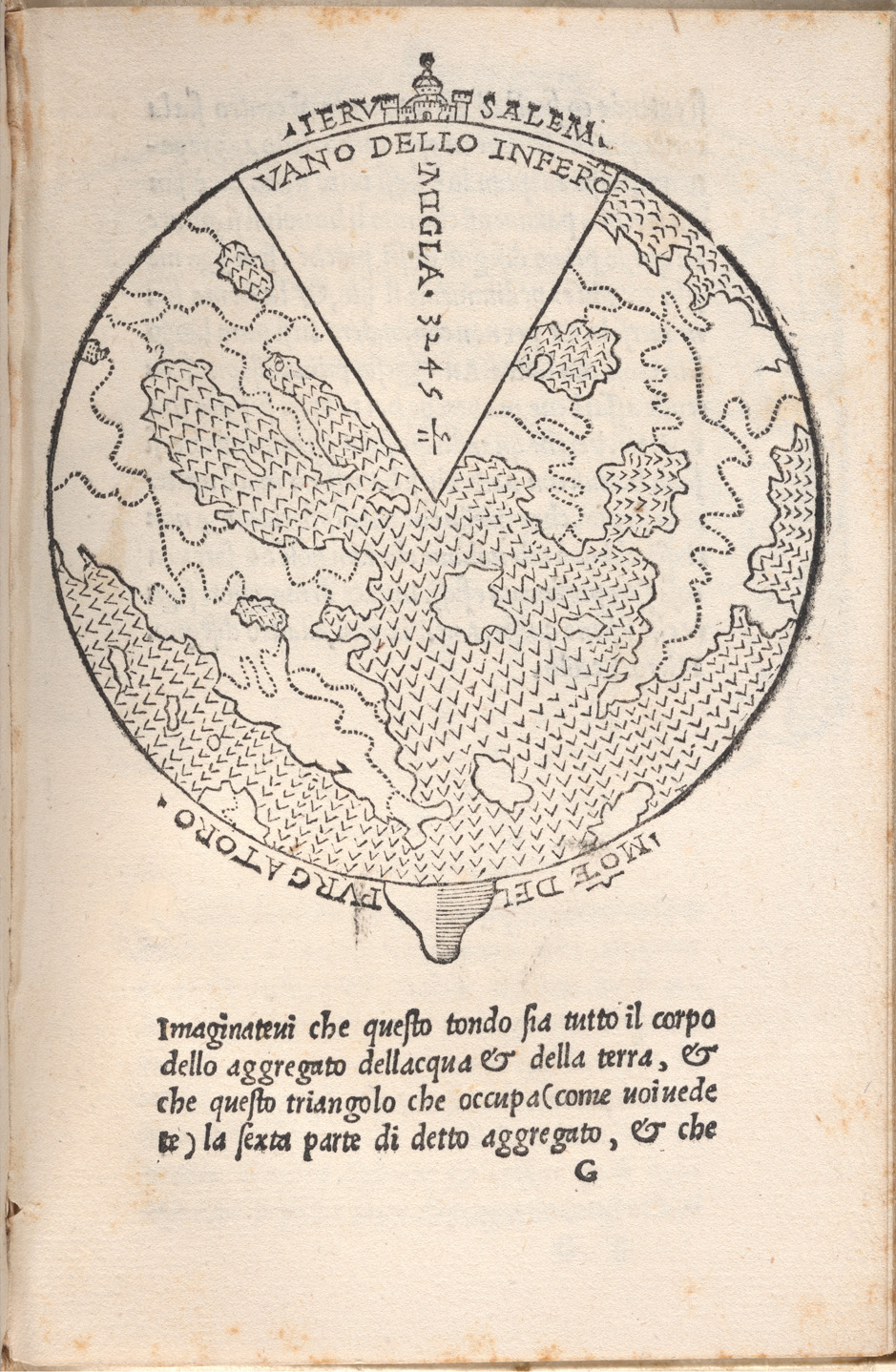
We ven­er­ate Galileo Galilei for dar­ing to speak the sci­en­tif­ic truth in the face of severe insti­tu­tion­al oppo­si­tion. He pub­licly acknowl­edged that the Earth revolves around the Sun in a time when the Church would rather he did­n’t, dis­play­ing a bloody-mind­ed­ness that he seems to have acquired with age. Decades ear­li­er, in the first stage of his career, he found him­self (cir­ca 1588) tasked by the Flo­ren­tine Acad­e­my with cal­cu­lat­ing the pre­cise dimen­sions of hell as described in Dan­te’s Divine Com­e­dy. Duti­ful­ly apply­ing him­self to this now-absurd-sound­ing work, he deter­mined that the under­world’s roof had to be cen­tered in Jerusalem, as wide as the radius of the entire Earth, and no less than 600 kilo­me­ters thick.

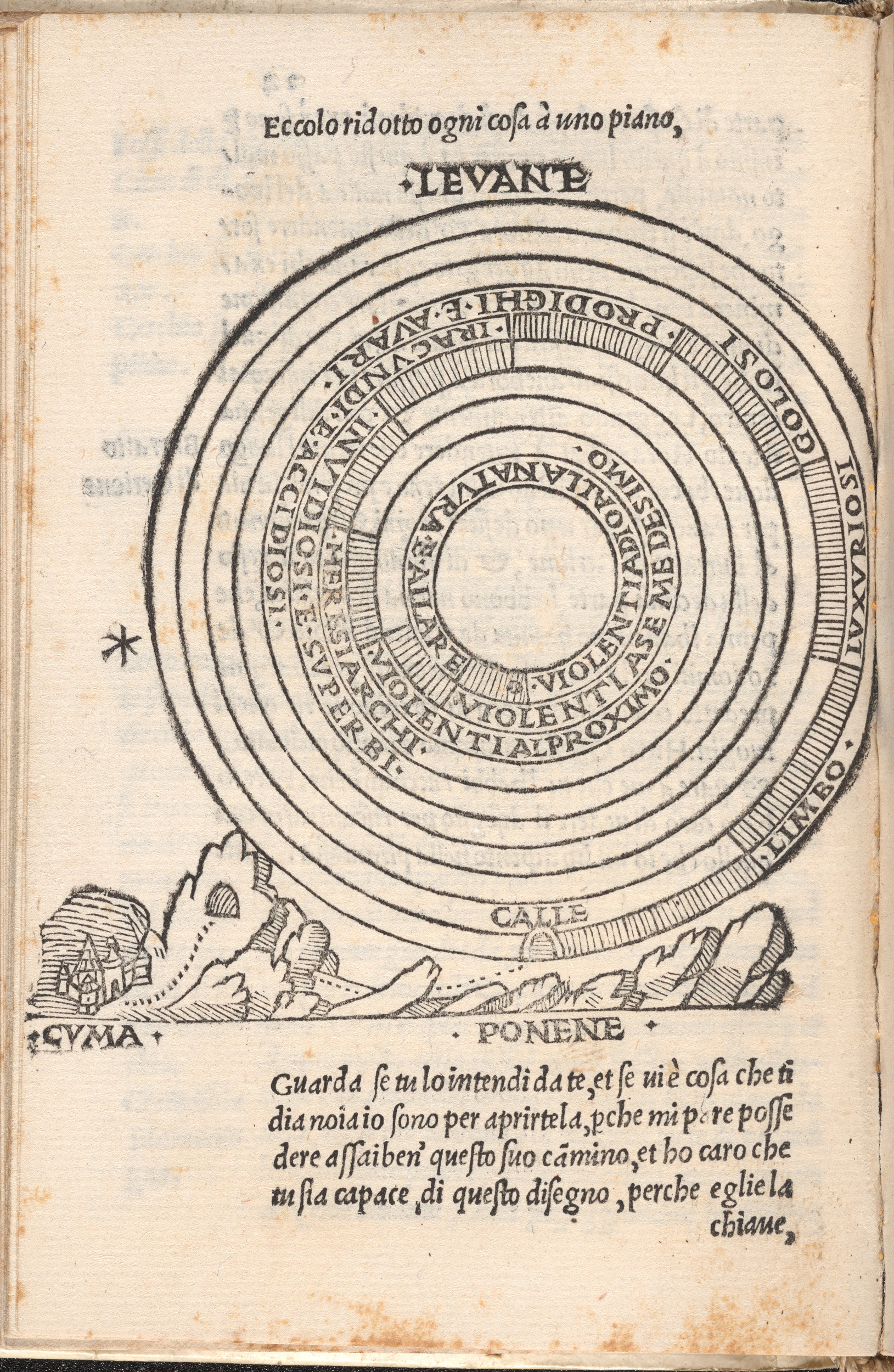
Not that any of this was based on friv­o­lous rea­son­ing. As a mod­el for the dimen­sions of hel­l’s roof, for instance, Galileo looked over to Fil­ip­po Brunelleschi’s dome, which had topped the Flo­rence Cathe­dral for a cen­tu­ry and a half at that point. Galileo’s cal­cu­la­tions of hel­l’s dimen­sions con­tra­dict­ed an ear­li­er mod­el pro­posed by the schol­ar Alessan­dro Vel­lutel­lo. Instead, they sup­port­ed a mod­el devel­oped by archi­tect Anto­nio Manet­ti, whose draw­ings appear here.

That Manet­ti was a fel­low Flo­ren­tine, and Vel­lutel­lo was from Flo­rence’s long­time rival Luc­ca could well have count­ed among the moti­vat­ing fac­tors. But we must bear in mind that, in the six­teenth cen­tu­ry, peo­ple real­ly did want to get these facts straight — if “facts” be the prop­er term.

The attempt to rec­on­cile scrip­ture with objec­tiv­i­ty absorbed the lives of many high­ly intel­li­gent peo­ple through­out the Mid­dle Ages and the Renais­sance. How­ev­er hope­less that goal could be, the thought Galileo devot­ed to the prob­lem may have result­ed in a gen­uine break­through. Math­e­mati­cian and sci­ence his­to­ri­an Mark Peter­son, pre­vi­ous­ly fea­tured here on Open Cul­ture, has argued that his cal­cu­la­tions of Dan­te’s non-Euclid­ean, topol­o­gy-curved uni­verse — as we might plau­si­bly describe it today — laid out the basis for what would become math­e­mat­i­cal physics. In any case, the young Galileo’s lec­tures at the Flo­ren­tine Acad­e­my land­ed him a job as a math­e­mat­ics lec­tur­er at the Uni­ver­si­ty of Pisa, as good a rea­son as any for him to keep his pri­vate doubts to him­self. When it comes to sci­ence and reli­gion, as he must have known, you’ve got to pick your bat­tles.

Relat­ed con­tent:

Dante’s Divine Com­e­dy: A Visitor’s Guide to Hell, Pur­ga­to­ry & Par­adise

Physics from Hell: How Dante’s Infer­no Inspired Galileo’s Physics

Beau­ti­ful 19th Cen­tu­ry Maps of Dante’s Divine Com­e­dy: Infer­no, Pur­ga­to­ry, Par­adise & More

Visu­al­iz­ing Dante’s Hell: See Maps & Draw­ings of Dante’s Infer­no from the Renais­sance Through Today

A Dig­i­tal Archive of the Ear­li­est Illus­trat­ed Edi­tions of Dante’s Divine Com­e­dy (1487–1568)

Explore Divine Com­e­dy Dig­i­tal, a New Dig­i­tal Data­base That Col­lects Sev­en Cen­turies of Art Inspired by Dante’s Divine Com­e­dy

Based in Seoul, Col­in Marshall writes and broad­casts on cities, lan­guage, and cul­ture. He’s the author of the newslet­ter Books on Cities as well as the books 한국 요약 금지 (No Sum­ma­riz­ing Korea) and Kore­an Newtro. Fol­low him on the social net­work for­mer­ly known as Twit­ter at @colinmarshall.

The Secret History of the Antichrist

Pay­Pal co-founder Peter Thiel has spo­ken pub­licly on a vari­ety of issues from con­trar­i­an entre­pre­neur­ship to tech­ni­cal stag­na­tion to geopo­lit­i­cal strug­gle. Late­ly, he’s drawn more atten­tion with extend­ed remarks on what would seem an unex­pect­ed sub­ject: the Antichrist, a seem­ing­ly enlight­ened but decep­tive­ly malev­o­lent fig­ure or move­ment bent on putting the world under inno­va­tion-sti­fling uni­fied con­trol. The term itself may sound famil­iar, though many of us haven’t seen it ref­er­enced much in pop­u­lar cul­ture since the hey­day of the Left Behind nov­el series that sold so well around the turn of the mil­len­ni­um. Whether or not it’s to your lit­er­ary taste, that apoc­a­lypse nar­ra­tive’s vil­lain does adhere to the Antichrist arche­type laid out in the Bible.

In the new Hochela­ga video above, Tom­mie Trelawny goes back to the bib­li­cal texts to deter­mine the ori­gins of the Antichrist, whom human­i­ty has por­trayed as “a great deceiv­er who charms the world through false mir­a­cles, and with it, demands to be wor­shiped as god him­self.” How­ev­er large he looms in mod­ern Chris­t­ian sto­ry­telling, he’s ref­er­enced in only four pas­sages of the Bible. The word Antichrist appears nowhere but in one of John’s epis­tles, which also warns that “even now many antichrists have come,” indi­cat­ing, as Trelawny puts it, those who reject “that Jesus is the Christ, or Mes­si­ah.” As John saw it, some such indi­vid­u­als — includ­ing mem­bers of new sects like Gnos­ti­cism — were also dan­ger­ous­ly charis­mat­ic, which aid­ed the spread of their false doc­trines.

The apos­tle Paul or one of his dis­ci­ples, in a let­ter to the Thes­sa­lo­ni­ans, fore­sees the rise of “a mys­te­ri­ous fig­ure known only as ‘the law­less one,’ who will gain pow­er by deceiv­ing peo­ple through false mir­a­cles, and once in pow­er, he will com­mit his great­est crime of all: ‘He will oppose and exalt him­self over every­thing that is called God or wor­shiped, so that he sets him­self up in God’s tem­ple, pro­claim­ing him­self to be God.” For its part, the Book of Rev­e­la­tion adds “the arrival of a mon­strous sev­en-head­ed beast,” and lat­er, a com­pan­ion with “the horns of a lamb but the voice of a drag­on.” There­after comes the “mark of the beast,” 666 — or per­haps 616, Trelawny adds, giv­en that either could be seen as code for Neron Kaisar in Greek or Nero Cae­sar in Latin, bet­ter known as the ancient Roman Emper­or Nero. Some sus­pect­ed him of being the Antichrist, espe­cial­ly if he orches­trat­ed Rome’s great fire in order to con­sol­i­date his pow­er and scape­goat the Chris­tians.

Trelawny also gets into detail about the twice-excom­mu­ni­cat­ed Holy Roman Emper­or Fred­er­ick II, whom Pope Gre­go­ry IX saw as the proph­e­sied “law­less one,” and even into the accu­sa­tions of being the Antichrist flung back and forth dur­ing the Protes­tant Ref­or­ma­tion and the flur­ry of print­ed pam­phlets that drove its sur­round­ing con­tro­ver­sy. The lat­ter sto­ry “shows a sub­tle change tak­ing place in how peo­ple could under­stand the Antichrist. It was no longer just a sin­gle per­son; it could be an entire sys­tem or insti­tu­tion.” Through­out his­to­ry, as under­scored today by anony­mous online debates as well as lec­tures deliv­ered by Peter Thiel in Rome, “it seems that what­ev­er peo­ple fear the most, from com­mu­nism to glob­al­ism to reg­u­la­tion, the Antichrist can become.” If so, we’ll keep hear­ing about his immi­nent (or already accom­plished) rise until human­i­ty can get over its fears — and what a mir­a­cle that would be.

Relat­ed Con­tent:

A Sur­vival Guide to the Bib­li­cal Apoc­a­lypse

The Reli­gions of Bob Dylan: From Deliv­er­ing Evan­gel­i­cal Ser­mons to Singing Hava Nag­i­la With Har­ry Dean Stan­ton

It’s the End of the World as We Know It: The Apoc­a­lypse Gets Visu­al­ized in an Inven­tive Map from 1486

A Rare, Ear­ly Ver­sion of the King Arthur Leg­end Found & Trans­lat­ed

Par­adise Lost Explained: How John Mil­ton Wrote His Epic Reli­gious Poem from Satan’s Per­spec­tive

Mar­shall McLuhan Explains Why We’re Blind to How Tech­nol­o­gy Changes Us, Rais­ing the Ques­tion: What Have the Inter­net & Social Media Done to Us?

Based in Seoul, Col­in Marshall writes and broad­casts on cities, lan­guage, and cul­ture. He’s the author of the newslet­ter Books on Cities as well as the books 한국 요약 금지 (No Sum­ma­riz­ing Korea) and Kore­an Newtro. Fol­low him on the social net­work for­mer­ly known as Twit­ter at @colinmarshall.

The Visionary Mystical Art of Carl Jung: See Illustrated Pages from The Red Book

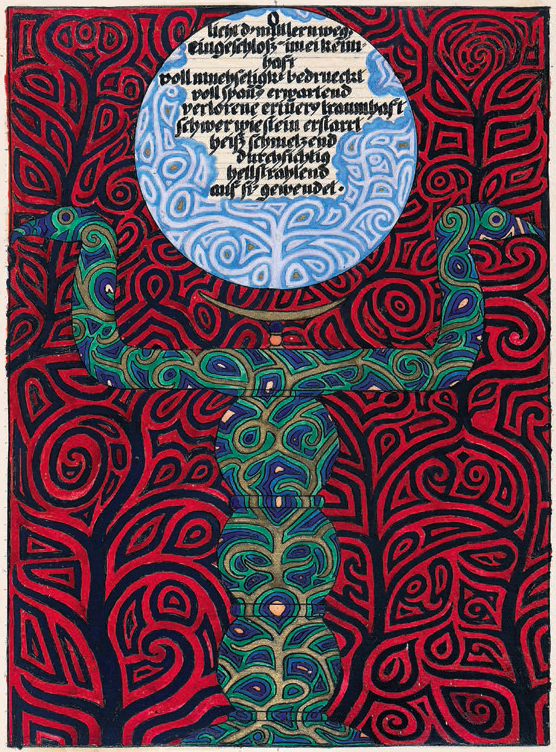
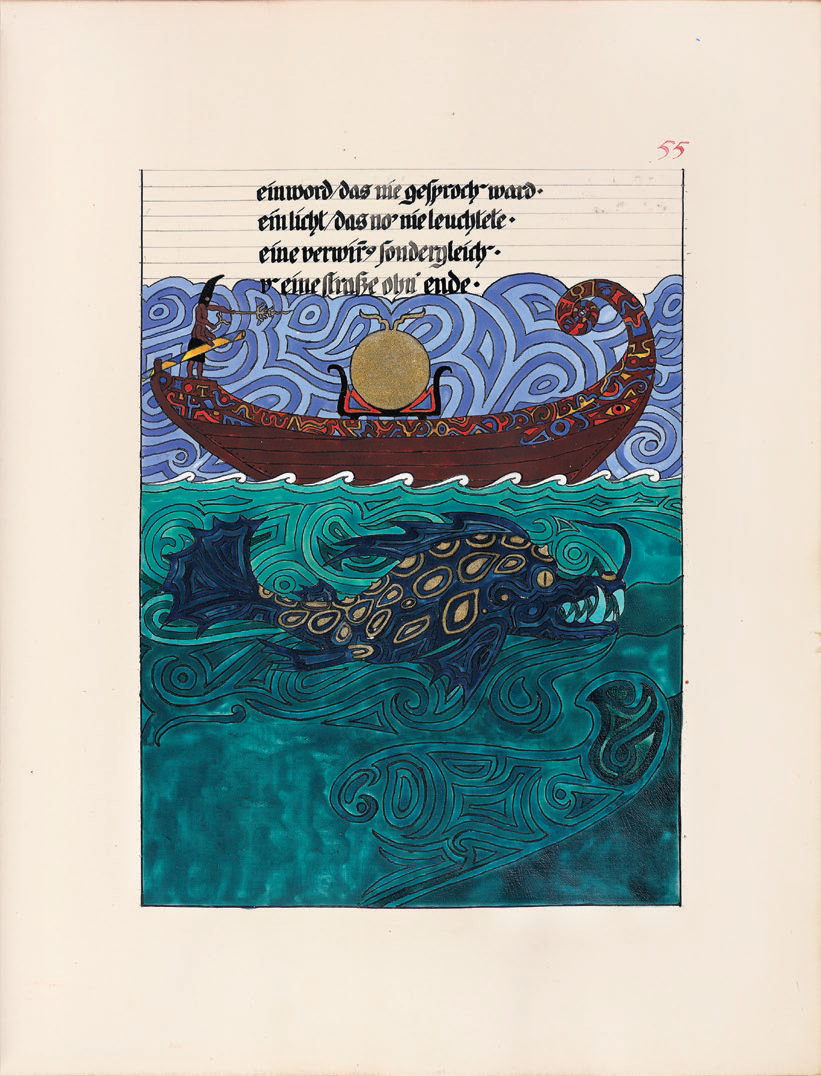
Carl Jung’s Liber Novus, bet­ter known as The Red Book, has come to light in a com­plete Eng­lish trans­la­tion, pub­lished by Nor­ton in a 2009 fac­sim­i­le edi­tion and a small­er “reader’s edi­tion” in 2012. The years since have seen sev­er­al exhi­bi­tions of the book, which “could pass for a Bible ren­dered by a medieval monk,” writes art crit­ic Peter Frank, “espe­cial­ly for the care with which Jung entered his writ­ing as ornate Goth­ic script.”

Jung “refused to think of him­self as an ‘artist’” but “it’s no acci­dent the Liber Novus has been exhib­it­ed in muse­ums, or func­tioned as the nucle­us of ‘Ency­clo­pe­dic Palace,’ the sur­vey of vision­ary art in the 2013 Venice Bien­nale.” Jung’s elab­o­rate paint­ings show him “every bit the artist the medieval monk or Per­sian courtier was; his art hap­pened to be ded­i­cat­ed not to the glo­ry of God or king, but that of the human race.”

One could more accu­rate­ly say that Jung’s book was ded­i­cat­ed to the mys­ti­cal uncon­scious, a much more neb­u­lous and ocean­ic cat­e­go­ry. The “ocean­ic feeling”—a phrase coined in 1927 by French play­wright Romain Rol­land to describe mys­ti­cal oneness—so annoyed Sig­mund Freud that he dis­missed it as infan­tile regres­sion.

Freud’s antipa­thy to mys­ti­cism, as we know, did not dis­suade Jung, his one­time stu­dent and admir­er, from div­ing in and swim­ming to the deep­est depths. The voy­age began long before he met his famous men­tor. At age 11, Jung lat­er wrote in 1959, “I found that I had been in a mist, not know­ing how to dif­fer­en­ti­ate myself from things; I was just one among many things.”

Jung con­sid­ered his elab­o­rate dream/vision journal—kept from 1913 to 1930, then added to spo­rad­i­cal­ly until 1961—“the cen­tral work in his oeu­vre,” says Jung schol­ar Sonu Sham­dasani in the Rubin Muse­um intro­duc­tion above. “It is lit­er­al­ly his most impor­tant work.”

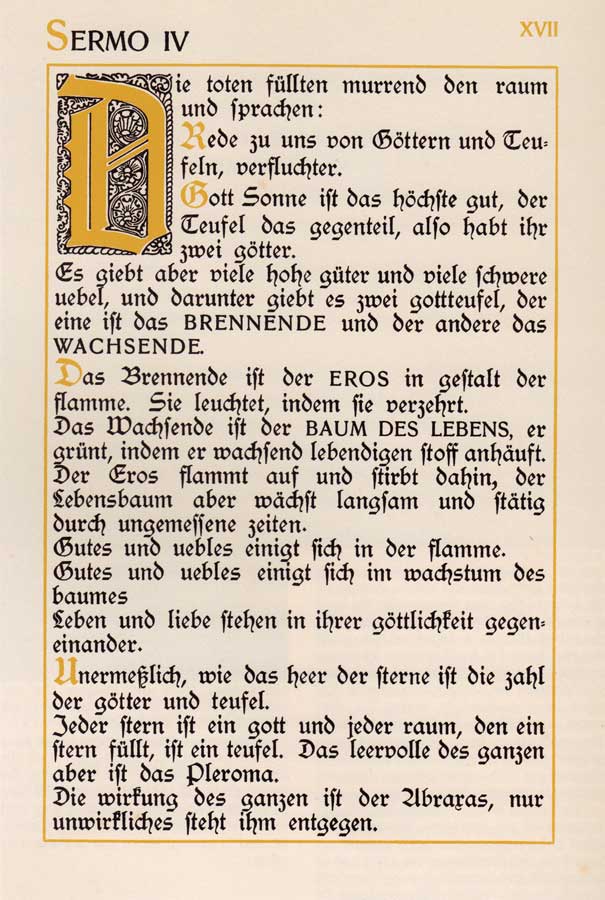
And yet it took Dr. Sham­dasani “three years to con­vince Jung’s fam­i­ly to bring the book out of hid­ing,” notes NPR. “It took anoth­er 13 years to trans­late it.” Part of the rea­son his heirs left the book hid­den in a Swiss vault for half a cen­tu­ry may be evi­dent in the only por­tion of the Red Book to appear in Jung’s life­time, “The Sev­en Ser­mons of the Dead.”

Jung had this text pri­vate­ly print­ed in 1916 and gave copies to select friends and fam­i­ly mem­bers. He com­posed it in 1913 in a peri­od of Gnos­tic stud­ies, dur­ing which he entered into vision­ary trance states, tran­scrib­ing his visions in note­books called the “Black Books,” which would lat­er be rewrit­ten in The Red Book.

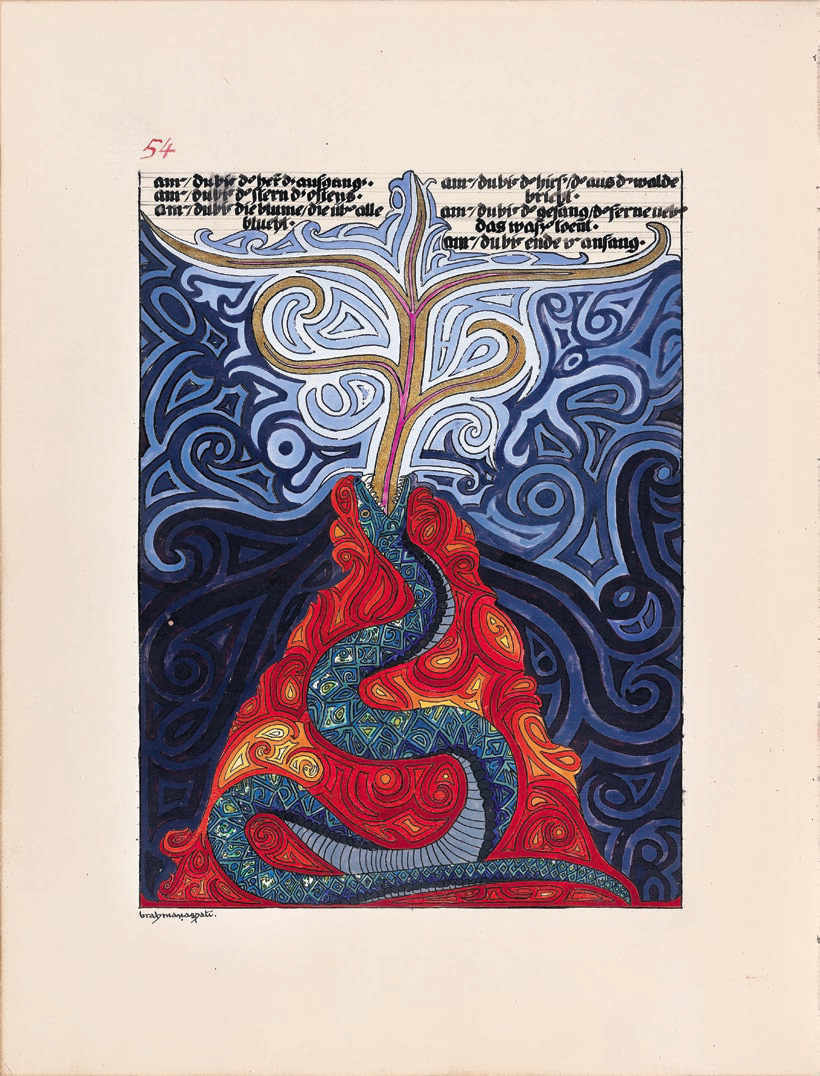
You can see a page of Jung’s metic­u­lous­ly hand-let­tered man­u­script above. The “Ser­mons,” he wrote in a lat­er inter­pre­ta­tion, came to him dur­ing an actu­al haunt­ing:

The atmos­phere was thick, believe me! Then I knew that some­thing had to hap­pen. The whole house was filled as if there were a crowd present, crammed full of spir­its. They were packed deep right up to the door, and the air was so thick it was scarce­ly pos­si­ble to breathe. As for myself, I was all a‑quiver with the ques­tion: “For God’s sake, what in the world is this?” Then they cried out in cho­rus, “We have come back from Jerusalem where we found not what we sought/’ That is the begin­ning of the Septem Ser­mones. 

The strange, short “ser­mons” are dif­fi­cult to cat­e­go­rize. They are awash in Gnos­tic the­ol­o­gy and occult terms like “plero­ma.” The great mys­ti­cal one­ness of ocean­ic feel­ing also took on a very sin­is­ter aspect in the demigod Abraxas, who “beget­teth truth and lying, good and evil, light and dark­ness, in the same word and in the same act. Where­fore is Abraxas ter­ri­ble.”

There are tedious, didac­tic pas­sages, for con­verts only, but much of Jung’s writ­ing in the “Sev­en Ser­mons,” and through­out The Red Book, is filled with strange obscure poet­ry, com­ple­ment­ed by his intense illus­tra­tions. Jung “took on the sim­i­lar­ly styl­ized and beau­ti­ful man­ners of non-west­ern word-image con­fla­tion,” writes Frank, “includ­ing Per­sian minia­ture paint­ing and east Asian cal­lig­ra­phy.”

If The Red Book is, as Sham­dasani claims, Jung’s most impor­tant work—and Jung him­self, though he kept it qui­et, seemed to think it was—then we may in time come to think of him not only as an inspir­er of eccen­tric artists, but as an eccen­tric artist him­self, on par with the great illu­mi­na­tors and vision­ary mys­tic poet/painters.

Note: An ear­li­er ver­sion of this post appeared on our site in 2020.

Relat­ed Con­tent:

Carl Jung: Tarot Cards Pro­vide Door­ways to the Uncon­scious, and Maybe a Way to Pre­dict the Future

The Famous Breakup of Sig­mund Freud & Carl Jung Explained in a New Ani­mat­ed Video

Carl Jung Explains His Ground­break­ing The­o­ries About Psy­chol­o­gy in a Rare Inter­view (1957)

Josh Jones is a writer and musi­cian based in Durham, NC.

How Did Everything Begin?: Animations on the Origins of the Universe Narrated by X‑Files Star Gillian Anderson

We pre­vi­ous­ly brought you the BBC series of short ani­mat­ed videos, A His­to­ry of Ideas. Pro­duced in col­lab­o­ra­tion with the UK’s Open Uni­ver­si­ty and nar­rat­ed by Har­ry Shear­er, these fun intro­duc­tions to such philoso­phers as Simone de Beau­voir and Edmund Burke, and such weighty philo­soph­i­cal top­ics as free will and the prob­lem of evil, make chal­leng­ing, abstract con­cepts acces­si­ble to non-philoso­phers. Now the series is back with a new chap­ter, How Did Every­thing Begin?, a sur­vey of sev­er­al the­o­ries of the ori­gins of the uni­verse, from Thomas Aquinas’ philo­soph­i­cal spec­u­la­tions, to Hin­du cos­mol­o­gy; and from the­olo­gian William Paley’s design argu­ment (below), to the the­o­ry of the Big Bang (above).

The two videos here present an inter­est­ing coun­ter­point between the ori­gin the­o­ries of astro­physics and the­ol­o­gy. Though cur­rent-day intel­li­gent design pro­po­nents deny it, there is still much of William Paley’s argu­ment, at least in style, in their expla­na­tions of cre­ation. First pro­pound­ed in his 1802 work Nat­ur­al The­ol­o­gy, the theologian’s famous watch­mak­er analogy—which he extend­ed to the design of the eye, and every­thing else—gave Charles Dar­win much to puz­zle over, though David Hume had sup­pos­ed­ly refut­ed Paley’s argu­ments 50 years ear­li­er. The Big Bang theory—a term cre­at­ed by its fore­most crit­ic Fred Hoyle—offers an entire­ly nat­u­ral­is­tic account of the universe’s ori­gins, one that pre­sup­pos­es no inher­ent pur­pose or design.

As with the pre­vi­ous videos, these are script­ed by the host of the Phi­los­o­phy Bites pod­cast, Nigel War­bur­ton. This time around the videos are nar­rat­ed by Gillian Ander­son, whose voice you may not imme­di­ate­ly rec­og­nize. Rather than sound­ing like Dana Scul­ly, her famous X‑Files char­ac­ter, Ander­son speaks in a British accent, which she slips into eas­i­ly, hav­ing lived in the UK for much of her child­hood and now again as an adult. (You may have seen Ander­son in many of the Eng­lish peri­od dra­mas she has appeared in, or in British crime dra­ma The Fall or Michael Winterbottom’s uproar­i­ous adap­ta­tion of Tris­tram Shandy.)

These fas­ci­nat­ing spec­u­la­tive theories—whether sci­en­tif­ic or mythological—are sure to appeal to fans of the X‑Files, who can per­haps begin to believe again, or remain skep­ti­cal, thanks to Chris Carter’s R‑rated direc­tor’s cut of X‑Files: I Want to Believe, com­ing out this fall.

Watch the remain­ing videos in the series below:

Thomas Aquinas and the First Mover Argu­ment

Hin­du Cre­ation Sto­ries

Note: An ear­li­er ver­sion of this post appeared on our site in 2015.

Relat­ed Con­tent:

A His­to­ry of Ideas: Ani­mat­ed Videos Explain The­o­ries of Simone de Beau­voir, Edmund Burke & Oth­er Philoso­phers

The His­to­ry of Phi­los­o­phy With­out Any Gaps – Peter Adamson’s Pod­cast Still Going Strong

Free Online Phi­los­o­phy Cours­es

Josh Jones is a writer and musi­cian based in Durham, NC.

Where Did the Monk’s Haircut Come From? A Look at the Rich and Contentious History of the Tonsure

One might assume from a mod­ern view­point that the hair­styles worn by monks arose to deal with male pat­tern bald­ness anx­i­ety. As in the school uni­form approach, you can’t sin­gle out one person’s bald­ness when every­one is bald. But this, again, would be a mod­ern view, full of the van­i­ty the tonsured—those with reli­gious­ly shaven heads—ostensibly vowed to renounce. Accord­ing to the Catholic Ency­clo­pe­dia, the ton­sure (from the Latin verb for “to shear”) began as a “badge of slav­ery” among Greeks and Romans. It was adopt­ed “on this very account” by ear­ly monas­tic orders, to mark the total sur­ren­der of the will.

Would it sur­prise you, then, to learn that there were ton­sure wars? Prob­a­bly not if you know any­thing about church his­to­ry. Every arti­cle of cloth­ing and of faith has sparked some major con­tro­ver­sy at one time or anoth­er. So too with the ton­sure, of which—we learn in the Vox video above—there were three styles. The first, the coro­nal (or Roman or Petrine) ton­sure, is the one we see in count­less Medieval and Renais­sance paint­ings: a bald pate at the crown sur­round­ed by a fringe of hair, pos­si­bly meant to evoke the crown of thorns. Next is the Pauline, a ful­ly shaved head, seen much less in West­ern art since it was “used more com­mon­ly in East­ern Ortho­doxy.”

The third style of ton­sure caused all the trou­ble. Or rather, it was this style that served as a vis­i­ble sign of reli­gious dif­fer­ences between the Roman Catholic Church and the church­es in Britain and Ire­land. “Celtic Catholi­cism was ‘out of sync’ with the Roman Catholic Church,” notes Vox. “Roman Catholics would use the dif­fer­ences between them to por­tray Celtic Catholi­cism as pagan, or even as an off­shoot, cel­e­brat­ing the pow­er-hun­gry magi­cian, Simon Magus.” The Celtic ton­sure fell under a cloud, but how exact­ly did it dif­fer from the oth­ers? Since it dis­ap­peared in the ear­ly Mid­dle Ages and few images seem to have sur­vived, no one seems sure.

Daniel McCarthy, fel­low emer­i­tus at Trin­i­ty Col­lege, Dublin set out to solve the mys­tery. He spec­u­lates that the Celtic ton­sure, as you’ll see on a com­put­er-sim­u­lat­ed monk’s head, was a tri­an­gu­lar shape, with the apex at the front. When the Roman Catholics took over Ire­land, all of the vest­ments, dates, and hair­cuts were slow­ly brought into line with the dom­i­nant view. The prac­tice of ton­sure offi­cial­ly end­ed in 1972, and fell out of favor in Eng­lish-speak­ing coun­tries cen­turies ear­li­er, accord­ing to the Catholic Ency­clo­pe­dia. But in any case, McCarthy sees the ton­sure not as a spurn­ing of fash­ion, but as a cult-like devo­tion to style. In that sense, we can see peo­ple who adopt sim­i­lar hair­cuts around the world as still visu­al­ly sig­nal­ing their mem­ber­ship in some kind of order, reli­gious or oth­er­wise.

Note: An ear­li­er ver­sion of this post appeared on our site in 2018.

Relat­ed Con­tent:

How a Bal­ti­more Hair­dress­er Became a World-Renowned “Hair Archae­ol­o­gist” of Ancient Rome

Ani­mat­ed: Stephen Fry & Ann Wid­de­combe Debate the Catholic Church

50 Years of Chang­ing David Bowie Hair Styles in One Ani­mat­ed GIF

Josh Jones is a writer and musi­cian based in Durham, NC.

The Bible’s Deleted Scenes: A Guide to the Strange Biblical Stories Known as the Apocrypha

The term apoc­ryphal may sound anti­quat­ed, but any rea­son­ably seri­ous read­er encoun­ters it fair­ly often, even in recent­ly pub­lished texts. In the mod­ern usage, it usu­al­ly describes words or events that, despite prob­a­bly nev­er hav­ing been spo­ken or tak­en place, tend to be cit­ed as if they had. Hochela­ga cre­ator Tom­mie Trelawny says that the word comes from a Greek term mean­ing “hid­den,” and was used to refer to dis­put­ed texts not includ­ed in the main­stream Bible. Some church­es acknowl­edge these apoc­rypha, and oth­ers reject them. As for what the unpre­dictable and often bizarre mate­r­i­al, even by bib­li­cal stan­dards, in these “hid­den books,” that’s what Trelawny explains in his new video above.

In the book of Tobit, a high­ly unfor­tu­nate man and woman receive sal­va­tion from the angel Raphael, who uses fish guts to cure their phys­i­cal and demon­ic afflic­tions. In the book of Judith, the tit­u­lar Israelite wid­ow deceives and slays the Assyr­i­an gen­er­al Holofernes, a scene immor­tal­ized by Car­avag­gio (and ren­dered even more vis­cer­al­ly, as pre­vi­ous­ly fea­tured here on Open Cul­ture, by Artemisia Gen­tileschi).

In one chap­ter of the book of Daniel, the tit­u­lar prophet plays the lawyer in a kind of court­room dra­ma that has a cou­ple of men get­ting their come­up­pance for false­ly accus­ing a woman of adul­tery; in anoth­er, he turns detec­tive, inves­ti­gat­ing the mat­ters of a stat­ue said to come alive at night and a drag­on being wor­shipped as a god.

There’s quite a bit more, all of it event­ful, none of it uni­ver­sal­ly accept­ed among the holy texts of Chris­tian­i­ty. The pecu­liar sta­tus of the apoc­rypha dates back to the fourth cen­tu­ry, when the schol­ar Jerome embarked upon a trans­la­tion of the Bible into Latin. This first required gath­er­ing up all extant ver­sions of the book, which did­n’t nec­es­sar­i­ly agree with each oth­er: one, writ­ten in Greek, includ­ed quite a few more books than the Bible in Hebrew. It was Jerome who, unable to con­firm these extra books’ authen­tic­i­ty, labeled them “apoc­rypha,” plac­ing them in a sec­tion that even­tu­al­ly got them regard­ed as a kind of sec­ond canon: “delet­ed scenes,” as Trelawny puts it, accom­pa­ny­ing the fea­ture that is the Bible. As for the extent to which they reflect the auteur’s true vision, that can only be — and remain — a mat­ter of debate.

Relat­ed con­tent:

Chris­tian­i­ty Through Its Scrip­tures: A Free Course from Har­vard Uni­ver­si­ty

Every Book of the Bible Explained in One Video

The Gnos­tic Gospels: An Intro­duc­tion to the For­bid­den Teach­ings of Jesus

The Dead Sea Scrolls: Dis­cov­er the Secrets of the Bible’s Old­est and Strangest Texts

How Many Lives Does God Take in the Bible: An Inves­ti­ga­tion into a Sur­pris­ing­ly High Body Count

Based in Seoul, Col­in Marshall writes and broad­casts on cities, lan­guage, and cul­ture. He’s the author of the newslet­ter Books on Cities as well as the books 한국 요약 금지 (No Sum­ma­riz­ing Korea) and Kore­an Newtro. Fol­low him on the social net­work for­mer­ly known as Twit­ter at @colinmarshall.

An Introduction to the Islamic World: 1,000 Years of History in 19 Minutes

Ref­er­ences to Islam in major media can make it sound mono­lith­ic and eter­nal. But it’s actu­al­ly a much younger and less uni­fied phe­nom­e­non than many of us imag­ine, espe­cial­ly if we hap­pen to live out­side the Mid­dle East. As a reli­gion, it dates back “only” to the sev­enth cen­tu­ry, when it was found­ed by the Prophet Muham­mad. As an engine of large-scale civ­i­liza­tion, Islam took a bit longer to come into its own, and it has­n’t stopped under­go­ing divi­sions, trans­for­ma­tions, declines, and rebirths since. Here on Open Cul­ture, we recent­ly fea­tured a video from YouTube chan­nel How So cov­er­ing 1,000 years of medieval Euro­pean his­to­ry in 20 min­utes. The one above does the same thing for the Islam­ic world’s first mil­len­ni­um, end­ing with the rise of the Ottoman Empire.

After he unit­ed the for­mer­ly poly­the­is­tic Arab tribes under his new faith, Muham­mad lived for a decade longer. His death in the year 632 marked the last time that every believ­er in Islam would have been on the same page. It was at that point that the title caliph, or suc­ces­sor, was defined, and the first four caliphs after Muham­mad held pow­er for thir­ty years, the peri­od in which the first Mus­lim state emerged.

The caliphate, as their ter­ri­to­ry was called, expand­ed wide­ly across and out of the Ara­bi­an Penin­su­la, into the ter­ri­to­ries of the Byzan­tine and Sas­san­ian empires. Sup­port­ers of the ear­ly caliph Ali ibn Abi Tal­ib argued that he was the true heir to Islam, and detrac­tors that he was­n’t. Even­tu­al­ly, the for­mer group became known as the Shias, and the lat­ter as the Sun­nis, the two sides of a schism of which prac­ti­cal­ly every­one today has heard.

Less­er known to the gen­er­al pub­lic are the Umayyads, Abbasids, Buyids, and Fatimids, all of them major play­ers in the con­tin­u­ing expan­sion of Islam well into the Mid­dle Ages. But the still-famil­iar place names of Dam­as­cus, Jerusalem, Bagh­dad, and Con­stan­tino­ple (or, as we know it, Istan­bul) are just as impor­tant in these chap­ters of the sto­ry of Islam, and with­out under­stand­ing that reli­gion, it’s impos­si­ble to under­stand the diverse forms that civ­i­liza­tion has tak­en in those places and oth­ers in the wider region of the world around them. The cri­sis of author­i­ty that began set­ting in after Muham­mad’s death has, in some sense, per­sist­ed for near­ly four­teen cen­turies now, more than long enough to have become a defin­ing char­ac­ter­is­tic of the Islam­ic world. What shape its soci­eties will take over the next mil­len­ni­um, it would sure­ly take a prophet to know.

Relat­ed Con­tent:

The Birth and Rapid Rise of Islam, Ani­mat­ed (622‑1453)

500+ Beau­ti­ful Man­u­scripts from the Islam­ic World Now Dig­i­tized & Free to Down­load

How Medieval Islam­ic Engi­neer­ing Brought Water to the Alham­braThe Com­plex Geom­e­try of Islam­ic Art & Design: A Short Intro­duc­tion

The World Map That Intro­duced Sci­en­tif­ic Map­mak­ing to the Medieval Islam­ic World (1154 AD)

Learn Islam­ic & Indi­an Phi­los­o­phy with 107 Episodes of the His­to­ry of Phi­los­o­phy With­out Any Gaps Pod­cast

1,000 Years of Medieval Euro­pean His­to­ry in 20 Min­utes

Based in Seoul, Col­in Marshall writes and broad­casts on cities, lan­guage, and cul­ture. He’s the author of the newslet­ter Books on Cities as well as the books 한국 요약 금지 (No Sum­ma­riz­ing Korea) and Kore­an Newtro. Fol­low him on the social net­work for­mer­ly known as Twit­ter at @colinmarshall.

The Spread of Christianity Animated, from Antiquity Until Today, on an Animated Map

Chris­tian­i­ty has long been close­ly iden­ti­fied with West­ern civ­i­liza­tion. The asso­ci­a­tion is espe­cial­ly strong, in mod­ern times, with the Unit­ed States of Amer­i­ca, that source of deri­sive­ly quot­ed, quite pos­si­bly apoc­ryphal argu­ments that “if Eng­lish was good enough for Jesus Christ, it ought to be good enough for our chil­dren.” But of course, Jesus nev­er heard a word of Eng­lish, and though the spread of the reli­gion named after him did shift into high gear not long after his death — to say noth­ing of after Con­stan­ti­ne’s — it took its sweet time get­ting to the Amer­i­can con­ti­nent. In fact, it does­n’t show up there until more than five and a half min­utes into the new eight-minute video from Ollie Bye above, which ani­mates Chris­tian­i­ty’s his­tor­i­cal prop­a­ga­tion on a world map.

It’s a world map by the end, in any case: the view zooms out as the reach of Chris­tian­i­ty increas­es, start­ing with the region we now call the Mid­dle East and end­ing up with every con­ti­nent on dis­play, none of them untouched save Antarc­ti­ca (which actu­al­ly does have eight church­es of its own). Remark­able though it is that this first-cen­tu­ry “desert reli­gion” has tak­en root in such a vari­ety of envi­ron­ments, cul­tures, and soci­eties, it has­n’t come through that process com­plete­ly unchanged.

Indeed, Bye’s map includes a run­ning leg­end of its major vari­ants, from Nicene, Celtic, and Chal­cedon­ian Chris­tian­i­ty ear­ly on to Angli­can, Luther­an, Bap­tist, and many more in our time. It makes less sense to speak of the spread of Chris­tian­i­ty, per­haps, than the spread of Chris­tian­i­ties.

In the sin­gu­lar or the plur­al, what has made all this so adapt­able to such a wide vari­ety of human set­tings? Chris­tian­i­ty’s non-eth­nic uni­ver­sal­ism sure­ly has some­thing to do with it, as does the broad emo­tion­al res­o­nance of its core nar­ra­tives of sin, sal­va­tion, and rebirth. The assid­u­ous trans­la­tion of its texts and out­ward march of mis­sion­ar­ies and oth­er car­ri­ers of the gospel has been going on almost since the very begin­ning. Through­out its his­to­ry, Chris­tian­i­ty has also shown the ver­sa­til­i­ty to thrive as a clan­des­tine under­ground move­ment, a state reli­gion, and every­thing in between. All the while, it has assim­i­lat­ed qual­i­ties of the civ­i­liza­tions it enters, from Gre­co-Roman phi­los­o­phy to Celtic fes­ti­vals to Kore­an shaman­is­tic tra­di­tions. In fact, I’m writ­ing this very post from one of the many church cafés in Seoul, as con­vinc­ing an expe­ri­ence as to under­score Chris­tian­i­ty’s improb­a­ble — and con­tin­u­ing — endurance.

Relat­ed con­tent:

Ani­mat­ed Map Shows How the Five Major Reli­gions Spread Across the World (3000 BC — 2000 AD)

180,000 Years of Reli­gion Chart­ed on a “His­tom­ap” in 1943

The Birth and Rapid Rise of Islam, Ani­mat­ed (622‑1453)

A Visu­al Map of the World’s Major Reli­gions (and Non-Reli­gions)

World Reli­gions Explained with Use­ful Charts: Hin­duism, Bud­dhism, Judaism, Islam, Chris­tian­i­ty & More

The His­to­ry of the World in One Video: Every Year from 200,000 BCE to Today

Based in Seoul, Col­in Marshall writes and broad­casts on cities, lan­guage, and cul­ture. He’s the author of the newslet­ter Books on Cities as well as the books 한국 요약 금지 (No Sum­ma­riz­ing Korea) and Kore­an Newtro. Fol­low him on the social net­work for­mer­ly known as Twit­ter at @colinmarshall.

More in this category... »
Quantcast